#209- The Sixth Sense

Quick recap: A kid sees dead people and also it’s really cold all of the time.

from savagechickens.com from savagechickens.com

Fun (?) fact: M. Night Shyamalan said that he got the idea for The Sixth Sense after an episode of ‘Are You Afraid of the Dark?’. That show used to freak me out so much as a kid so it’s nice to know that it stuck with someone else as well.

The Midnight Society made me want to try throwing stuff into fires

My thoughts: Welcome to Horrorfest! The past couple of years have mostly been about trying to find something to truly terrify me, but seeing as how the list has started to dwindle a bit, my new theme is ‘Whatever is Left’. Catchy, don’t you think? Anyway, first up we have The Sixth Sense, which I chose because it is currently streaming on Netflix. I have seen this movie a few times, including once when it was still in the theater and embarrassed myself by crying because the ending confused me. So, yes, I knew about the ending beforehand, which, if you don’t, A: Congratulations on not getting spoiled yet! The internet can be a cruel, terrifying place about stuff like this  and B: Probably best if you skip this post for now and keep your purity.

Knowing the ending before sitting down to watch the movie made it a little less fun, but not much. I started out trying to find all of the clues that would’ve given away that Malcolm was dead, but gave up pretty quickly because I was so wrapped up in the story. The details I did manage to find made the twist seem so obvious, but only if you know what you are looking for. For example, there is a very obvious close up to Bruce Willis’ face when Cole says that he sees dead people, yet that could also be explained by the director wanting to get a reaction shot. In the end, the realization was still a shock even though I knew it was coming. I liked that Shyamalan used shots from what we had already seen to explain what happened, rather than Malcolm just saying, ‘ Oh my god. I’m dead.’It’s nice when directors choose to trust that their audience can figure out what is going on.

What surprised me most this time around was the emotional punch this movie gave. As an adult, the ghosts no longer scare me, but the idea of having a child with this ability does. I’m not even talking about the ability to see ghosts, but any disability or something not easily treatable. Then there’s the idea of losing someone you love and trying to put myself in Anna’s shoes but being unable to dwell on it too much because it made me so sad. It’s really funny to me how much this movie terrified me when it first came out and now it still terrifies me, just in different ways.

FInal review: 5/5 Also, good on Muriel for getting married and having a kid, although I wish it was in better circumstances. Poor Muriel.

Up next: More Horrorfest!

#208- Stella Dallas

Quick recap: Stella marries Stephen Dallas, a former millionaire. They have a daughter together, but shortly afterwards, everything falls apart and the two separate. Stella devotes her life to Laurel, her daughter, and is willing to do anything for her happiness, even if it means giving her up and never seeing her again.

Throughout the movie, all I could think about was how much Bette Midler looks like Barbara Stanwyck. Come to find out, Midler later starred in an adaptation of this movie!

Throughout the movie, all I could think about was how much Bette Midler looks like Barbara Stanwyck. Come to find out, Midler later starred in an adaptation of this movie!

Fun (?) fact: The movie later became a radio serial that lasted for 18 years.

Our kind of serial is a bit different than what people in the 30s wanted.

Our kind of serial is a bit different than what people in the 30s wanted.

My thoughts: I think the most remarkable thing about Stella Dallas is that it was as hokey and sentimental as you can get, and yet I didn’t feel the need to roll my eyes at all. I don’t know, maybe I’m getting soft. I think part of this amazing feat is due to the fact that the acting was so well done, except for John Boles who basically just had to smoke his pipe and smirk at the camera. The character of Stella Dallas wasn’t my favorite, but I did love Barbara Stanwyck and her ability to make my heart break into pieces. Laurel Dallas, played by Anne Shirley also did a phenomenal job and went well above her role as ‘sad teen with a heart of gold’.

Stella Dallas was also more complicated of a story than I thought it would be. On one side, you have Stella, who hunts Stephen down and marries him, only to realize they had different goals. The synopsis I read said that Stephen tried to make Stella into someone glamorous, but considering that she sought him out after finding out that he was a former millionaire, I think this was the lifestyle she wanted. Stephen, on the other hand, wanted a family and quiet life. It was interesting how the two separated because it wasn’t some big event; they just drifted apart. I might have misunderstood some of the scenes, but it seemed to me to be a balanced view of the ending of a relationship.

I felt sorry for Stella’s character moreso than any other one in the film. She started out in a very strict household, only to move on to a man who didn’t stick around for very long. She had a great relationship with her daughter, but it was also extremely sad to see that her choices hurt Laurel. There were many sad scenes for me, but the worst was when Stella and Laurel were at the resort, and all the teens were badmouthing Stella while Laurel was within earshot. When the truth finally came out, it was devastating and led to Stella making Laurel go live with her father so she would have a better life. Her own life was a hot mess in every sense of the word and although it seems extreme by today’s standards, it really was for the best back then.

Final review: 4/5

Up next: The Big Sleep

#207- Hoop Dreams

Quick recap: This documentary follows two inner city kids from Chicago as they chase their dream of playing professional basketball.

Meanwhile, my basketball skills.

Meanwhile, my basketball skills.

Fun (?) fact: When Hoop Dreams failed to get a nomination for Best Documentary, it pissed Roger Ebert off. He researched the process and found that when voters viewed a movie, they would turn on a flashlight if they didn’t feel the movie had a chance. When enough flashlights were turned on, the movie was stopped. Hoop Dreams lasted only 15 minutes before it was turned off. Because of this, rules were changed and now no one will EVER have an issue with Academy voting again. EVER.

My thoughts: Oh, boy. This movie got to me, you guys. I started Hoop Dreams thinking it would be about playing basketball and maybe the dream of playing basketball- a ‘hoop dream’, if you will. And it was, of course, but it was also so much more. There are so many topics to choose from when talking about this film: poverty, race, crime, drugs, gangs  and so on, and it’s easy to get lost in the message at times. What it comes down to, though, are two boys who just want to be someone. It’s as simple as you can get, and so, so powerful.

Before I go any further, I want to confess that the first thought running through my mind as the credits rolled was, ‘Please let them still be alive and happy,’ and it seems like they are. William Gates’ brother Curtis, who was featured in the film, was murdered in 2001 and Arthur Agee’s father, also featured in the film was gunned down in 2004, but the boys themselves seem successful and happy.

It amazes me the amount of dedication that went in to telling the story of William Gates and Arthur Agee. When filming started, both boys had just finished middle school, and although both of them had amazing talent, no one knew what the ending would be. In many ways, there is nothing remarkable about either story. William is scouted and ends up at St. Joseph’s High School, an expensive private school. He comes in with very low grades ( a persistent issue in the film), but has the drive to continue. His mom is a single parent and does her best, but it’s difficult. At one point in the film, William and his girlfriend have a baby, which adds another layer of complexity to an already complex situation. Add to the fact that William playing for St. Joseph was both an amazing opportunity and also a horrible decision. Being one of only a few black students, some of the games felt like more of a spectacle than just a high school kid doing what he loved. I didn’t really like the coach because it just felt like William was being used to win games for the school. On the other hand, putting him in a prestigious school opened up many doors that wouldn’t otherwise be available.

As much as I enjoyed William, it was Arthur Agee who got to me most. As a public school teacher in a low income area, I see so many kids just like Arthur: kids who have heavy stuff going on at home and try hard to not let it get to them. Kids who are so far behind and are embarrassed about it, so they hide behind their friends and try to show that they don’t care. I was especially interested in Arthur’s friendship with Shannon, the boy with a similar  background who later moved in with the Agees. Both boys were low academically and goofed off a lot in class, yet it was Arthur who ultimately succeeded because of his love for basketball. I don’t want to spoil the outcomes of either boy, but I think it’s safe to say that their passion for the game took them much further than other kids in the same situation would have. We talk a lot about ‘realistic’ goals in school because we want them to choose something they can work for and see progress in. But there is something to having a crazy dream, also, and for these boys, at least, it is what kept them going.

Final review: 5/5 A must see for anyone who loves documentaries.

Up next: Paths of Glory

#206- Zero for Conduct

Quick recap: 4 boys in a strict boarding school make a plan to attack the adults and bring revolution.

QFVoHpT

Fun (?) fact: Not so much ‘fun’, but ‘inevitable’: immediately after its release, it was banned completely until 1946.

now look what you've done!

now look what you’ve done!

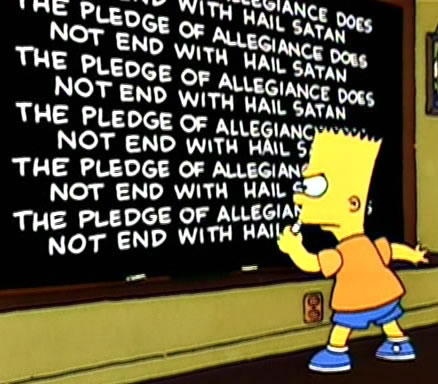
My thoughts: As a teacher, I’ve become used to the various complaints and insults directed at me by kids. Hate homework? I get it, but you still have to do it. I’m making you work too hard and now your hand hurts? got it, don’t care. Eat your shorts? Whatever, Bart Simpson. Children hating school is a fact of life, and movies depicting this is pretty standard. But Zero for Conduct is in its own realm of absurdity and anarchy, and I’m still not quite sure what I watched.

Before you read any further, If…. was directly inspired by Zero for Conduct and although I don’t think they improved on anything, it’s still an interesting companion to this film.

The first scenes of the film were a little underwhelming, since I was expecting full anarchy from the get-go. Instead, the story starts with two boys in a train car, on their way to boarding school. It was kind of like Harry Potter, but without the magic and happiness. The boys start pulling toys out of their jackets to impress each other, like feathers and balloons. It’s silly and made me wonder what counted as ‘bad behavior’ back then, because if this is it, then all those people who say, ‘back in my day, kids didn’t act like they do today’, are quite correct. And really, throughout the entire movie, I didn’t see anything too scandalous from the boys or even from the administration and teachers. In one scene, a couple of boys are roughhousing and the prefect (NOT a Weasley), makes them stand at the foot of the bed for awhile. It was weird, but I wouldn’t call it cruel or abusive. Many of the scenes involved the boys being made to work, which of course they don’t want to do and so they decide to start a war during their school’s Commemoration Day ceremony. I read in many places that the school was very strict and rigid, which I guess was true, but that’s what I thought boarding schools were about. The only thing objectionable I saw was that the boys were made to eat beans everyday, so….probably not worth a battle.

Up yours, children!

Up yours, children!

I guess the confusing part (just like If….) was that I didn’t know who to sympathize with. The boys were annoying and, well…..boyish. There was bathroom humor and smoking and roughhousing, which didn’t endear them to me. The school itself didn’t invoke much sympathy, either. The adults all had something weird going on, like one who did handstands in class and then the president who was a little person. I guess it was just all very weird. And the war itself ended up being all of the boys locking themselves in an attic and refusing to participate, while the four main boys threw random things at the adults. Revolution indeed, children.

Now, that's some high level tomfoolery I can get behind!

Now, that’s some high level tomfoolery I can get behind!

Final review: 2/5. Did I mention it was a French film? Probably not a surprise, given its absurdity.

Up next: Hoop Dreams