#182- Buffalo ’66

Quick recap: It sounds like a typical set up for a romantic comedy- a guy lies to his parents about having a girlfriend and must find someone at the last second to keep the deception alive. Except that the guy just got out of prison. Except that his parents are total nut jobs. Except that the way he finds a girl is to kidnap one from dance class. Except that the girl is a teenager. Ignore all that and you have a solid romantic comedy!

awww.

awww.

Fun (?) fact: Vincent Gallo wrote, directed, composed music for and starred in Buffalo ’66.
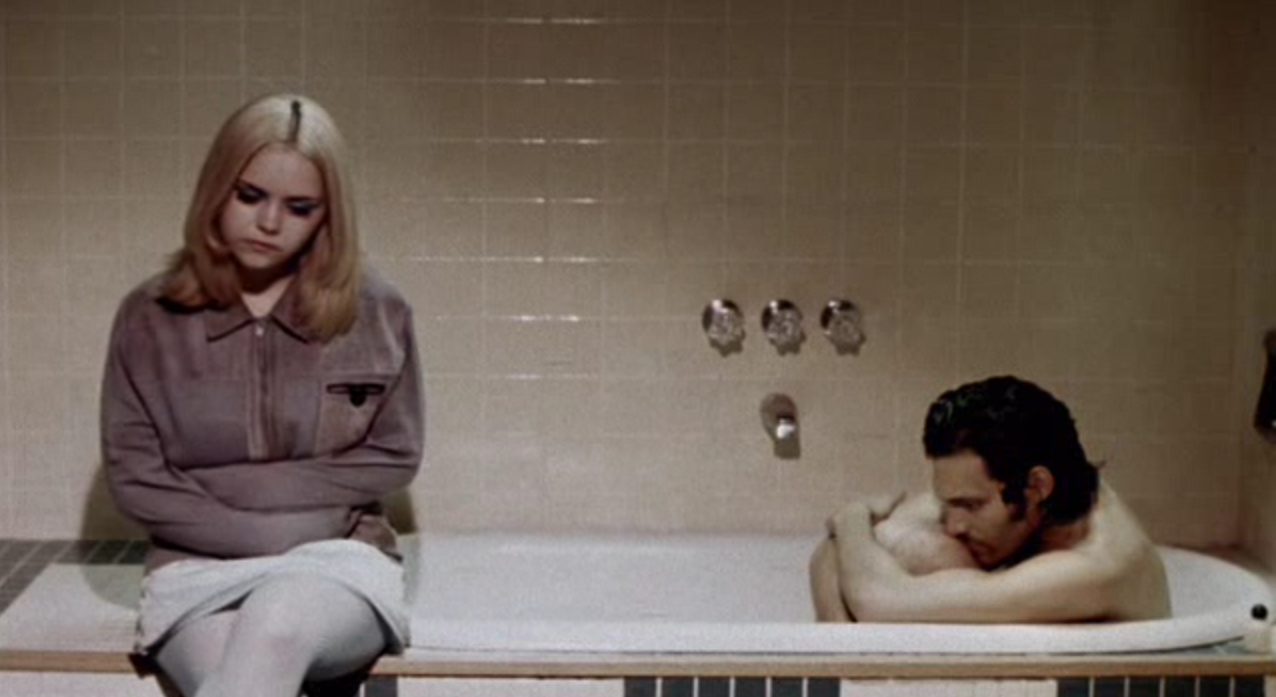
tumblr_lxpf51KSfZ1r2odvuo1_1280

My thoughts: Buffalo ’66 is an ‘indie’ movie, to be sure, but so much darker than anything Wes Anderson could have or would have dreamed up. On its surface, it seems like the perfect film for a community like Tumblr to latch on to (and believe me, many have). The characters are beyond nutty yet also really sad and they get together in the end which is always nice. Nice, that is, if you are into ex-cons hooking up with teenage girls they have kidnapped. I personally wouldn’t go around pasting pictures of the movie with the hashtag #relationshipgoals, but to each his own, I suppose.

Shady ethical questions aside, I really did love this movie. Vincent Gallo has been called a control freak (see above fun fact), but in this case, it worked out perfectly. He was able to put all the pieces together in a way that he might not have been able to do with a partner. It’s difficult to describe the character of Billy Brown (although the word ‘tragic’ comes to mind), and I can’t imagine anyone else playing him besides Gallo. Seeing as how Gallo wrote the screenplay, only he knows the true ins and outs of the character like no one else could’ve pulled off. He disparaged Christina Ricci (his costar) in interviews about the film, and although I think she did a fine job, I don’t think anyone could’ve met Gallo’s expectations for the character Layla. Except maybe Gallo. Maybe he should’ve just been a one man show and taken full control of everything.

The characters in Buffalo ’66 are equal parts cringe-worthy, tragic and unintentionally funny. Honestly, each character could have his/her own analysis but I am in no way qualified or interested to do so. Most people might gravitate towards Billy Brown or his mother, but for me it’s Layla who I think is the most complicated. She justifiably scared when she meets him but then is able to turn into a loving wife when she meets the parents. It’s not very believable, though, which is why I loved the scene so much. I wonder what her motivation was at the time, because it had to be more than just fear of Billy Brown. When she recounts the (fictional) story of how they met the whole thing turns into a young girl having a serious infatuation with someone out of her league. And yet he isn’t, which is why the two stick together. She tells him that she loves him in the end, but is it true love or simply a teenage girl not knowing what she really wants? And Billy Brown reacting to her advances only shows how immature he is emotionally, but I still wanted it to end well, no matter how twisted the ending was.

Final review: 4/5. Let me tell you, this was a complicated movie to review, much more complicated than I originally thought it might be.

Up next: Alphaville
#181- The Ballad of Narayama

Quick recap: A rural village in 19th century has a strange tradition of taking old people to the top of a mountain and leaving them there to die.

There are many weird traditions.

There are many weird traditions.

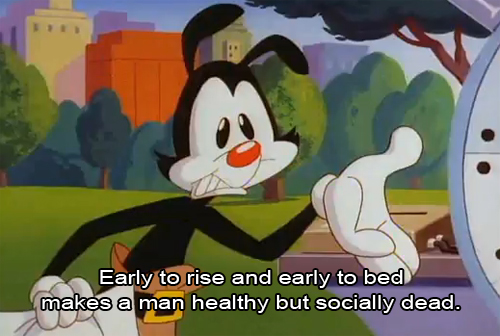
Fun (?) fact: Second time in a row that I am devoid of facts. So instead, I’ll throw out one I personally learned while watching this movie: a ‘yakko’ is the second born son of a family and is not allowed to marry. A ‘yakko’ is also the first born Animaniac and so doesn’t really fit with the definition I learned.

tumblr_lb0s92QPht1qbs8sjo1_500

My thoughts: The first 5 minutes of Ballad of Narayama consist of beautiful shots of a mountain region. The music was woodwind heavy and it felt like I would be watching a nature documentary for the next two hours. Not that I minded, of course, since it would give me a break from some of the weirder things I have seen on this list. And then, two boys came out of their home to pee in the snow. I wasn’t shocked, but it threw off the nature vibe I had been feeling. Still, this seemed like a little serene movie about a village steeped in tradition. That is, until the dead baby showed up in a farmer’s paddy.

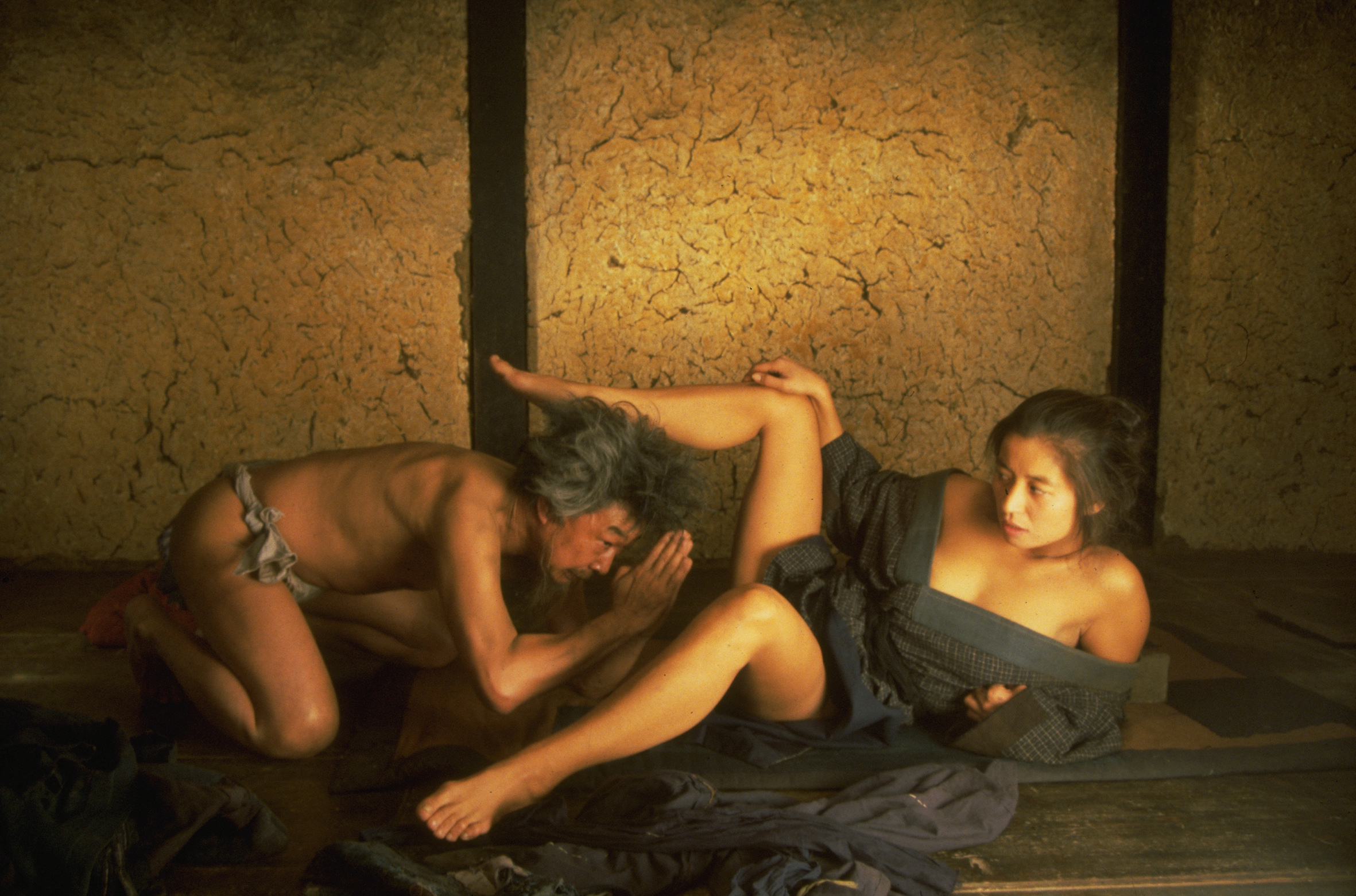
Dead babies usually signal some major plot point and I was surprised the movie ran with something so important so early on in the film. It is the yakko, Risuke, who finds the baby and runs around to his neighbors, trying to find who left it there. He seems more annoyed than anything and it wasn’t long before I figured out that in this village, dead babies are more of a joke than anything else. The movie continued on this way, with village life mixed in with graphic sex scenes and violence. It was animalistic the way these people behaved and it bothered me on some level, I suppose, because this felt realistic to the time period. One of the most shocking scenes involves the family Amaya, who have been stealing from other villagers. A crime for sure, but everyone decides that the only solution is to bury them alive, children and all. It made me physically ill to watch them die, but at the same time it also made sense, if you go back to thinking of these people as animals, doing what they can to survive.

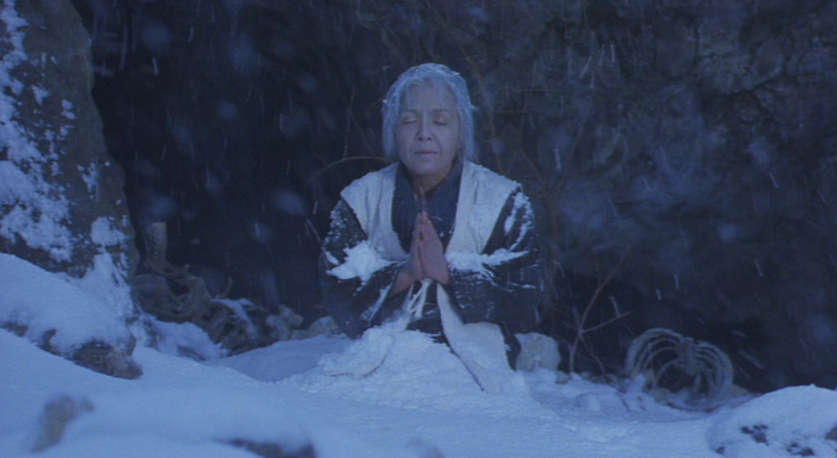
Most of the film revolves around day to day life, but the main plot is that Orin, the family matriarch will be 70 soon. This means that her son will carry her to the top of a mountain, where the mountain god will welcome her and she will see everyone who has died before her. Of course there is no mountain god, but Orin refuses to think otherwise and gleefully looks forward to the journey. The last 20 minutes of the film consist of the trek and there are very few words spoken at this time. My feelings changed at this point because I was finally able to see that Tatsuhei, the son, was human. I could see it on his face, the struggle he was going through-not just physical, but mental as well, as he came to grips with the fact that this was the last time he would see his mother. The end of the journey was the most heartbreaking for me, watching Tatsuhei walk through all the bones of the people that had been left behind for the mountain god and faced with mortality in such a brutal way. It is almost impossible to let her go and yet, that is what she wants. Maybe she knew there was no mountain god or maybe she was näive to believe he would come soon, but Orin seemed completely at peace with everything. As Tatsuhei comes back down from the mountain and back to his life, he seems at peace, as well.

balladnarayama10

Final review: 4/5. Most of the film was shocking but the ending more than made up for it

Up next: Buffalo ’66

#180- Le Million

Quick recap: A man loses a million dollar lottery ticket, which sucks for him because he told all of his creditors that he is rich now and can afford to pay his debts.

those are his creditors dancing for joy because this guy was kind of a jerk and apparently owed a ton of money

those are his creditors dancing for joy because this guy was kind of a jerk and apparently owed a ton of money

Fun (?) fact:  Nothing. Zip. Nada. First time in 180 movies that the trivia page on IMDb was empty, but it’s bound to have happened at some point.

My thoughts: The fact that I had such a hard time finding anything out about Le Million says a lot. It wasn’t a good or bad movie. It just was. For a movie made in 1931, I was most impressed by the sound quality, which is the reason, I think, for including it in The List. The songs (yes, this was a musical) were catchy, although they kind of drifted in and out through the movie, never really beginning and never really ending. It was weird, but also made the movie’s events seem more plausible, almost as if it was a dream.

One of the reasons I didn’t really embrace Le Million is because of the characters. Michel is the jerk who lost the lottery ticket. He’s a penniless artist who has a fiancée but also sees girls on the side, which she totally knows about but refuses to break it off. Classy guy, that one. His friend (or rival?) Prosper is not much better and challenges Michel that if he finds the ticket, he gets half of the fortune. There’s also a mob guy, Grandpa Tulip, who takes the jacket that the ticket was in, and then the opera singer, Ambrosio, who buys the jacket and refuses to return it. I spent most of the film trying to figure out whether I wanted Michel to find the ticket or not, but ultimately rooted for him because his fiancée Béatrice was the one who gave the jacket away initially and I wanted something good to happen to her.

Looking on the positive side, although I can’t really say that I ‘enjoyed’ myself, I certainly wasn’t bored. I never laughed at any of the funny parts but I recognized that they were supposed to be funny, if that’s a thing. One scene in particular stood out: when the opera singer is on stage and Michel sneaks on to take the jacket. It had many elements of Moulin Rouge, including the way the audience was seated. I couldn’t find anything online, but I’m curious if Le Million inspired Baz Luhrmann in any way. It’s also possible that I see Moulin Rouge in practically everything.

Final review: 2/5. A very ‘meh’ movie.

Up next: The Ballad of Narayama

#179- Diary of a Country Priest

Quick recap: A young priest keeps a diary of his time at a parish

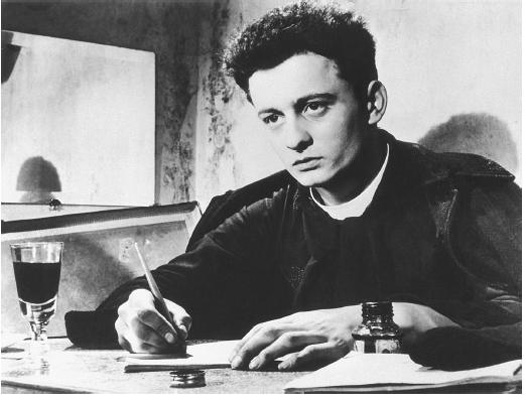
the priest and I shared the same expression throughout the movie

the priest and I shared the same expression throughout the movie

Fun (?) fact: The hand, as well as the handwriting throughout the film belong to director Robert Bresson. Yes, this was the most fun fact I could find about the film, which does not bode well for its rating from me.

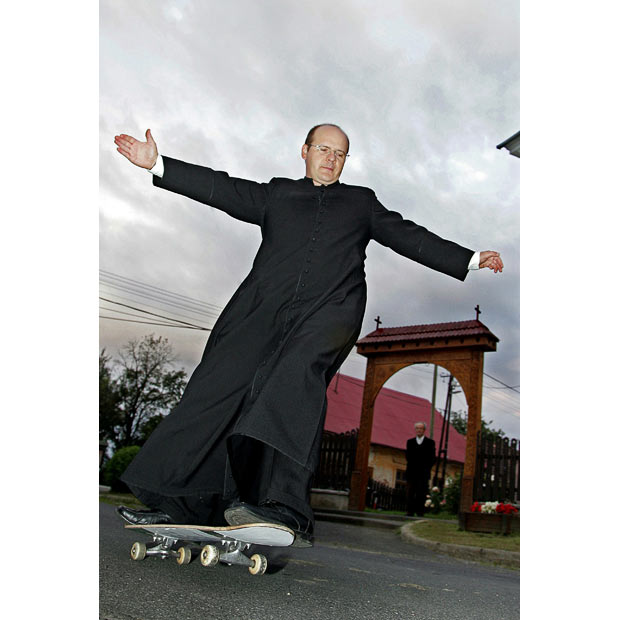
My thoughts: 179 movies in and I’m already getting tired of the ‘sad priest’ and ‘crisis of faith’ trope. Had I seen this movie before Winter Light, I might have appreciated it more, but that’s the way this goes sometimes. Just once, I’d like to see a movie about a priest who learns rad tricks on a skateboard for his congregation. The only crisis of faith he would  suffer would be when he isn’t sure he can master a 360 flip in time for the competition against the rival Baptist church down the road.  I’m not asking for much, you know. Just a skateboarding priest. With blue hair. And maybe the ability to fly.

YES.

YES.

Quite honestly, I’m not really sure what I was watching most of the time. The beginning of the film made me think that the priest had been thrown into a parish that he wasn’t able to handle. He’s unable to make anyone happy and at the first sign of difficulty runs to a nearby priest for guidance. As he starts to interact more with the locals, I felt an almost sinister vibe to the town, from the little girls in Communion class humiliating him to the suicide of the doctor. That would’ve made the movie far more interesting, if it turns out the priest had been sent to a parish full of demons.

The main storyline with the Count was also confusing. Everyone in that house had some sort of issue that involved the priest, but all the issues contradicted each other so much that I didn’t know who to believe, if anyone. Part of me wonders if that was the point, that the priest should’ve just left them all alone instead of meddling in affairs he didn’t belong in, but that also says a lot about his character. Throughout the movie, the priest suffers from some mysterious stomach ailment which finally leads him to seek medical attention in the end. The Count’s daughter comes by to talk, and although she has caused so much trouble,the priest continues to talk to her and calmly explain his actions. This is where the movie turned the priest into a God-like Saint role, putting others before himself, even to the detriment of his health.

It is revealed at the end of the film that the priest has stomach cancer and dies, but not before regaining his faith. It was a decent ending, I suppose, but as a whole, Diary of a Country Priest was a bit too heavy for me to ingest.

Final review: 2/5. Different time and different place, I might’ve enjoyed it more, although this isn’t really the kind of film to ‘enjoy’

Up next: Le Million