#74- Mr. Deeds Goes to Town

Quick recap: After a distant uncle leaves him millions, Longfellow Deeds moves from an idyllic small town to the big city. Once there, he is  taken advantage of and laughed at for such shocking things as giving donuts to a horse and playing the tuba. To make matters worse, the girl he falls in love with turns out to be an undercover reporter who has been writing all the sensational stories about him in the newspaper.

Fun (?) fact: The verb ‘doodle’ originated from this movie as well as the term ‘pixelated’, which was a popular word for a few years and then died out.

My thoughts: There is nothing I enjoy more than an American classic movie, provided I see the following: a spinning newspaper montage, a fainting lady, a climactic courtroom scene, and a random musical number. And boy howdy, did this movie deliver. After the 4th or so spinning newspaper montage, I realized that I had reached American classic movie heaven.
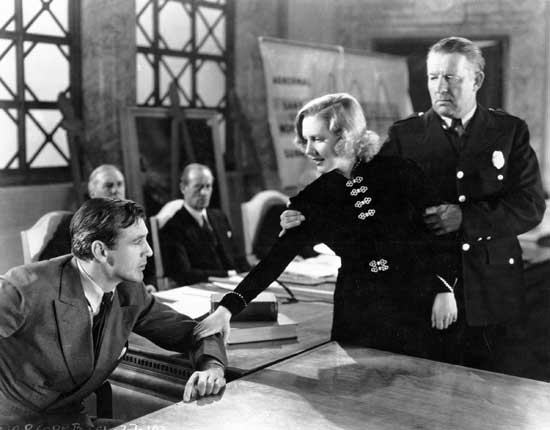
courtroom scene!

courtroom scene!

Seeing as how Mr. Deeds Goes to Town is labeled as a ‘screwball comedy’, I knew there wouldn’t be much thinking involved. I was disappointed with the first 10 or so minutes of the film because I couldn’t understand a word anyone said because they talked so fast. After I turned on the subtitles, however, I really started to enjoy myself. This movie is about as predictable as they come, and that’s okay sometimes. It was relaxing to find myself laughing over the sillier parts and rolling my eyes through the mushier ones. I think I was most surprised by the amount of heart this film had. Gary Cooper as Longfellow Deeds was the perfect fit. He was adorably naive, and yet was sometimes the sanest person around. I genuinely felt for him when the writers made fun of his poetry and my heart broke when he realized the woman he was in love with had secretly been making fun of him the entire time. Plus, Gary Cooper has a strong resemblance to Bill Nye that endeared him to me even more.

bow ties are cool

bow ties are cool

Mr. Deeds Goes to Town is adequately entertaining, but for me, really shines in a historical context. The way the small town is described is not what was really going on, but instead what Americans expected in the Great American Dream. In many ways, this movie sparked that idea of quintessential small town values trumping anything the big city has to offer. The tie in to the Depression was also an apt one. As Deeds tries to do good by not becoming a cynical fat cat, he ends up falling short of his own expectations when he realizes all the farmers he could be helping with his fortune. The scene were the farmer barges in on Deeds and points a gun at him was a little schmaltzy, but the movie’s heart was in the right place.

I felt the courtroom scene went on too long and all loose ends were tied up a little too neatly. As more and more witnesses came forward with their shocking tales of Deeds, I wondered how he could possibly explain away every person’s complaint, but somehow he did . I knew from the first few minutes of the film that I would get a happy ending, but I suppose I was hoping for a little more substance than what I got. Then again, this is an American classic, and a courtroom scene is a necessary trope.

Final review: 4/5. I’d watch again just for Gary Cooper.

Up next:The Bride of Frankenstein 


#70- City Lights

Quick recap: Charlie Chaplin plays the Tramp, a guy just trying to get by. As he bounces along the city, he falls in love with a blind woman and becomes friends with a millionaire who only seems to like him after he has been drinking.

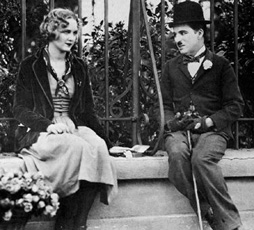
City-Lights-Charlie-Chaplin


Fun (?) fact: The gibberish heard at the beginning of the film as the statue is being revealed was done by Chaplin. It is the first time his voice can be heard on film.

My thoughts: I was lucky enough to get to enjoy City Lights on the big screen at the Alamo Drafthouse. I almost went insane at the beginning of this project, sitting through all of those silent films. Many of them were good, but it still wore on me after awhile. It’s the very reason I decided to change things up and watch the movies in a random order, rather than chronologically. My love for the silent film almost returned with Metropolis and now I can fully embrace it again with this film. These early films were created for the big screen and I doubt I would’ve enjoyed Chaplin as much if I had been sitting at home. One of the best parts of the experience was not the movie itself, but being able to participate as an audience member. We collectively swooned when the Tramp was courting the Blind Woman and laughed when he got himself into another situation. I don’t use the word often but it was delightful, being a part of this. I felt like I had been transported back in time, watching it as if it had just come out.

city-lights-3


I admit to not knowing much about Chaplin before watching City Lights. I knew him as a silent film star and to me that meant a lot of slapstick. At the time this film was made, ‘talkies’ had started creeping into the moviegoer’s experience. Despite the trend, Chaplin firmly believed that he could make a successful silent film, and he was proven correct tenfold, seeing as how this movie is considered as one of the greatest of all time. From the very first scene, when the Tramp is napping on a statue that has just been revealed to the public, I was hooked. Chaplin had a way to convey emotions so eloquently without saying a word. He is charming, to the point of being adorable. He is a good person, just trying to get by. And when bad things do happen to him, he takes it all lightly and pushes forward. One of my favorite scenes that show what a genius Chaplin is, occurs right after he and the Millionaire have fallen into the water. The Millionaire invites the Tramp back to his house, and as they ascend up the steps, he turns around and grabs the flower he had bought from the Blind Woman. It was such a simple gesture, but the way he does it conveys all of the love that he has for this woman.

I was a little apprehensive about seeing all the slapstick comedy because it’s not really my thing. I was worried that the outdated form would distract me from the movie, but it did the opposite. Instead, it showed me the beauty of a perfectly timed bit. The scene where the Tramp becomes a boxer in order to earn money for the Blind Woman is like watching ballet. It was very funny, but also beautifully done. I think I laughed hardest during the scene when the Tramp swallows a whistle and makes a sound every time he breathes. Once again, Chaplin has no need to say anything because his face is so full of expression.

city-lights-prizefighter


And of course, the ending. The ending to City Lights is considered one of the greatest ever done. Not because there is anything spectacular, but because of its simplicity and once again, beauty. Throughout the film, the Tramp does what he can to become closer to the Blind Woman. He cares for her daily after she falls ill and does what he can to find money so that she can continue to live in her apartment. Somehow, the Tramp is able to get enough money to also help the Blind Woman see. The final scene happens when the two meet for the first time and she can finally see. The Blind Woman had been convinced the Tramp was actually a millionaire and the expressions she conveys as she realizes it is really this man in tattered clothing, is perfect. But the real beauty of it all is watching Chaplin as he is so excited to be seen and so, so hopeful. I am not a very emotional person when it comes to movies, but this one really got to me. It was also comforting to hear other audience members sniffling as the lights went back on.


city-lights-1931-charlie-chaplin-silent-movie-review-image-42Final review: 5/5. Of course. If had to choose one movie to make people watch from this list, this would be it.

Up next: Cleo from 5 to 7.


#22-It Happened One Night

Quick recap: Socialite Ellie Andrews has married a man her father disapproves of. When he annuls the  marriage, she runs away to be with her husband. Andrews embarks on a journey to New York by bus that proves difficult because she is rich and also a woman. Peter Warne, a journalist, steps in to help her manage her money and not get taken advantage of because she is rich and also a woman. At some point Andrews falls in love with Warne and of course everyone lives happily ever after. Except Andrews because she is rich and also a woman.

he's teaching her how to dunk her donut properly because she can't even do that right

he’s teaching her how to dunk her donut properly because she can’t even do that right

Fun (?) Fact: The next time someone mentions that they love this movie, I’m going to respond with, “Do you know who else loves this movie? HITLER.” Because he totally did. Apparently.

I think I just wanted to mention Hitler so I could post this.

I think I just wanted to mention Hitler so I could post this.

My thoughts: If there is 0ne genre of movie I detest, it would have to be the modern ‘Romantic Comedy’. I can’t quite pin down why I hate them so, but it might have to do with the fact that the woman always seems desperate for a man and falls in love with him in some zany way. And then when I read the description for this movie, I realized that THIS is where it all began and for some reason that gave me hope. Maybe the original romantic comedy is delightful and really funny and sweet and the modern genre has just lost its focus.

NOPE.

As a disclaimer, if I look at this movie in the correct context of 1930’s American culture, I can see why it was such a big hit. It’s an interesting premise to have love blossom on a bus and the main characters are gorgeous. But I’m watching this in 2013 and the plot just doesn’t hold up as well. Ellie Andrews is supposed to be this hard headed woman who will do what she pleases, but what she wants is a man. She needs a man. And she has absolutely no idea how busses work. She seems so strong in the beginning, but by the very first night of running away, she is leaning on Warne’s arm for comfort. She misses the bus the next day and Warne is there to rescue her. At one point he even takes away her money because she isn’t using it properly. She becomes even more helpless as time passes. There is one scene when the two of them try to get some rest in a haystack. Warne walks away for a minute to find food and Andrews FREAKS out. I know that the scene is important to show that she is in love, but she seemed more like a child than an ‘independent woman’. I suppose the two are perfect for each other as one needs constant rescuing and guidance and the other is perfectly happy to fill that role.

And then there is the violence and threatening of violence. I get that that sort of thing was hilarious a long time ago, but it just makes the movie seem dated now. 10 minutes into the first scene, Andrew’s father is slapping her for being silly. In one of the most important scenes where Warne declares his love for Andrews he says, ‘She needs a guy who’d take a sock at her once a day whether she deserves it or not.’ That’s true love, right there.

Plot aside, I really did enjoy the bus scenes with all of the colorful characters and I also fell in love with the motel houses (?) that they stayed in each night. It made me want to buy a bus ticket right then and there, although I don’t think I would have as grand a time. This movie was also set in the 30’s and you know what that means….. spinning newspaper montage!!! No classic film is complete without it.

And Clark Gable, we can’t forget about him. He was the sole reason I found myself drawn to this movie more than I expected to. He was charming and funny and I think I fell in love at some point. The one scene I found truly hilarious was of Warne undressing himself in front of Andrews in an attempt to persuade her to stay with him. I can see why everyone went crazy over him back then.

yet another novel way to threaten a woman

yet another novel way to threaten a woman

Final review: 3/5. This was a tough one to settle on. I disliked the helplessness of Andrews but on the other hand, CLARK GABLE.

Where/how I watched it: Netflix DVD

Up Next:  Ariel, my first foray into subtitled foreign films. Oh boy.


#11-The Thin Man

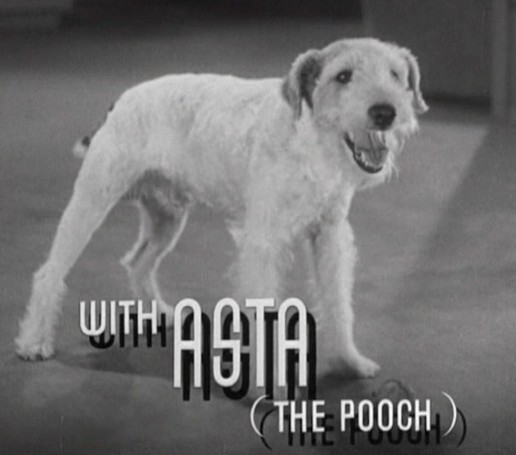
Quick Recap: Clyde Wynant, eccentric inventor, has disappeared. His friend Nick Charles, world famous detective,and wife Nora take on the case to help solve the mystery. While searching for Wynant, his lover/secretary is murdered. Wynant becomes suspect number 1 and it is up to Charles to clear his name and find the real killer. There’s also a cute dog. A ridiculously cute dog.

Image

I don’t like dogs, but this one won me over

Fun(?)Fact: This movie was so popular that it inspired a series of movies centered around Nick and Nora Charles, as well as a radio broadcast and tv show.

My thoughts: In writing about this movie, I think it’s important for me to separate my thoughts into two parts. The first part is the actual mystery of Clyde Wynant. I was mildly interested in who the real murderer was, and I did enjoy the few twists and turns. I especially liked the end of the movie when Charles hosts a dinner party for all of the suspects so that he can reveal the true killer. It was a little over the top, but then again, this is 1930’s cinema.

Image

Every classic movie needs a spinning newspaper montage

So, mystery aside, the real fun in this movie came from the banter between detective husband and wife, Nick and Nora Charles. I genuinely laughed at their exchanges and I was surprised by how strong their chemistry was together. Nick treated Nora as an equal and as a true friend. It was easy to see how much they loved each other, but also how much they respected and enjoyed each other. The character of Nick Charles is especially interesting. The creation of a brilliant, smart ass detective has been run into the ground. Yet, in this context, it’s refreshing and sincere. In most of the scenes, Charles is drinking heavily, to the point one wonders about his alcoholism. He sobers up immediately once he realizes something about the case and it’s amazing to see such a quick transition.

Final review: 2/5. I wouldn’t watch this again. Nick and Nora were charming and the dog was damn cute, but the mystery was meh. It was interesting the watch the beginning of the detective genre take off, but I wouldn’t want to sit through it again.

Where I watched it: Netflix DVD

Up Next: North by Northwest