#268- The 39 Steps

Quick recap: A man goes on the run after a woman is found dead in his apartment. However, the woman was actually a spy so not only does the man have to hide from the law, he is also tasked with taking down a bunch of villain spies out to steal information.

Fun (?) fact: The sheep that were brought in for one of the scenes ate up the plants and bushes and the crew had to keep replacing them. Sheep are going to do what sheep do.
Film_56_39Steps_original

Surprisingly, no one said ‘by jove!’ in this movie.

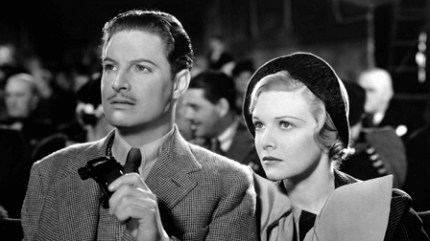
My thoughts: Seeing as this is my 6th Hitchcock film, I now feel qualified to have an opinion of him as a director. And so far, I think I like him best when he isn’t doing horror. It’s almost comforting to watch his films, knowing that even when this movie was made in 1935, Hitchcock had his trademarks set up: a man falsely accused, a MacGuffin, a director cameo, stairs. It’s all there. At the same time, each film is wildly different from the rest and seeing as this one was all about spies, I was fascinated even more than I normally am.

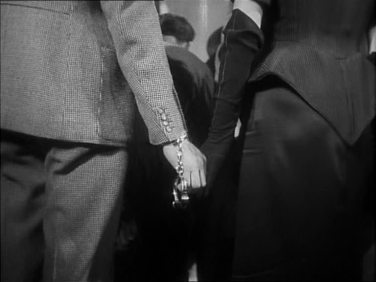
The character Hanney, the man on the run from the law, is one of my favorite elements of the film. When the movie opens, he’s just a regular guy, maybe hoping to get some action from this random woman who enters his life. But when she’s murdered by an evil spy ring, he gets thrust into the spy life. Throughout the movie, he never really does anything like a stereotypical spy and yet he has enough wits about him to stay one step ahead. In doing so, it made me root for him and want him to solve the mystery before the bad guys got to him first. It also surprised me how much I liked the character Pamela, who ended up handcuffed to Hanney, despite having no previous involvement with either side. She wasn’t just a dumb blonde and made her own decisions, thank you very much.

Seeing as how this movie was made over 80 years ago, I don’t really feel like I’m spoiling it to say that the secrets The 39 Steps were trying to smuggle out of the country were housed in a man called Mr Memory. It was a huge surprise to me when this was revealed, but I also kind of felt bad because his act was a super lame party trick. His schtick was basically that he knew a ton of facts and the audience could shout out obscure questions for him to answer. I mean, considering there was no Wikipedia back then, I guess it’s cool, except how does anyone know if he’s telling the truth? Except if you already know the answer to the question you asked and then in that case, you are just as lame as this guy. Anyway. Just as Hanney figures out he is the key to the whole thing, Memory is shot, but not before divulging his secret to Pamela and him. As he takes his dying breath, Hanney and Pamela hold hands and it was a beautiful ending to actually a really good movie.
the39steps2

Final review: 4/5

Up next: Happiness

#258-The Bridge on the River Kwai

Quick recap: A group of PoWs build a bridge in a Japanese camp while another group of British soldiers make plans to blow the whole thing up. It sounds much more wacky than it actually was, sorry to say.

the-bridge-on-the-river-kwai

Elephants helped build the bridge and took breaks whenever they damn well pleased.

Fun (?) fact: The story is loosely based on the relationship between Lt. Col. Toosey and Maj. Risaburo Saito, who was actually a reasonable guy. Toosey defended him during the war crimes tribunal and after he died, Saito went to England to visit his grave.

Philip_Toosey_1942

Lt. Col. Toosey, whom the character Col. Nicholson is based on

My thoughts: War is hell, man. This is the thought I had not while watching the movie, but earlier today as I was scrolling through pictures of actual PoW camps from WWII. Not that I expected a film made in 1957 to be so realistic, but looking at a photo of the character Shears, with his muscles upon muscles and golden skin tone from hours of manual labor, next to a photo of a real PoW, all skin and bones, it startled me, to say the least. And, maybe unfairly, took away somewhat from what I had been feeling about the film.

The Bridge on the River Kwai is based loosely on real life, so I can’t down the tone too much. In the film, Col. Nicholson is the leader every soldier wants. He’s a rule follower to the point of risking his life to do what’s right and it pays off for him and his men. He eventually convinces Col. Saito, head of the Japanese camp ,to allow Nicholson and his officers to take over constructing the bridge, because it just so happens that a few of the men are engineers. It’s oddly convenient, but this is supposed to be the inspiring tale to end all inspiring tales, so let’s just run with it. The British soldiers respond much better when they are aren’t constantly threatened with death and so the bridge is built just in time.

Meanwhile, British forces are planning on blowing up the very bridge the soldiers worked so hard to construct, because, like I’ve said, war is hell. Had the movie only focused on the soldiers, I would’ve written off the whole film as shmaltzy, patriotic entertainment, but adding this element of Allies essentially working against each other makes everything so much more complicated. I wanted to root for Shears, who escaped the camp in the beginning, only to come back to help destroy it, but I also really liked the eventual friendship between Saito and Nicholson. In the end, SPOILER ALERT the bridge gets destroyed and it felt like a defeat. That might not have been the purpose of the movie, but that’s what I’m taking away from it. It felt unfair for everyone because three of the British soldiers on this secret mission died, the bridge was blown up and the train that the Japanese sent would’ve been used to transport sick soldiers to another camp. So, not all the heartwarming when you think about it. All I learned from this movie is that there are never any easy decisions in war and the decisions you think you are making for the good of many, might not be good after all.

Final review: 4/5. Alec Guiness as Col. Nicholson is worth watching for his role alone.

Up next: Paris, Texas


#253-12 Angry Men

Quick recap: 12 guys ( some angrier than others) must decide whether a kid murdered his father.

giphy

Fun (?) fact: To increase tension, the first third of the movie is shot above eye level, the second eye level, and the third below eye level.

My thoughts: Although I hadn’t seen 12 Angry Men until a few nights back, the movie ran through my mind constantly when I sat on a jury a few years ago. More than anything else, I was terrified I would end up in the Henry Fonda role and have to defend my verdict against everyone else. I know some people are born into that role, but I’m definitely not. Luckily, the trial was about hazardous waste that leaked out of some expensive bags so I didn’t have to decide whether or not someone was murdered.

Cinema-wise (totally a word. Shut up.), this movie is amazing, maybe even one of the best. The acting is phenomenal, which it has to be because people talking is the only action that takes place. On the surface, it sounds like the most boring premise ever- two hours of men deliberating. But director Sidney Lumet managed to pull out off so well that even though I knew the ending, I was still on the edge of my seat.The camera angles mentioned above really brought out the claustrophobia and by the climax  it felt like the walls were moving in on everyone.

12 Angry Men is lauded as the perfect movie to showcase that the justice system can work. But to me, it was terrifying to imagine how many juries are without a Henry Fonda.And how, even though there were some very angry men, most of them were at least a little open to hearing the opposite side. It’s a nice fantasy, but real life is much more messy. I try to be somewhat optimistic about humanity, but nothing squashes that quicker than sitting in a pool of jurors and listening to person after person give bullshit excuses as to why they can’t serve. I know that’s the whole point of jury selection, to actually choose people who will listen and make a good judgement, but it’s disheartening to know how many people don’t take the responsibility seriously. On an even more terrifying aside, it occurred to me halfway through the film that what if the kid was actually guilty and Henry Fonda is about to convince a group of people to let a murderer free? It goes both ways, I suppose.

Final review: 4/5. It was a little schmaltzy at times, but overall very well done and about as exciting as 12 men arguing can get.

Up next: The Jerk


#249- Bob le Flambeur

Quick recap: Bob, a gambler, is almost broke- you guessed it- from gambling. Instead of bowing out gracefully, he decides to plan a heist to rob a casino.

Film_150w_BobFlambeur_bw_original

Fun (?) fact: Stanley Kubrick once said that he gave up doing crime films because of Bob le Flambeur.

url

My thoughts: When I think of the genre ‘crime film’, I picture a bunch of hot guys in suits being all clever and flirty and through sometimes bumbling efforts, somehow end up pulling off the heist. Bob le Flambuer invented all that. Being French, however there is an undercurrent of sadness and a lingering feeling that even if the robbery does go through, it won’t change anything for anyone, so why bother, really?

So, this isn’t the most fun crime film I’ve watched, but it was definitely interesting to see such an American concept integrated with something so quintessentially European (in case you are keeping count, I’m pretty sure that’s the most pretentious thing I’ve written on this blog yet). The beginning of the film, as Bob describes Montemarté, reminded me so much of Lola or Cleo From 5 to 7. That makes sense because director Jean Melville is considered the father of French New Wave films. I loved the scenes with Bob interacting with his friends. He seemed so suave, it’s no wonder even the police loved him. Yet, there was this lingering sadness to him that I also liked. He wanted to pull off the heist, but not as a ‘screw you’ to society. Instead, he was doing it as a last ditch effort to find happiness.

The planning of the heist, including the gathering of the team, bored me the most. I couldn’t keep up with all of the men and their roles and it was clear to me early on that this wouldn’t end well. Bob, however, shouldered on, against everyone’s advice. I admire that, though. His insatiable urge to come out on top shielded him from logic, which is a very French thing to do. The end of the movie drew me back in, as Bob’s luck changed inside the casino. He was finally winning the hands and by the end, had won so much money that he completely forgot about the heist going on downstairs. The police were there, though, and by the time Bob remembered, he too had been rounded up and handcuffed. Being Bob, he managed to stay on top one last time as the casino staff shoveled in the massive amounts of money he had won. It was a very smart ending, to show Bob succeeding in the only way he truly cared about.

Final review: 4/5

Up next: The Crying Game