#129- Gimme Shelter

Quick recap: This documentary follows the Rolling Stones on their worldwide tour in 1969, although the focus is mainly on the tragedy at the Altamont Speedway December of that year.

The post will be Mick Jagger heavy. Deal with it.

The post will be Mick Jagger heavy. Deal with it.

Fun (?) fact: Meredith Hunter, the guy who was stabbed by the Hell’s Angels, was not actually murdered during ‘Sympathy for the Devil’ but instead ‘Under My Thumb’.
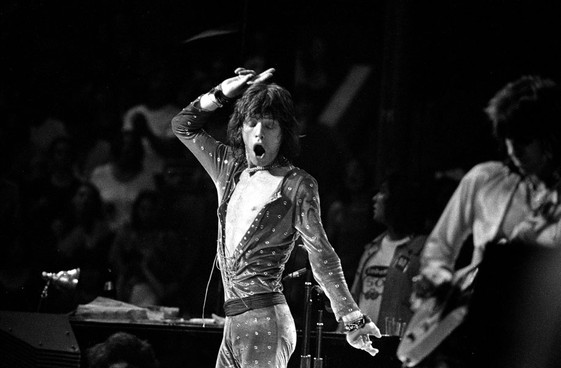
RollingStones1972PA090311

My thoughts: Mick. Jagger.  Oh my god, Mick Jagger. I know that the documentary touched on a few complex issues in the music world, but let’s just sit for a minute and appreciate Mick Jagger. Go ahead. Take a minute. I’ll be right here.

Good? Ok. So I’ve never been a big Rolling Stones fan, although I certainly appreciate their talent and influence on virtually every rock band in existence. I think the reason I never got into them is because I’ve only heard their biggest hits on classic rock stations and it never occurred to me just how important they were/are. After watching Gimme Shelter, I get it. What’s funny about that is that this isn’t the sort of music documentary that most people are familiar with: a lighthearted look at a hard working group who spend long days on the road, meet with thousands of fans and still manage to find time to goof off.* Gimme Shelter is a critical look at The Stones and their decision to hire Hell’s Angels to protect them as well as the counter culture movement in general.
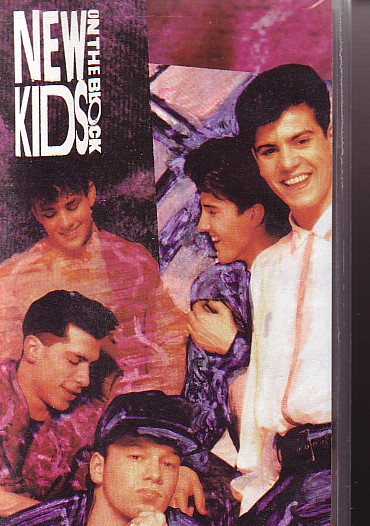
* The only music documentary I am familiar with. Unfortunately, not on this list.

* The only music documentary I am familiar with. Unfortunately, not on this list.

My take on the whole thing is that everyone had a hand in this and yet who’s really to blame? Starting with the Rolling Sones, when it was announced they would be doing a free concert at a speedway, I knew things wouldn’t end well. They were one of the biggest groups at the time, if not the biggest. Practically the entire country would try to come to this. Which leads to their decision to use the Hell’s Angels to protect them. I read that there is a Hell’s Angels in Britain that the Stones used before, but they were much less violent. It seems that they didn’t know what they were getting into until it started getting out of hand. Which leads to the audience’s part in all of this. There were over 300,000 people in attendance that night and I would guess that most there were on something. People showed up expecting a Woodstock but instead it turned ugly and violent. Meredith Hunter’s death is incredibly sad, but as it was later noted, he had pulled out a gun and one of the Hell’s Angels stabbed him in self-defense. It’s hard to say how this all could’ve been prevented except to maybe have not had the concert at all.

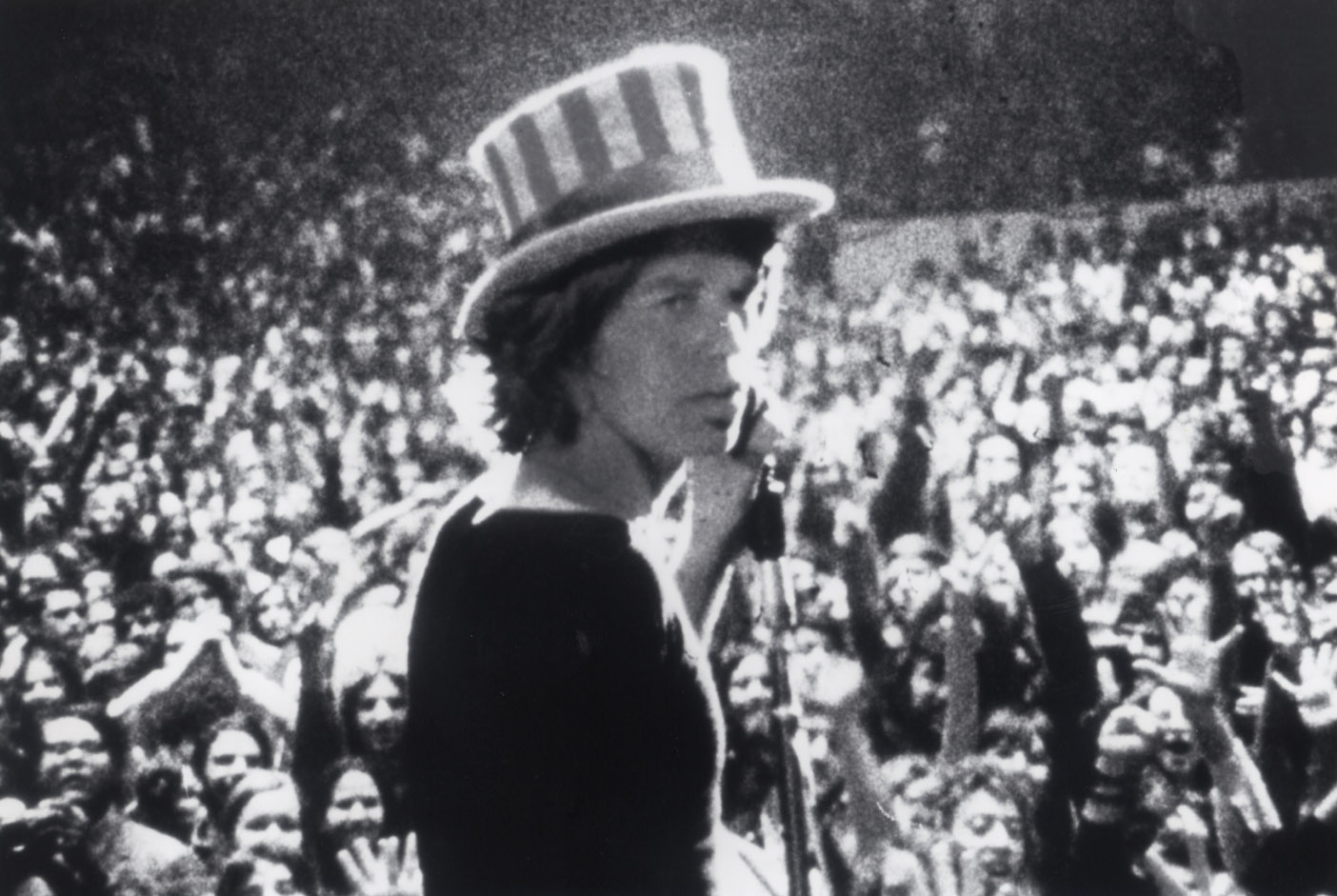
It’s powerful enough to see the crowd start to get out of hand and even more powerful to actually watch as the death occurs. The Stones keep playing during all of this although they do say at some point that a doctor is needed. I imagine that stopping the concert at this point would’ve been useless because that would’ve probably started a riot. So it isn’t until the end of the movie that we see The Stones sitting and watching the footage of the concert and feeling the weight of their consequences. And it isn’t even that they are to blame necessarily, but that there are consequences to everything, especially with  such explosive fame as theirs.
Gimme-Shelter_image2

Final review: 4/5. A little slow at first but very powerful at the end.

Up next: The Burmese Harp

#126- The Thief of Bagdad

Quick recap: A thief-who lives in Bagdad- has a lot of fun stealing stuff until he falls in love with the princess. Basically it’s like Aladdin but without the monkey and the altruistic reasons. And without Genie (RIP Robin Williams).

Instead of getting a Middle Eastern guy to play the Thief of Bagdad, they got Douglas Fairbanks-the whitest name ever.

Instead of getting a Middle Eastern guy to play the Thief of Bagdad, they got Douglas Fairbanks-the whitest name ever.

Fun (?) fact: The special effects for this movie are amazing, considering it was made in 1924. During one scene, as Fairbanks is jumping in and out of the large pots, he actually installed trampolines in each one to make it easier to hop.

I suspect this was also done with special effects. Can't be sure, though.

I suspect this was also done with special effects. Can’t be sure, though.

My thoughts: A bonus fun fact: I started this blog chronologically, but after sitting through 9 silent films I couldn’t take it anymore and gave up. It wasn’t even that they were bad, but that they were so EPIC.  It was hard to continually sit through something so heavy and long (that’s what she said) and know that the next movie would give me no reprieve. But then I saw A Clockwork Orange at the Alamo Drafthouse several months later and it renewed my passion. All that to say I made the right choice to watch randomly so that when the time came for another silent movie, I’d be ready.

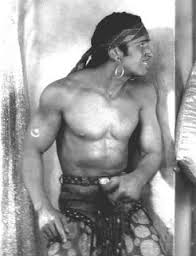
The Thief of Bagdad comes from the 1001 Arabian Nights collection of stories  so it’s basically your quintessential adventure movie. Fairbanks, who plays Ahmed the Thief, was the go to actor for all things adventure, starring in movies such as Robin Hood, The Three Musketeers and The Black Pirate. He spends the entire movie flexing his muscles and practically winking at the camera, to show the audience how awesome he is. It was difficult to root for him at times because he was a thief just for the sport of it instead of helping others.Not that I was expecting much, but Aladdin is the only story I know from Arabian Nights and that guy stole bread to give to children. Kind of a lot to live up to, though.  Fairbanks was enjoyable to look at, although the thin lips bothered me. Was that a fashionable thing to have or did all people in the 20s just have naturally thin lips? This bothers me more than it should.

Not a complaint, but it seems like he should've been able to steal a shirt at some point.

Not a complaint, but it seems like he should’ve been able to steal a shirt at some point.

If there is any reason to watch The Thief of Bagdad, it’s the setting. Director Raul Walsh had the set built on 6 1/2 acres of land and spared no expense. Every detail is beautiful and ornate. The fact that it was made in 1924 makes it all the more inspiring to think of the work that went into making this movie.

Final review: 4/5. When you take into account that the story came from an ancient book, the racism is not as bad as I expected.

Up next: Singin’ in the Rain

#121- Persona

Quick recap: Netflix told me that this was a story about a nurse who cares for an actress who is unable to speak anymore. The two move to a summer cottage so that the actress can recuperate and in the process, the two women form a bond. Nice try, Netflix, but you aren’t tricking me that easily.

Netflix also neglected to tell me about the giant spider I would have to encounter in the opening.

Netflix also neglected to tell me about the giant spider I would have to encounter in the opening.

Fun (?) fact: The opening sequence features among other things, a cartoon shown upside down, A GIANT SPIDER, a lamb being slaughtered and Jesus crucified. It was all very weird and unsettling to me,but it turns out all the images reference other Ingmar Bergman films.

My thoughts: This is my second Bergman film, which pushes me ever closer to the line of pretentiousness. Not too close however, because I can’t understand a damn thing from either movie without spending a couple of hours researching what the hell I just watched. It makes me feel like I’m back in high school, looking up the meaning of almost every line in a Shakespeare play on Sparknotes and being so proud of myself for finally getting it. And then a minute later regret overcomes me and the whole piece of work has been cheapened just a little.

Just like Winter Light,  I loved how stylized and simple everything is. The film was shot in black in white and the characters also wear dark and light clothing. Watching the two converse (the actress couldn’t talk so it was just the nurse talking) was like watching a play where the focus is on nothing else but the characters. In some ways it made the film easier to identify with but in other ways, it just made everything seem significant. Why was Elisabet perched on that rock? What does that rock stand for? Alma cuts her left wrist, not her right. What could it mean???

The idea of Persona is an interesting one. It certainly drew me in more than Winter Light did. In the beginning of the film Alma is seen as the stronger of the two since Elisabet is unable to speak or do much. As the two become closer at the summer cottage, Alma starts to divulge some dark secrets, including an abortion she had after sex with a couple of underage boys. It’s at this point that Elisabet becomes the sane one. After a night of drinking, Alma observes how much alike she and Elisabet are, which references the title of the film and the idea that we see ourselves in others, but not always in the best way. The most mind blowing scene is when Alma confronts Elisabet about her past and a son that was born after failed abortion attempts. Elisabet’s face becomes more and more pained as Alma continues and then in one shot, it appears as if the women’s faces have merged together.The story could easily be Alma’s.  The realization horrifies her as she can truly see who she is and so Alma is finally able to escape.

url

Final review: 4/5. I can see myself watching this again, this time paying more attention to detail.

Up next: The Burmese Harp

#120- Murder, My Sweet

Quick recap: Detective Philip Marlowe has been hired by an ex-con to find his missing ex girlfriend. Somehow this also turns into a jewelry heist and murder mystery. Always with the murder mysteries, noir films.

murder_2

Fun (?) fact: The film was originally titled Farewell, My Lovely but was changed because audiences thought it was a musical. If anything, I think this speaks more about the advertising department for the film than the initial confusion.

My thoughts: I’ve mentioned my least favorite genres at length as of late, but now I’m glad to talk about a new favorite- the film-noir. I’ve watched a few already and really love how dark they can be, and yet have such a quick wit about them . Murder, My Sweet is no exception. If I had to describe what film-noir was to someone, I would use this movie as a prime example.

The mystery at the heart of the film is a complex one and I’ll admit to still not completely understanding some parts. Not understanding a plot would annoy me in other situations, but it’s all par for the course in this type of genre. I wasn’t able to figure out where the ex-girlfriend was until the very end and I’d like to say it’s because of the intricate plot, but it’s most likely because I’m the worst at solving mysteries. I couldn’t even handle  Encyclopedia Brown as a kid because the stress of solving the puzzle, mixed in with the crushing disappointment of knowing the answer was right in front of me the whole time was too much for a 7 year old to deal with. In a positive light, if I had figured out the ending to Murder, My Sweet I wouldn’t have been as entertained.

I loved Dick Powell as Detective Philip Marlowe. He was fearless when it came to hunting down clues and never lost his cool. I’m not sure detective work is really a good choice for him in the long run however, on account of how easily he blacked out throughout the movie.The scene where he wakes up after being drugged is my favorite because of all the work it took to put the viewer in the perspective of someone who has lost his mind. The camera’s lens was made to look like spider webs had formed in the room, a perfect symbol for that foggy feeling we all feel at some point. Hopefully not because we have been strangled by a dim witted ex-con, but I still get it.

The black pool opened under my feet again, and I dived in

The black pool opened under my feet again, and I dived in

Some favorite tropes I observed in Murder, My Sweet:

  • beach house as a scene of the crime (seriously, I’m staying away from beach houses)
  • making out with all the girls, even the ones who are about to murder you
  • flashbacks!
  • police interrogation at the beginning of the film to launch the story
  • gun mishandling- always a laugh

Final review: 4/5. This one was a lot of fun, but still a little to complex for its own good.

Up next: Persona