#49- Poltergeist

Quick recap: A normal suburban family has to deal with the fact that something in their house wants to harm them. What starts out as supernatural pranking (chairs moving on their own) turns into a nightmare when the youngest daughter gets taken away by the poltergeist.

Poltergeist-movieFun (?) Fact: Many people believe the film is cursed because real skeletons were used in the swimming pool scene instead of fake ones (they were cheaper). During the franchise’s history, the actor who played Carol Anne died at 13 and the actor who played the oldest daughter was murdered. Seems to me everyone should’ve heeded their own advice and refrained from messing with the dead.

My thoughts: There is a rule of childhood that says at some point in your life, you will spend all your waking time attempting to scare yourself to death. I have vivid memories of riding my bike to the local video store and perusing the Horror section, trying to find something that would traumatize me. Despite the myriad of choices, I always settled on ‘It’ because there was nothing in the world more scary than clowns living in the gutter and killing children. If I had bothered to branch out once in awhile, this movie would’ve indeed been at the top of my list for creating terrifying nightmares.
just in case you needed a reminder of your childhood terror

just in case you needed a reminder of your childhood terror

If I was in the business of cremation, I would totally use parts of this movie as advertising against burial. The whole plot of Poltergeist centers on houses being built on top of an old burial site so if cremation had been more popular a long time ago, this whole thing wouldn’t have happened. In all seriousness, cremation solves so many problems! Besides haunting, it also helps cut down on land being used for cemeteries as well as prevents a future zombie outbreak.

Although there was nothing that truly scared me, there were plenty of creepy scenes. The ‘scariest’ part for me was probably the scenes when Carol Anne was talking through the tv, especially when she says she is scared of another person with her. It reminded me of the book, ‘House of Leaves’, which is about a house that is bigger on the inside than outside (no, not the TARDIS). There are a few scenes in the book where the inhabitants are able to hear people talking and know they are inside the house, even though no one can find where the voices are coming from.

I'm still not sure whether I actually finished the book or not

I’m still not sure whether I actually finished the book or not

In the category of ‘ easy things that could’ve prevented everything from happening’, those children sure did have some creepy toys. I mean, who in their right mind would think that clown doll was appropriate for a child? At that point, you are just asking for it. I did appreciate the C-3P0 light switch that looked like a demon in later scenes, though.

poltergeist-clown

As an adult, Poltergeist didn’t really scare me so much as make me think, ‘What the hell would I do in this situation?’ It was fascinating to think how a changed perspective can still make a movie scary, but in a completely different way. I think what terrifies me most is the idea that I’m the one in charge now. I have a 4 year old that I would do ANYTHING for, so it was completely realistic to see how the parents reacted during the film. When the movie was over, I turned off the lights and my heart began to race a little but then I went and checked on my son who was fast asleep and I felt fine.

Final review: 4/5. A near perfect horror film. It was a great mix of over the top terror and excellent effects.

Nightmares: of course! It took me awhile to fall asleep and once I did, I can’t remember anything specific. I did however, wake up a few times in the night to a sense of dread.

Up next: more Horrorfest!


#44- All the President’s Men

Quick recap: In the early 70’s,  journalists Bob Woodward and Carl Bernstein were responsible for bringing the Watergate scandal to light. What starts out as a minor break in at the Democratic Headquarters eventually leads higher and higher up into the Republican Party and eventually implicating  then-President Nixon. SPOILER ALERT- Nixon is forced to resign.  I apologize if anyone was spoiled by that previous statement.

This was supposed to be an image of 'Deep Throat'. I don't suggest Googling the title.

This was supposed to be an image of ‘Deep Throat’. I don’t suggest Googling the title.

Fun (?) Fact: The movie was originally shot inside the real Washington Post office, but workers kept trying to get screen time so they rebuilt the office on a sound stage . The office shown on the film has meticulous details like real stickers and phone books that had been used during the scandal.

My thoughts:  I love politics. I love movies. But I do not enjoy political movies, for the most part. In fact, the only movie I can recall really loving was ‘Frost/Nixon’, so maybe I just have a thing for Nixon? Personally, I find him to be one of the most interesting presidents we have had. Not one of the best, but interesting.

Richard Nixon's Head


This movie was odd in that I was really drawn to it at the very beginning and very end, but the middle was a little tedious at times. Maybe it was because I already knew the outcome, but I was rather bored sitting through several scenes of Woodward and Bernstein calling people. It just seemed too true to life for me at the point. On the other hand, the film did a great job turning phone calls into AMAZING REVELATIONS!. I’m thinking of one scene where Bernstein calls the librarian and asks her about books that have been checked out. She admits to seeing the person but then a few minutes later denies ever hearing the man’s name. Riveting stuff, really. It was around this point, that I had my own AMAZING REVELATION. As I was watching Woodward and Bernstein combing through the library records, it occurred to me that I was looking at this film from the entirely wrong perspective: This movie was not about Watergate, but instead about journalism itself. After realizing this, I found myself enjoy the movie much more.

Being married to someone who was a journalist at one point and eventually changed careers because print media is dying, made this movie all the more poignant. I was amazed by how much WORK went into blowing a scandal open like this. Every tiny detail had to be researched and then confirmed by several sources before it went to print. The journalists involved gave every waking moment to investigating the scandal and it paid off. I can’t really comment on the state of things now, seeing as I don’t have first hand information, but I imagine that investigative journalism just isn’t the same anymore. There is one scene in the beginning of the movie where Woodward is trying to figure out a name on a list. He asks his boss, who happens to know what the man’s title is and it is that knowledge that helps move the investigation further along. Had this happened in modern times, Woodward would’ve simply Googled the name, maybe emailed the guy and waited around. I love me some technology, but there is something to watching how all of the clues are being put together without a use of a computer, just by talking to people. I loved how Woodward and Bernstein could make people talk. It wasn’t like the sources had a reason to give info and many were afraid to do so, but they helped anyway and it helped bring down the presidential office, eventually. I see it on Twitter, both political parties always looking for their ‘Watergate’, but the thing is, that was a once in a lifetime story, and even then may have amounted to nothing if it hadn’t been for those two.  It’s a truly fascinating film to watch, if only to see the final death knell of traditional investigative journalism.

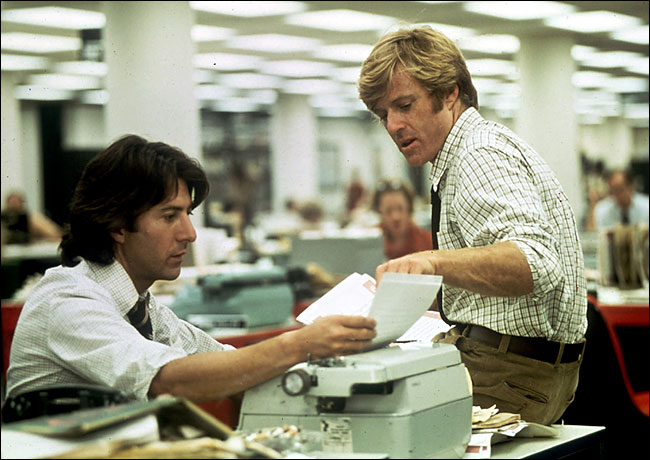
Robert-Redford-Screening-All-the-Presidents-Men-Revisited-in-Washington-DC


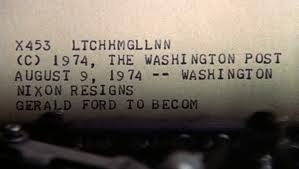
Final review:  4/5. The final few moments are some of the best in cinema history: Woodward and Bernstein writing the piece that finally blows everything open, as they watch Nixon’s inauguration on tv and the metaphor of the cannons blasting. And then summing up the rest of the events of Watergate, using the typewriter. Watch this movie, if only for these scenes. allthepresidentsmentypewriter

Up next: The Silence of the Lambs

#43- Spring in a Small Town

Quick recap:  A wife has grown tired of her daily life- chores, shopping, and taking care of her ailing husband. One day a man shows up who turns out to be the husband’s best friend but also the wife’s former love. Drama ensues as the two fall madly in love again. Once in awhile they remember that the husband is still around and sick to boot, and they feel like jerks in the end.

Fun (?) fact: The Communist party buried the film after its release in China because of lack of politics. It wasn’t until the 1980’s that people really started to appreciate the movie.

My thoughts: I audibly groaned when I found out this movie was next on the list because the whole thing seemed like torture to watch: a black and white foreign film about love and loss. Bleck. I especially winced as the opening credits came on the screen because they were jumpy and the audio kept going in and out. The opening scene is of the wife walking along the city wall as she does a voiceover explaining the unhappiness that is her life. It caught me off guard, to see such a ‘modern’ filmmaking tool such as voiceover to tell a story. I know this wasn’t the first film to do so, but it was still impressive to see, considering what the US had been churning out at the time.

As the plot revealed itself, I was calmed by its simplicity. Foreign films have a reputation as being hard to follow and I admit that I don’t have much experience watching films from China. So this was a pleasant surprise. ‘Simplicity’ might not be the best word to use to describe the film because the emotions that are laid out for the audience are quite complex. The friend cares deeply for the husband and his health but he is also still in love with the wife. He is a good person and really, all of the characters can be described as ‘good’. I felt sympathy for everyone, even the wife as she must make a decision to stay or go. Her love for her husband was apparent but she also had to reconcile with the reality that she had married a very sick man who was unable to give her what she needed.

Above everything else, I was mostly blown away by the fact that the entire story is told in two settings and between 5 characters. Big budget films can draw audiences in, but in the end, sometimes simplicity is needed to truly tell a story.

url


Final review: 4/5. Modern audiences can still appreciate the story, although it isn’t for everyone.

Up next: All the President’s Men

#39- The Best Years of our Lives

Quick recap: This movie follows three servicemen as they return from fighting in World War II and try to readjust to civilian life. Al, a sergeant in the Pacific, returns to his loving family and job as a banker. Fred, who was in the Air Force, comes home to an uncertain future as he and his wife are barely able to make ends meet. Homer, a veteran from the Navy who has had both of his hands removed, must cope with his new disability as well as try to build a relationship with his fiancee.

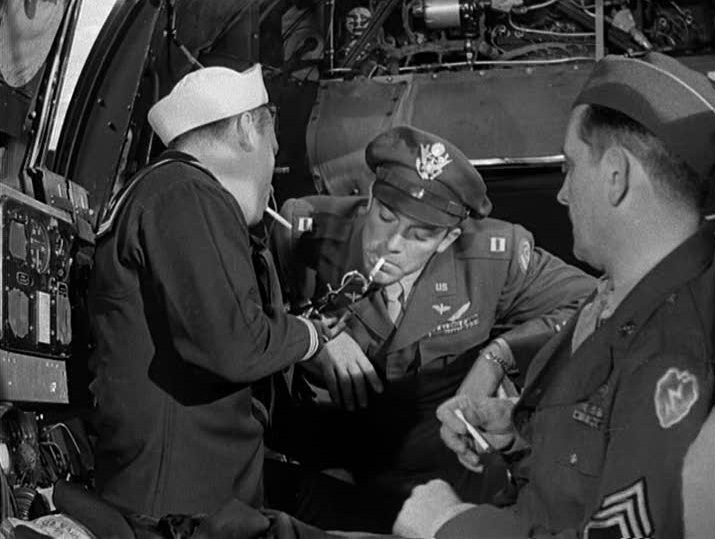
bonding over a good smoke

bonding over a good smoke

Fun (?) fact:  Harold Russell, who played Homer, was nominated for an Oscar for Best Supporting Actor. The board thought he was a longshot to win so they created a fake award for inspiring courage for his fellow veterans. And then he won the Oscar.

My thoughts: Growing up, I always had this idealized view about World War II. In my mind, America universally supported the war effort and when soldiers returned home, they were greeted as heroes and were given everything they needed as reward for keeping us safe.  I became an adult during the war in Afghanistan and Iraq and was able to see more realistically what solders are faced with: unemployment issues, disabilities that aren’t necessarily easy to spot, and the inability for us civilians to truly relate to what they have gone through during combat. After watching this movie,  I realize that soldiers have always faced these issues. I can’t comment as to how things have gotten better over time, but it just seems sad to me that these issues are still very much present.

The movie clocks in at almost 3 hours, but it is important to see each character as they navigate through their old life again.  It was heartbreaking to watch each character return to their family, especially Fred. He had done so much during the war, saving countless lives and yet comes back to his parents living in squalor, his wife MIA and no job. Most people who have seen the movie tend to focus on Homer’s character- the veteran who has had both hands amputated. And there is good reason for that, especially considering he was a real veteran. But for some reason, it is Fred’s story that really stuck with me. His character also had to deal with ‘combat trauma’, what we now call PTSD and it was moving to see him trying to recover from the past the horrors of war, yet knowing that it will never really be gone.

Final review: 4/5. The only issue I had with the movie was the ending. Everyone ends up happy and ‘back to normal’. It would’ve been nice to have had a grittier ending, but I’ll take it.

Up next: Who Framed Roger Rabbit?