#108- Sergeant York

Quick recap: This movie is the real life story of Alvin C. York, a young wild Appalachian turned Christian turned war hero.

real life Alvin C. York

real life Alvin C. York

Fun (?) fact: Alvin York agreed to a movie of his life on 3 conditions- 1) profits would go to a Bible school he wanted built 2) no cigarette smoking actress would play his wife and 3) only Gary Cooper could play him.

So directors went with a real life 15 year old to play the wife and kiss a 40 year old.

So directors went with a real life 15 year old to play the wife and kiss a 40 year old.

My thoughts: Before I start my snark on this movie (and believe me, there will be snark. SOO much snark), let me just say that the real Alvin York is a badass. He led an attack during World War I that killed 23 Germans and captured 132 of them. And he did this with help from only 7 other men.  He’s a hero, plain and simple. Now, onto the snark!

My issue with Sergeant York lies solely with Gary Cooper. That Gary Cooper that I absolutely fawned over last time. It surprised me to learn how many people consider this movie his best role because I thought it was awful. Maybe my ire is directed towards Cooper because of his god awful redneck accent or his portrayal of a simple minded man, but I think the biggest problem with this role is Cooper’s age.

It happens all the time: actors playing characters much younger than themselves. Sometimes it works, but most of the time it’s just creepy. And for me, when the age difference is so big, it distracts from the entire movie. The real Alvin York was 30 when he fought in the war but Cooper is over 40 and he looks it.The first scene with Cooper has him in overalls, running all over the countryside like an idiot. We are supposed to believe he is in his 20s but the effect is more of something like Forrest Gump, who you just feel sorry for.  It should be noted that many people who made the movie also thought Cooper was too old to play York but York refused to sign over the rights to his story unless he got to choose who played him. Which is fair, I suppose. If anyone made a movie out of my life  I’d choose Jennifer Lawrence. Or maybe Betty White because she is hilarious.

Annex - Cooper, Gary (Sergeant York)_01

The movie itself is your typical patriotic war movie. Sergeant York was released in 1941, right around the time of Pearl Harbor. There are reports that after watching the movie, young men ran and signed up to serve in the war effort. The story follows the American Dream perfectly: a young, poor wild man finds God and with divine intervention, becomes a war hero. The only thing that would’ve made this movie more patriotic would’ve been a bald eagle in every shot.

Final review: 2/5. be forewarned that if I have to sit through this movie again, I’m just going to end up yelling , ‘He’s, like, 40!’ for two hours straight.

Up next: The Harder They Come or Winter Light

#107- Stalker

Quick recap: A guide takes two desperate men into a dangerous place called The Zone, which grants your innermost wish.

Where dreams come true!

Where dreams come true!

Fun (?) fact: Supposedly, 3 members of the crew died from chemical contamination while shooting this movie in Estonia.

My thoughts: Not only is this movie in Russian, but it is over 2 1/2 hours long which means I wasn’t jumping for joy at the prospect of watching Stalker. Nonetheless, I threw on my pajamas, poured a drink and settled in. And you know what, you guys? It wasn’t that bad. I think I’ve finally realized that many of the movies I fear watching turn out to be the most interesting and the ones I get excited about let me down in some way. Especially Psycho which I am still in recovery from my disappointment.

The colorization (I’m sure that’s not the technical term) of the film is what stands out the most for me. The beginning of the movie up until the men entering The Zone has a sepia tone to it, much like the beginning of The Wizard of Oz. The Zone is gorgeous, in a ‘zombies from a nuclear disaster are about to eat my face’ way. Throughout the film, as The Stalker reminisces about something or recites a poem, the color shifts back into the sepia tone. It was a great use of symbolism to contrast the real world with that of dreams.

There's also that

There’s also that

While the Stalker takes The Writer and The Professor to The Room (side note: I really appreciate these names because it would be too difficult to keep up with all the Russian names), he mentions a previous stalker who went by the name ‘Porcupine’. Porcupine eventually took his own brother to The Zone but then let him die. When porcupine entered the room he begged for his brother back but when he got home he was instead made filthy rich. A week later, he hanged himself. As the Stalker points out, The Room only grants your innermost wish, not your conscious one. I thought this was a novel take on the ‘wishes’ trope and also a pretty good commentary about the minds of people.

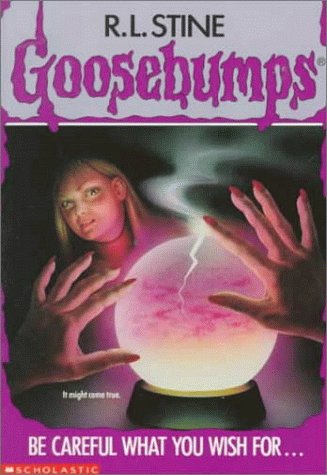
My husband found out before I watched the movie that Stalker was loosely used as inspiration for the video game S.T.A.L.K.E.R. It makes sense because of the Zone being fraught with danger. None of the traps are visible and may not even be real, but there are certainly some spooky things that happened that made the movie a little disconcerting at times, like when the men finally get to The Room and a random phone starts ringing or the various military equipment scattered about from a failed invasion. In the end, after trekking through this dangerous place, the men end up not entering The Room after all as they learn to be careful what you wish for (which I too learned back in 4th grade from reading a Goosebumps book).

goosebumps

Final review: 3/5. Interesting, but not worth sitting through again. Overall, the movie was too heavy with philosophical dialogue but if you are just itching to watch something like that, you might enjoy it.

Up next: Sergeant York

#106- The Conversation

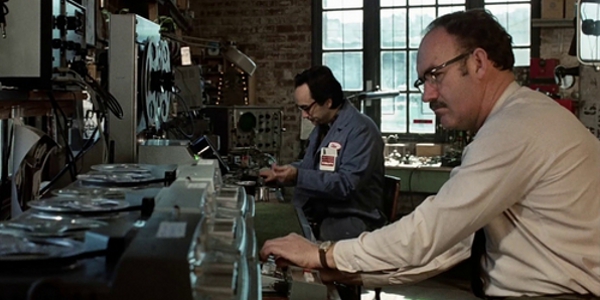
Quick recap: Surveillance expert Harry Caul (Gene Hackman) records a conversation for a mysterious client and comes to the conclusion that the couple he heard are going to be murdered. I’d say this is a good lesson about the dangers of eavesdropping, but that’s this guy’s job so this is more of a story about doing a job really well.

Homer: Marge, my ears are burning! Marge: Homer, we weren't talking about you. Homer: No, my ears are really burning. I wanted to see what was inside so I lit a Q-Tip Homer: Marge, my ears are burning!
Marge: Homer, we weren’t talking about you.
Homer: No, my ears are really burning. I wanted to see what was inside so I lit a Q-Tip

Fun (?) fact: Continuing with my coincidence fact series, The actress who plays Ann in The Conversation played Laurie in American Graffiti. It’s like the 6 degrees of Kevin Bacon except nothing like it all, and much more boring. You’re welcome!

My thoughts: With a title as simple as The Conversation, I knew that the movie was either going to be awesome or worse than The Dead, which at least gave me hope that someone would expire by the end of the movie (Spoiler alert: no one did).  But with The Conversation,  I already knew I was getting something that every movie has, except for all those silent films, of course. Luckily, director Francis Ford Coppola cut to the chase and showed the aforementioned conversation first. What was said between the couple sounded a little off but gave no indication or hint as to how the rest of the movie would turn out.

Don't be fooled! This is The Conversation, but there is no actual conversation going on right now Don’t be fooled! This is The Conversation, but there is no actual conversation going on right now

As you can imagine, The Conversation is an introspective film that gives more information about Harry Caul than the actual mystery of the couple. Caul is an anti-social man who would rather listen in on other people than give any information about himself. He is also extremely paranoid, which makes sense when your job is to basically spy on other people. On the other hand, he spends so much time lost in his world that he misses all these big clues around him. For example, during a convention about spy equipment (which is just as interesting as you can imagine), a competitor slips a ballpoint pen into Caul’s pocket that will record his conversations the rest of the night. IRONY! I knew the second I saw the pen what it actually was, but Caul didn’t think twice. As he becomes more concerned about the fate of the couple, Caul decides to destroy the tapes instead of handing them over and potentially having blood on his hands. After a drunken party at the spy convention, he sleeps with a woman who-you guessed it- stole the tapes! It was completely obvious what was going to happen which I thought was silly except after thinking about it, the whole scene just made me feel even more sorry for Caul and understanding his loneliness.

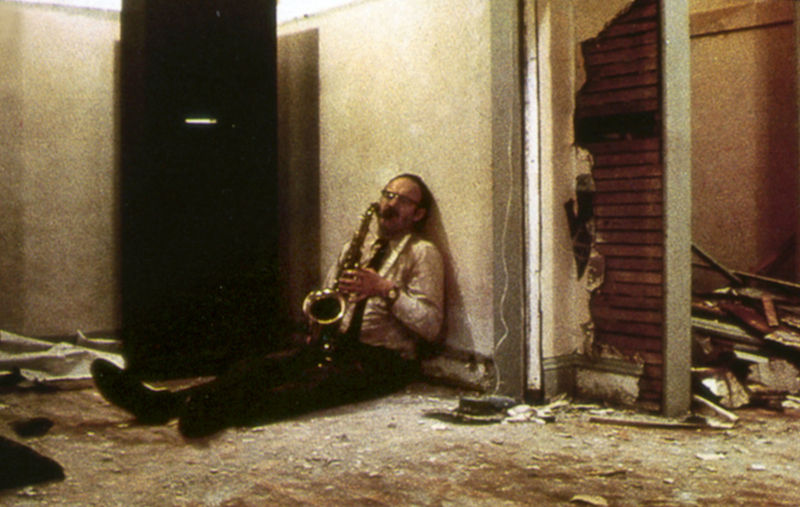
I have to stop here. At this point, when the tapes were stolen I was prepared to give this movie a 2/5 because although some of it was interesting, it was also rather boring. But then, as Caul followed the couple to the hotel room to find out their fate, my opinion changed. I LOVED this movie. The ending was much more complex than I ever expected it would be and I have many questions. Although this movie is 40 years old, I’m going to hold off revealing anymore spoilers. Francis Ford Coppola, the guy who directed the Godfather movies, has said that The Conversation is one of his personal favorites and I completely understand why.

8095-the-conversation

Final review:  5/5. I’m tempted to watch the movie again to see what other clues I might be able to pick up that will help me with the ending.

Up next: E.T

#105- The Golden Coach

Quick recap: An actress in a traveling troupe must choose between 3 men who are in love with her, one of whom gives her a golden coach. But then the actress realizes that she is a self-sufficient talented woman and chooses none of them. In a further ‘screw you’ move, she gives the coach to the Bishop who will in turn use it to help the sick and dying. An important life lesson there: Stick it to your love interests by giving to the poor. I should cross stitch that on a pillow or something.

but first I need to learn how to cross stitch

but first I need to learn how to cross stitch

Fun (?) fact: Director Jean Renoir was the son of Pierre Renoir, the artist. That’s about as fun as I can get on this movie.

Baby picture!

Baby picture!

My thoughts: I was afraid to watch this movie for fear I might die from overexposure to pretentiousness. The movie is directed by a French guy, set in Peru, featuring Italian actors. Add to that, the story centers around a Viceroy whose main problem is that he falls for an actress who he can be himself around. You know, a down to earth guy who buys golden coaches. And of course, after giving her this rather extravagant gift, he finds out she’s been seeing two other guys. But really though, the Viceroy should’ve had a bit more common sense than that. Anyone knows that you don’t throw out the golden coach as a gift first thing. If that’s where you start, how can you possibly top yourself?

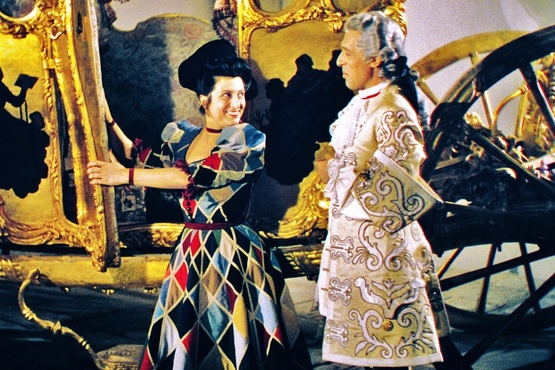
Visually, the movie is very colorful. The traveling acting troupe’s costumes were gorgeous and made the skits much more enjoyable to watch. I was little confused by the nobility, though. I’m not up on my Peruvian history, far from it, but I don’t think they had a bunch of white guys running around in powdered wigs back then. The plot itself is silly so I won’t analyze it too much. Beyond the colorful costumes and scenery, I was definitely not a fan of the musical score. It was typical classical music, which is fine, but it played THE ENTIRE TIME. Sometimes it was even hard to hear what was going on because the music was so loud. The music didn’t even really match with the plot. If you are going to have a symphony playing at all times, you should at least thrown in a Sad Trombone of Regret or the Triangle of Doom to give the audience cues on how to react.

I’m still confused as to who I was supposed to sympathize with during the movie. Camilla, the actor, is being wooed by a soldier, the viceroy and a bull fighter, one of whom gives her a golden coach.Not really the worst options, if you ask me. As for the suitors, I guess I liked the soldier because he was there from the beginning and Camilla dumped him once she saw she could get something better. The Viceroy annoyed me with his purchases of golden coaches and a never ending trail of women who swooned over him. The bullfighter seemed like a decent choice, minus the ego but isn’t that par for the course for a profession like that? I was a fan of the ending though, Camilla deciding to pursue her acting career and giving the coach away.It was really the best decision because she had caused so much strife within the small community.

This is how to impress the ladies in 18th century Peru

This is how to impress the ladies in 18th century Peru

Final review: 1/5. Not a fan, although this wasn’t traumatic like some of my other 1 point movies

Up next: The Conversation