#98- Babe

Quick recap: A pig who thinks he is a sheepdog? NO! Wait…..Yes. Very much so.
There's no rule that says a giraffe can't play football

There’s no rule that says a giraffe can’t play football


Fun (?) fact:  48 different pigs were used during the filing of Babe. No word on what happened to a pig once it grew up.

Pork_chops_served

My thoughts: Perspective, man. It’s all about perspective. I loved this movie as a kid and even then thought it much wittier than some of the other kid stuff being thrown at me. It wasn’t just a cute animal movie I was watching- it had heart. I don’t remember being too upset by the implications that Babe was about to be eaten, but the lesson that everyone and everything has a purpose has stuck with me. It’s probably been a good 15 years or so since I last watched the movie and it still amazes me how my viewpoint can change so drastically.

The toupee was a weird touch

The toupee was a weird touch

The animal I most empathized with and felt for this time around was Fly, the female sheepdog.  Granted, the movie is called Babe so it’s not my fault for not really noticing her before, but almost every scene she is in is a heartbreaking one: from watching her puppies being sold to the domestic violence with her Dog Husband (This is a kids’ movie?!) to the most heartbreaking scene of all: watching Babe being led to the slaughter. It was almost too much to watch at that point, knowing that that pig was all she had left and he was about to murdered by the farmer. Animals are way more complicated than I ever imagined.

I also really enjoyed the actors this time and was able to appreciate their depth. Farmer Hoggett’s character interested me especially. James Cromwell, who played Hoggett, originally took the part because he only had a few lines of dialogue and felt like it would be an easy movie,but then ended up on screen more than any other character (except Babe). He did a perfect job restraining his emotions, yet being able to convey exactly how he felt at all times.
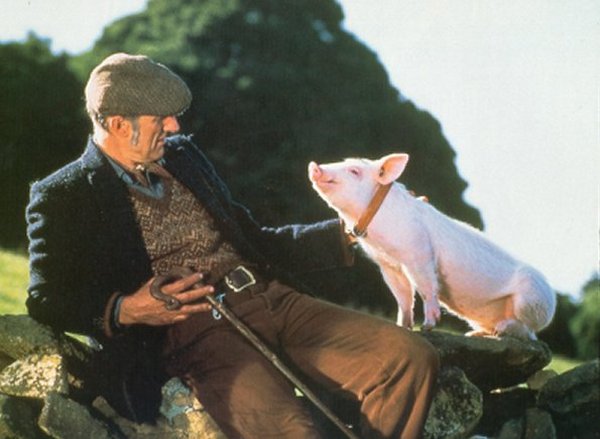
That'll do pig, that'll do.

That’ll do pig, that’ll do.

Final review: 5/5. It’s a great family film, but maybe for older kids because the subject matter is much heavier than I remembered.

Up next: The Bigamist and then……….#100! What’ll it be??


#97- L’Age d’or

Quick recap: A man and woman want to get it on but keep getting interrupted by the church, society and family. LAME.

ruins the mood a little

ruins the mood a little

Fun (?) fact: Director Luis Buñuel and Salvador Dalí were good friends but had a falling out before the movie was set to start filming. The first day on the set Buñuel chased Dalí off the premises with a hammer.

My thoughts: I don’t even know. L’Age d’or begins with a documentary about scorpions and ends with an orgy with Jesus so……. basically, it’s your typical French film. I started out somewhat interested, especially when it came to the scorpions. I have severe arachnophobia and I was just thinking to myself  last night how nice it would be to have a new fear and what better than another arachnid?? But then the scene changed to a bunch of soldiers who are fighting some religious guys and I was a little confused, but figured I would catch on as the film went on. And then in the next scene the religious guys were skeletons and a man and woman were trying to have sex in public and at that point I threw my hands in the air and just went with it.

The problem I had with L’Age d’or is not that it was all symbolic, but that it was symbolism I had never seen before. At this point, I’m just going to assume everything I watched was a reference to sex in some way. On the positive side, I learned a whole new crop of euphemisms for sexual repression: ‘kicking the violin down the street’, ‘cow in the bed’, ‘slap an old woman’, and my personal favorite- ‘ murder a child for no reason’. Fun times, I’m telling you.

No, really.

No, really.

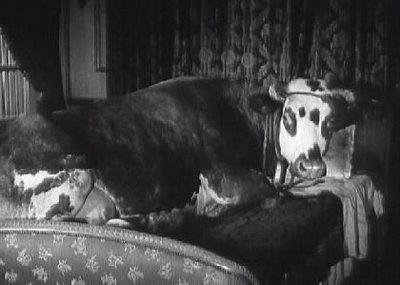
So, did the man and woman ever hook up?? I don’t know, kind of? At one point they were making out while a symphony played a few feet away and then they had each other’s hand in the other’s mouth, so I guess that counts as second base? The woman starts fellating a statue’s toe a little later on so I assume she wasn’t satisfied. At the end of the film, the two lovers are holding each other and having pillow talk- discussing how sleepy they are and how nice it is to murder children. And then the next scene the guy has blood all over his face. Luckily, I had checked out way before this scene came on and I wasn’t too traumatized.

L’Âge-d’Or

Final review: 1/5 and I don’t really think I need to go into detail as to why.

Up next: Babe!

#96- Moonstruck

Quick recap: Loretta Castorini is engaged to mild mannered Johnny and that’s cool and all until Ronny (played by Nicholas Cage) steps into the picture and she falls in love with him. Also, Loretta’s father is cheating on her mother and there’s a part about being cursed and then [insert every Italian stereotype here].

This might get weird.

This might get weird.

Fun (?) fact: No one really wanted Nicholas Cage in the movie except for Cher, who threatened to walk out if he wasn’t hired.

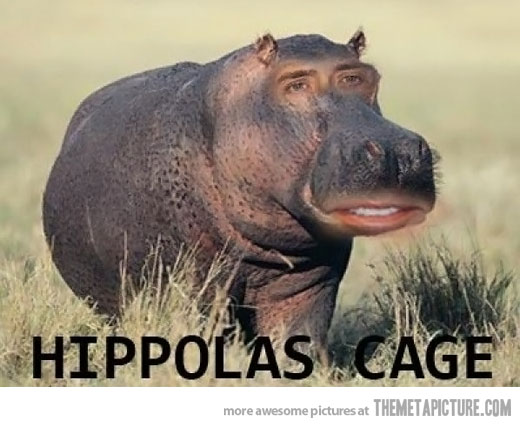
funny-nicolas-cage-photoshop-meme

My thoughts: Romantic Comedy. Two words that, when put together, can strike fear into any sane person. Add to that, Moonstruck is a romantic comedy starring Cher. I knew I was in for a rough night.

As mentioned above, this is the movie should’ve won some sort of Guinness World Record for most Italian stereotypes crammed into 90 minutes. When the characters weren’t making dramatic hand gestures or using a thick Italian accent, stereotypical Italian music could be heard in the background. Another fun fact: the original opening played the score from ‘La Boheme’, but testing audiences felt like they were being roped into an art house film and we wouldn’t want that, of course. So instead, the crew went in the opposite direction and chose ‘That’s Amore’ so that you wouldn’t forget your were watching a movie about an Italian-American family, even for a second.

That’s not to say I found anything wrong with being so heavy on the Italian references. I’m sure there were families all over the US that related perfectly to the characters, but it wasn’t something I was all that familiar with. Watching Moonstruck felt like taking one of those Buzzfeed quizzes that I stumble upon at 3 in the morning, unable to sleep. Could be something like, ‘Which English boarding school best describes your personality?’ or ‘How many of these indigenous beetles did you encounter in your trek across Africa in the 1930s?’ Either way, I felt left out.

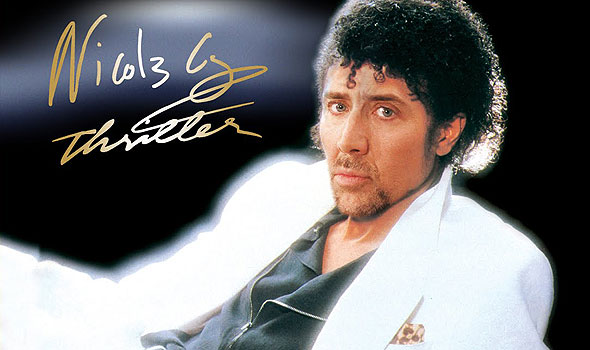
Chris-Shen-cage-michael-jackson-590x350

As for the plot, it was a little confusing. Not confusing in the sense that it was hard to understand because come on, Nicholas Cage is one of the main actors. More confusing in its message. The film centers around Loretta cheating on Johnny with his brother Ronny. We are supposed to root for her, especially when she does the romantic comedy makeover trope. When Johnny comes over at the end of the film to break off his marriage, that is supposed to signal that they all lived happily ever after. That’s all well and good until you factor in Loretta’s father, Cosmo. He too is cheating, but this is a bad thing for some reason. Maybe because he has been married for so long? He and his wife don’t seem to get along very well and maybe he could’ve found true love, just like Loretta did with Ronny. The wife, Rose, also briefly considered a fling with a handsome professor but at the last minute backed off and went home to a man who’s feelings had obviously changed. It was more depressing than romantic or comedic at that point.

Final review: 2/5 I knew I was in trouble when I found myself fully relying on Nicholas Cage to get me through this movie. And he certainly did.

tumblr_myue5axCHc1qfrkf9o8_r1_250

Up next: L’Age d’or

#95- Nanook of the North

Quick recap: Nanook (who’s name isn’t really Nanook) is an Eskimo (Inuk) who must fight daily (with guns) for survival. Along with documenting Nanook’s life (most of it is staged), the film also captures his family ( not really his family) and how they manage to adapt to the bitter cold.

On the other hand, there is a scene with a baby playing with puppies so it isn't all bad

On the other hand, there is a scene with a baby playing with puppies so it isn’t all bad

Fun (?) fact: Shortly after the film’s release, it was revealed that Nanook had died of starvation. Actually, it’s more likely he died at home of Tuberculosis, which is somehow better?

Is ANYTHING real? No.

Is ANYTHING real? No.

My thoughts: Nanook of the North is considered to be the first wide released documentary, which right off the bat I disagree with because so much of it is staged. One article I read put it in the genre of ‘docudrama’ which is a little better, I suppose, but still doesn’t reflect the level of fakery that was sold to the public. Before I continue ranting any more, I feel it best to point out that Nanook of the North ,  regardless of what it has been classified as, is a perfectly fine film all its own. I could’ve watched images of the landscape for many hours and the characters were also endlessly fascinating, real or not.

More huskies, less fake hunting

More huskies, less fake hunting

And now back to your regularly scheduled rant.

I knew going into this that I would potentially be watching something culturally insensitive, as the 20s weren’t known so much for their embracing of diversity as they were known for treating groups like a zoo attraction. One of the very first pieces of text describes the Inuk people (called eskimos) as a happy, simple people. And then the rest of the movie is spent justifying this statement. During one scene, Nanook’s family travels to a trading post, run by the ‘white man’ . While there, they encounter a gramophone for the first time and Nanook hilariously tries to bite the record, to see what it is (he knew what one was in real life). A minute later, one of the children has a stomach ache from eating so much and the man gives him some castor oil. In seconds, the child was smiling brightly and rubbing his stomach and licking his lips as if the oil were the best thing he had ever had in his entire life. Some of the scenes were truly touching, like when Nanook was showing a young child how to hunt with a bow and arrow. But overall, the simplicity of this family bothered me. The best example of this being the final scene, when the family has barely survived a sudden snowstorm. They find shelter in an abandoned igloo and, with faces radiant with happiness, lay down to sleep. It was supposed to be an example of the enduring strength of this man, but to me, came off once again like an attraction at the zoo.

The hunting scenes didn’t bother me as much as they apparently did to audiences when the movie came out. By the time Nanook and his family were being filmed, most of the families in the tribe had started using guns to hunt for food. But since guns kill things easier than a spear, they were left out of the film. I guess I didn’t care so much about these scenes being reenacted because it was hard for food to come by and so you have to work with what you have. And even though Nanook had moved to more modern forms of hunting, he still knew the ways of his ancestors.

Final reveiw: 3/5. A beautiful film filled with lies, but still a work of art.

Up next: Another surprise, apparently.