#91- Monsieur Verdoux

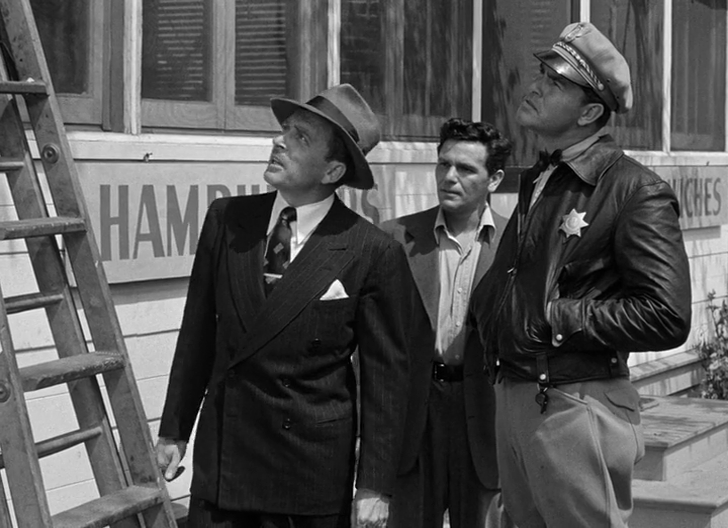
Quick recap: Charlie Chaplain plays Monsieur Verdoux, a perfectly charming gentleman.Faced with the difficult situation of caring for his wheelchair bound wife and young son after losing his job at the bank, Verdoux does what any stand up man would do-he becomes a mass murderer.

I'm going to murder you all!

I’m going to murder you all!

Fun(?) fact: Chaplain bought the idea for the movie from Orson Welles for $5000

My thoughts: City Lights is one of my favorite movies, and so I was hesitant to watch Chaplain in a ‘talkie’. In all honesty, I had kind of assumed he had retired once the era of silent films was over. Apparently not, and it was quite a relief to see how easily he had transitioned, yet still keeping his over the top expressions he was known for.

The film apparently takes place in France, although everyone has an english accent. That’s one of my biggest pet peeves in movies- when the accent doesn’t match the region (I’m talking to you, Tom Cruise). There were a lot of characters thrown in at the beginning of the movie, which was confusing at first, until I learned to just focus on Verdoux. Chaplain’s character is a little guy, but an expert at wooing women. He is supremely charming when he needs to be and has to summon up a lot of patience for some of the women he deals with. I especially loved the little quirks of his, such as how quickly he thumbed through the money and his continually failing to kill one of his wives. Hilarious!

1083875860

I thoroughly enjoyed myself until the end of the movie, when Verdoux is finally caught and sentenced to death for all the murders. In his speech to the court, Verdoux basically says that everyone finds him horrible, yet bombs are killing women and children every day and no one cares. It’s not that I disagree with the message, but I don’t like having to sit through a movie only to realize it was political satire this whole time. And I do love me some satire, but not in this way. If the speech had just been edited out, it would’ve been a perfectly fine comedy. Satire can be subtle but not so nonexistent so that the main character has to make a speech about the point of the movie. Chaplain was apparently extremely left-wing and felt this film to be one of his best. It was controversial when it came out and was the beginning of the end of Chaplain’s career.

Final review: 3/5. Still a nice little gem of a movie, if you take away the ending.

Up next: Star Wars: Episode IV
 

#77- The Postman Always Rings Twice

Quick recap: Frank Chambers is a drifter who comes to work for Nick and his wife Cora at a roadside diner. Immediately, Frank starts making out with Cora any chance he can get because that’s just what you did back then. She in turn falls in love and together they hatch a plan to kill off Nick so that they can live happily ever after. Although it turns out to be harder than either expected, Frank and Cora are ultimately successful. Unfortunately, they have been closely watched by the District Attorney and are charged with murder. Then, a million twists happen and Frank is sent to the gas chamber.

post9-1024x805

Fun (?) fact: Audiences freaked out while watching this movie once they realized the character of Frank used his tongue at one point when kissing Cora. The horror!

My thoughts:  Ever since I stopped spoiling myself about a movie by reading up on it beforehand, I’ve had to get creative with my predictions. Sad to say, I was WAY off on this one. My husband had already told me it was a crime movie, but I was betting on some back door arrangement, like a postal worker secretly working for the mob or something. In other news, I think I’ve created a plot for the next great blockbuster.

So, The Postman Always Rings Twice falls under the noir genre, which, after looking up the term on Wikipedia, encompasses A LOT of films. It seems as if even experts can’t agree on what constitutes as film noir, although there are some similar characteristics. For example, this movie revolves around the crime of murdering an innocent man in the name of love. Noir films also include convoluted plot lines, which this film delivers perfectly. After Frank and Cora have been accused of murder, the next few scenes are a big mess of plot twists. Frank signs a paper stating he had nothing to do with the murder, only to find out it had been a trick by the DA to get Cora to confess. But then Cora’s lawyer knew what she would do and put one of his guys in charge of taking the confession so that she wouldn’t give one to the DA. He also has her plead guilty but then, at the beginning of the trial gets the DA to drop charges because he really has no evidence. There was much more that happened after that, but I was too confused to keep up.

There was also a couple of weird scenes with this policeman, who loved cats- not that I know anyone like that.

There was also a couple of weird scenes with this policeman, who loved cats.

Another characteristic of a noir film is a bleak ending. After Frank and Cora eventually get married (only because they were threatened with jail for shacking up together), Cora finds out she is having a baby. The two were at each other’s throat since the trial but with this news, decide that they do truly love each other. On the way back from a celebratory trip to the beach, Frank accidentally crashes his car and kills Cora. He is immediately arrested for her murder and sentenced to death. It turns out that the entire movie has been one long flashback and he is telling his story to a priest right before his execution. It is revealed that the DA knew he didn’t murder Cora on purpose but later found evidence indicting him for the murder of Nick so he might as well be executed anyway. That’s not how the law works, but whatever.

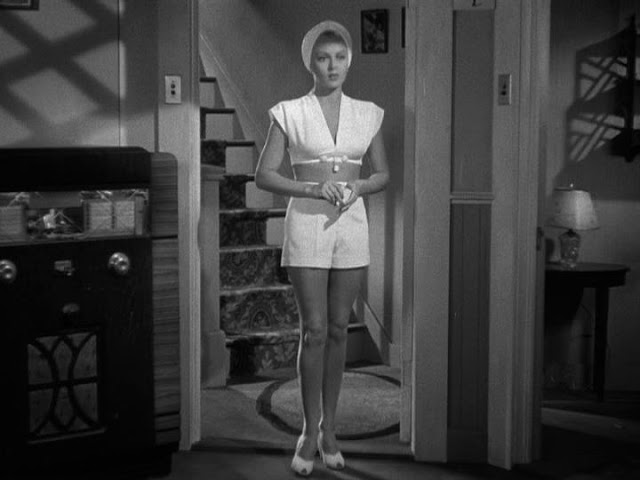
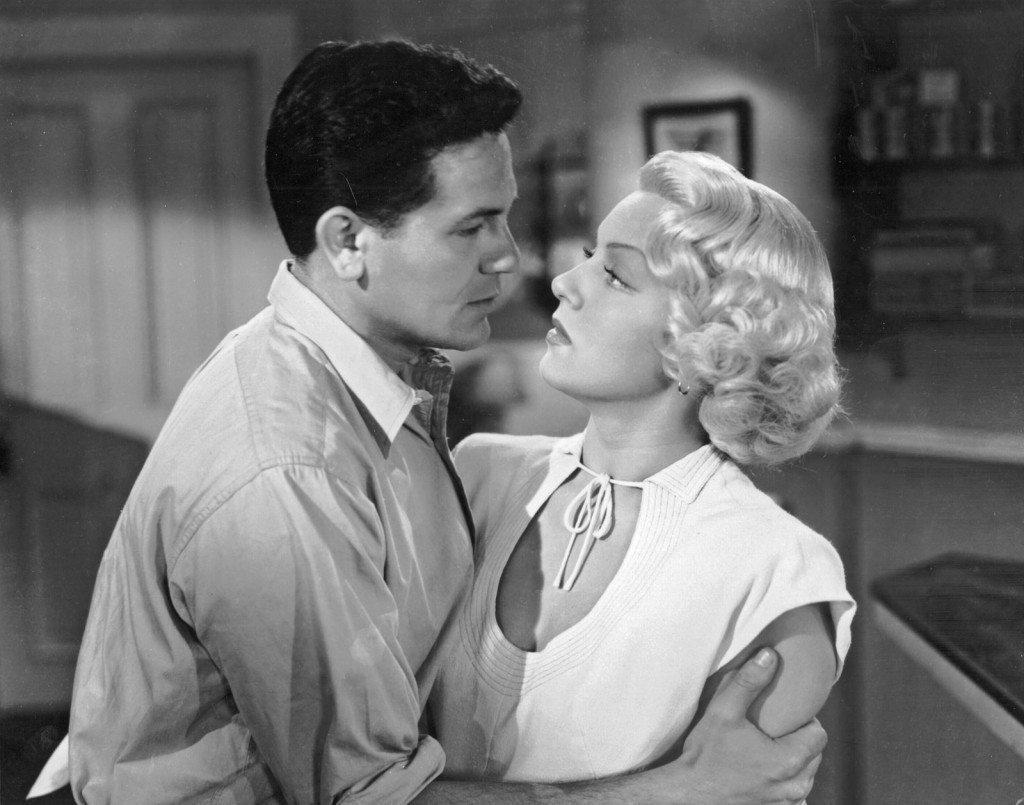
In looking at reviews of the film, I found it interesting how many people referred to Cora as the evil one, when in my opinion, that title belongs to Frank. He was the one that seduced her and also the one to first bring up the idea of killing Nick. When Cora’s mother falls ill, Frank drops her off at the train station and then immediately hops in the car with a random woman and drives off to Mexico for a week. Cora isn’t blameless by any means and I loved the decision to dress her in all white to really bring out her darker side. Lana Turner did a wonderful job portraying this character and although I don’t know much about her film career, it seems this was one of her best roles.

Shorts

Final review: 3/5, but just barely. The plot was too convoluted and I really didn’t care for John Garfield, who played Frank. His acting was too stiff and unbelievable. In the end, the film kept me entertained enough so it gets a decent rating.

Up next: The Dead, or possibly Casablanca 

#64- Mildred Pierce

Quick recap: Mildred Pierce is the story of a woman who started out as a housewife whose husband had just left her, to becoming a successful restaurant owner. Her life seems perfect, except for the fact that her second husband is only in it for the money and her daughter Veda is about as spoiled as you can get. It’s almost as if there is a lesson to be learned here, maybe something about money and selling out?

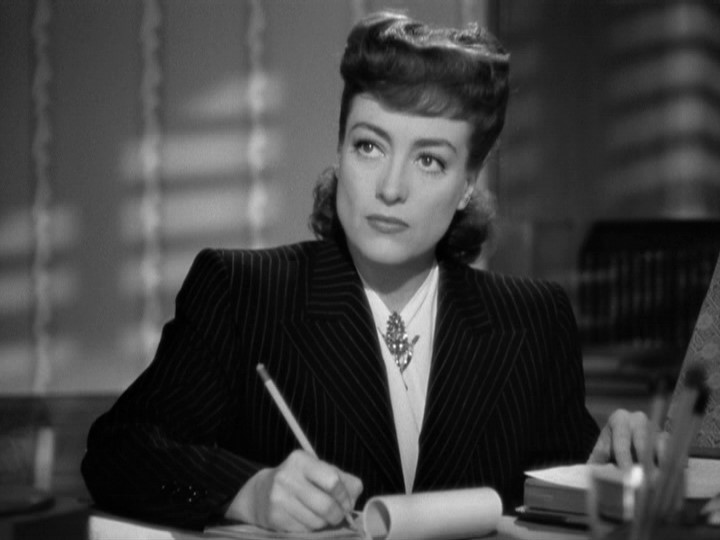
Joan Crawford as Mildred Pierce

Joan Crawford as Mildred Pierce

Fun (?) fact: Nobody really wanted Joan Crawford in this movie. Everyone was gunning for Bette Davis, but when she turned it down, they had no choice. Crawford ended up earning an Academy award for her performance, but that didn’t change the fact that people didn’t much care for her.

This probably didn't help her image much

This probably didn’t help her image much

My thoughts: At this point in my list, nothing strikes more fear in me than the word ‘melodrama’. As has previously been noted, I am not a fan of the genre. It just seems like such a cheap way to do cinema: to tug on the heartsrings of the audience and make them love you. On the other hand, the formula works. This movie did very well in its time and won several awards. I’m sure that back when it was first released, it was a film that appealed to a wide audience and had many plot points that people loved to discuss. I do understand why it made the list, but it just wasn’t the movie for me.

For starters, nothing screams ‘melodrama!’ more than someone getting murdered during the very first scene of the film. And as what has become my pet peeve, the death was in no way realistic. I don’t know why I expected more because that was just how you did things back then. But it just made the movie seem even more cheap and hokey.

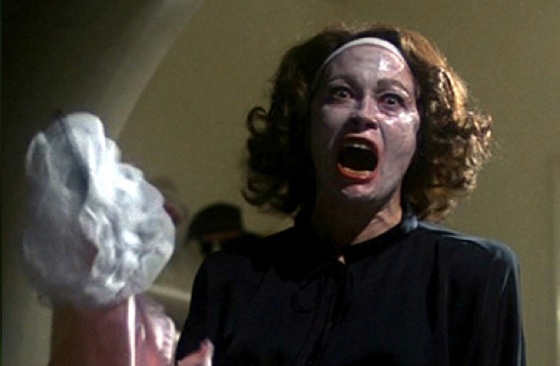
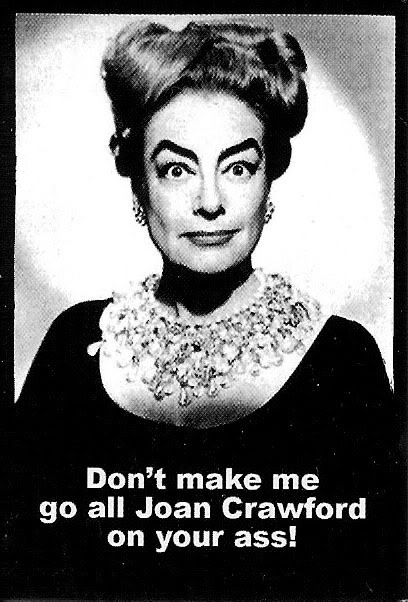
Although I didn’t love the plot, I do think some of the actors did a fine job telling the story. The actress who played Veda was my favorite. She played the bratty socialite to perfection. She did a fine job showing her true colors, as well as attempting to hide them when she was trying to get what she wanted. The performance I didn’t love, however, was that of Joan Crawford. I admit that there was some bias beforehand, because the only thing I knew about her was ‘Mommie Dearest’.I wavered back and forth throughout the entire movie, trying to decide if I could really see her talent or not. And even now, I don’t know. The movie called for a strong woman, someone who doesn’t crumble in the face of adversity, and Crawford plays that like no one else can. But also, the character of Mildred Pierce is supposed to invoke sympathy with the audience. I was supposed to sit there and think, ‘oh my god, that poor woman’, and I didn’t feel that way at all. Crawford could never seem to lose the ‘bitch’ face, like when she was interacting with her children. The acting stopped being realistic and started to take on the melodrama title proudly.

I think I want to be Joan Crawford for Halloween next year

I think I want to be Joan Crawford for Halloween next year

The revelation that Veda was the real killer was not a surprise, but I liked that the movie turned salacious when it was revealed she was having an affair with Pierce’s second husband. I’m sure that was shocking at the time. The twist seemed reminiscent of a VC Andrews book, which, if she were still alive, Joan Crawford would’ve been perfect for a role in an adaptation of any one of those books.

Final review: 2/5. Melodrama.

Up next: most likely Brokeback Mountain

#62- Citizen Kane

Quick recap: Charles Foster Kane, newspaper magnate, dies and his last word is ‘rosebud’. A reporter is sent out to investigate what the word means, in hopes of getting to the bottom of who Kane really was.

1f01_015


Fun (?) fact: It’s no secret that William Randolph Hearst wasn’t a fan of Citizen Kane, seeing as how the main character parallels many points from Hearst’s life. Orson Welles has stated several times that the inspiration for Kane was based off of several sources, not just Hearst. Nevertheless, one time Welles and Hearst were in an elevator together, during the San Francisco premiere of the movie. Kane asked Hearst if he would be attending and Hearst ignored him. As he got off on his floor, Welles replied, ‘Charles Foster Kane would have accepted.’

pretty sure I have a thing for Orson Welles now.

pretty sure I have a thing for Orson Welles now.

My thoughts:  I can predict that this post is going to be more rambling than usual.I’d like to say it’s because it will be hard for me to describe the greatness that is Citizen Kane, but in all reality it’s mostly because I have the flu. As an early Christmas present to all of my readers, here is a helpful tip for you: the flu shot is bullshit.

Citizen Kane has been a movie I have been wanting to watch for a long time because it’s on everyone’s ‘best of’ list. It’s also a movie I have dreaded watching because it’s on everyone’s ‘best of’ list. And seeing  as how Psycho turned out, I turned my expectations way down. Luckily, from the first few minutes I was hooked. I’m a fan of non-linear movies or really any film that defies traditional storytelling and this movie is the father of them all. It starts out with the death of the main character and the viewer only finds out who Kane was through flashbacks. I especially loved the newsreel scene at the beginning, announcing Kane’s death. It was so realistic PLUS it had my favorite old movie trope- spinning newspapers!!

I think the reason I loved this movie so much is how Charles Foster Kane is brought to life. Each person interviewed had a different perspective on Kane, some negative and some positive. I went from feeling sorry for Kane as he was taken away from his home and instead brought up by the bank to swooning over him as he refused to acknowledge his vast amounts of money, only wanting to help the poor. And then as he became even more wealthy, his personality began to change.  The pivotal scenes showcasing the segue from All-American Good Guy to Kind of a Jerk happened during his first marriage. At the beginning of the marriage, he and Emily can’t stay away from each other. Both are in good spirits and have high hopes for the future. But with each scene, all set at the breakfast table but with different years, the couples drift apart physically and emotionally. It was a powerful way to show the damage being done.

As Kane continued his rise to fame and money, he became even more eccentric- buying statues and other works of art and then doing nothing with them. It is during his second marriage that he decides to build an estate, Xanadu. He and his wife relocate here and it is at Xanadu that I could finally see what Kane had become. The scene where Susan is begging to not have to sing again is heartbreaking, as well as when she finally leaves him.  The estate itself is ornate and gorgeous but at the same time desolate and depressing. It was the perfect place to match what Kane had become.

I could write a whole post focusing on the special effects and cinematography of Citizen Kane but there isn’t much to say that hasn’t already been analyzed a million times over. My two favorite aspects of what makes this such a remarkable movie are 1) the makeup effects turning Kane from his early 20s to old age. It was so hard to believe it was the same person at times and it wasn’t until after the movie that I found out that Welles was only in his early 20s himself when he made the movie. And then 2) I had no idea this was a thing, but I loved how the camera focused. This is called ‘deep focus’. I can’t really describe it but basically it wasn’t just an actor staring into the camera and saying his lines.

it's not a spoiler for a movie made in the 40s.

it’s not a spoiler for a movie made in the 40s.

Final review: 5/5. This movie lives up to all the hype and then some. It is truly a must see for anyone.

Up next: let’s go with Woman in the Dunes. If I keep putting that title here, I will eventually watch it.