#86- The Apartment

Quick recap: C.C. Baxter works for an insurance company and figures out the best way to move up in the business: by renting out his apartment to all the men in his office who are having flings. It’s like Mad Men, but told from the perspective of the lonely bachelor watching everyone else get lucky.

b76d32e14b55e1c4e42bec57b534092d3768674495bfefdee745d8a823444310


Fun (?) fact: During the scene where Baxter has to sleep outside in the cold, director Billy Wilder had to spray him with anti-freeze so that he wouldn’t get sick. I actually have no idea if this was true, but the trivia for The Apartment was rather dull and this is the best of the bunch.

I developed quite a crush on Jack Lemmon, except for his voice which grated on my every nerve

I developed quite a crush on Jack Lemmon, except for his voice which grated on my every nerve

My thoughts: This past February 28th, I had the BEST.IDEA. EVER. to watch all Best Picture Winners that were also on my list and then try to decide if they were worth the Oscar. On March 1st, I promptly gave it up because there were only 4 movies that matched both lists on Netflix Instant. Not wanting to completely waste the month, however, I ended up watching the movies anyways. I’m sort of surprised The Apartment won Best Picture because it’s rather lighthearted and sentimental instead of pretentious and stuffy.

As mentioned above, watching The Apartment is like watching a very long episode of Mad Men. Except more depressing, if that is even possible. It seems as if every married man in the movie is having an affair and some of them, more than one. I’m pretty liberal when it comes to this sort of thing but even for a movie made in 1960, the way women were portrayed was atrocious. Every single woman gleefully let these men treat them horribly and didn’t think twice about hopping into bed with them. The one woman who had any sort of character development was Fran, and she ended up trying to kill herself over a serial cheater. Baxter wasn’t involved in any cheating but he didn’t do much to stop it either, until he could get the position he wanted. He felt little to no guilt until Fran took all the sleeping pills and at the end of the movie refused to hand over his key ,not out of some white knight complex, but because he had fallen for her. Sure, Fran ultimately left her relationship with Jeff Sheldrake, the cheater, but then moves on to someone else.

That’s not to say I didn’t enjoy the movie. There were several legitimately funny scenes, especially between Baxter and his neighbor, who thinks he has several girls over every night. I’m not much for the romance genre but I felt The Apartment had heart. Baxter was so sweet to Fran as she recovered from her overdose and I think I may have swooned when he refused to take advantage of her and instead play a game of Gin Rummy. The ending where he confesses his love for her was a little hokey, but I loved her line, ‘Shut up and deal’ in response. As a side note, I had NO idea Fran was played by Shirley MacLaine until the end of the movie. She was so adorable and made me briefly consider getting a pixie hair cut (not going to happen, Andy).
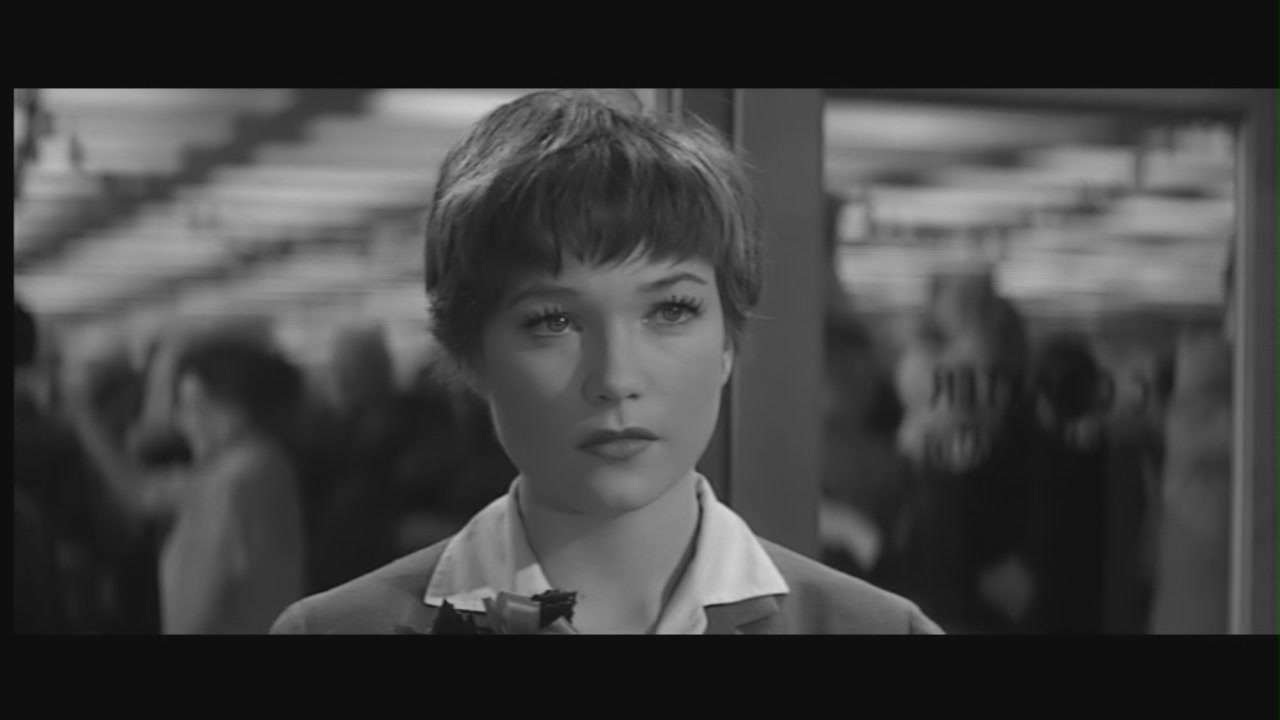
Shirley-in-The-Apartment-shirley-maclaine-5246028-1280-720


Final review: 4/5. Sexism abounds but it was the 60s, so not unexpected.

Up next: Rebel Without a Cause or Salt of the Earth


#83- West Side Story

Quick recap:  Romeo and Juliet, but with more dancing

We're fierce!

We’re fierce!

Fun (?) fact: Natalie Wood, who played Maria, was led to believe her voice would be used for at least some of the songs in the film. Instead, the producers went with Marnie Nixon and kept the truth from Wood. Nixon was not paid any direct royalties from the film or credited.

poor Marnie Nixon :-(

poor Marnie Nixon 😦

My thoughts: My non-existent attorney has requested that, in an effort to retain what little integrity I have left since watching The Tin Drum,  disclose my disdain for Romeo and Juliet. Sure, I could blame it on my cynical nature of love or the fact that I find Shakespeare overrated or because it’s the one play everyone names as a favorite because they know no others. But mostly, I just think two 13 year olds getting married and then killing themselves is kind of crazy.

Frozen - Quote1

Plot aside, I really enjoyed the dancing and orchestral arrangement. It was kind of hard to buy into rival gangs dancing it out, but I eventually got into it. Everyone was flawless in their moves, of course. My favorite number was probably the Quintet and my least favorite was ‘I Feel Pretty’. In general, the lyrics left a lot to be desired, but that’s not something I can fault the movie. Or actually, the lyrics are very insightful and romantic, until I remembered that Maria and Tony had only met a few hours ago. Maybe it is my cynical nature after all.

The scenes where the gangs were together talking about the rumble and the rumble itself were exciting and made me desperately want to see a live show. The scenes between Tony and Maria bored me to tears and I felt like the pacing was entirely too slow for much of the film. They seemed genuinely in love though, so I’ll give them that. The death scene (Come on, do I really need a spoiler alert for this?) was moving and gave me pause as to whether I hated Romeo and Juliet as much as I thought I did.

I think that, as a musical, West Side Story holds up rather well. The depiction of Puerto Ricans, though…….that was a little embarrassing. The accents were awful, like, in doing research for this movie, the actors were required to sit through hours of I Love Lucy reruns and try to imitate Desi Arnez (who was Cuban, but still).

Final review: 3/5, almost a 4. I’m very curious about the live show and how it stacks up against the film. Or, the other way around, since the Broadway musical came first.

Up next: I had a last minute idea to only watch Oscar winners this month, but seeing as how there are only 4 on Netflix Instant, I’ll supplement with my regular list. Terms of Endearment is next.


#71- Cleo from 5 to 7

Quick recap: Cleo, a French singer, must wait on the results of a biopsy. She is supposed to call the hospital in the evening so the entire film happens from 5 pm to 7 pm, as she ponders life and her fate.

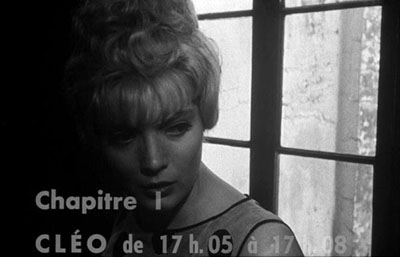
It took me almost the entire movie to realize the numbers were the time

It took me almost the entire movie to realize the numbers were the time

Fun (?) fact: There isn’t much fact-wise about this film, probably because not much happens. The only mildly interesting thing I could find is that ‘Cleo from 5 to 7’ is considered a French Wave film, which I can pretend to have an opinion about now.

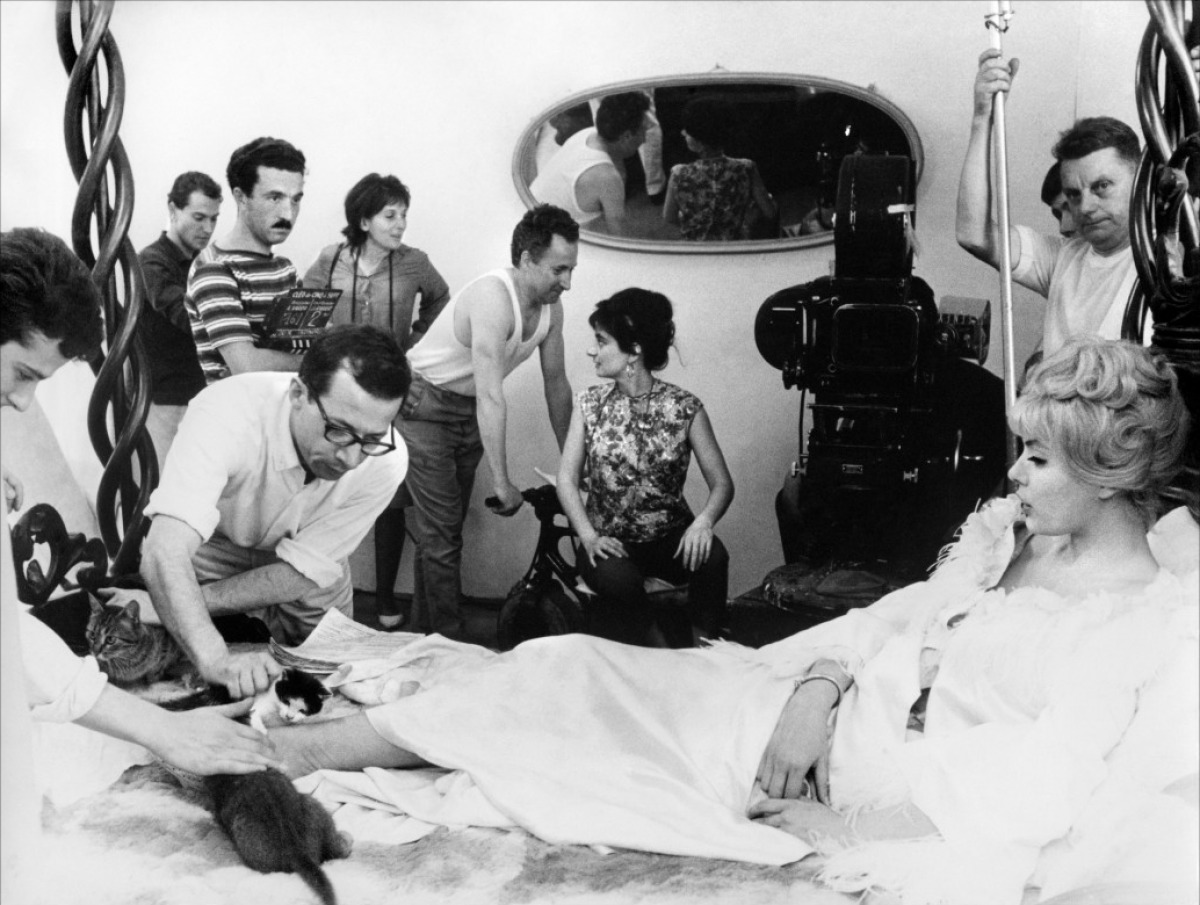
The random kittens were a nice touch

The random kittens were a nice touch

My thoughts: I realize I don’t have much to go on, seeing as how I have only seen 3 French films, but the ones I have seen are….different. I am well aware that ‘French’ isn’t a genre, but from Amélie to Murmur of the Heart to this movie, there is a connecting thread of Frenchness. That’s not a bad thing, because I find it amusing to finally understand what pop culture has been alluding to this whole time.

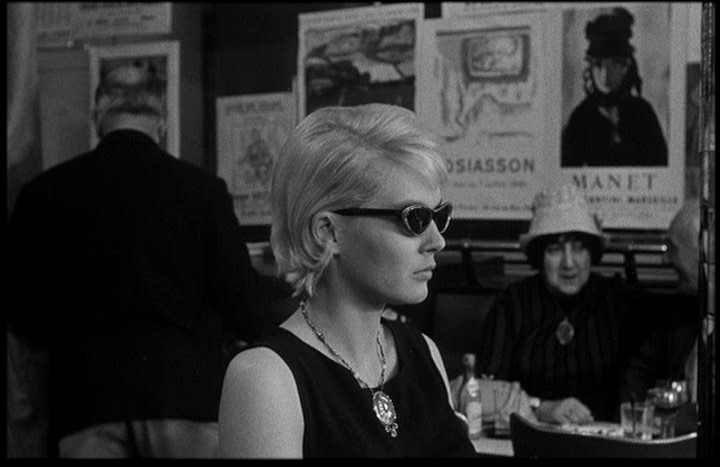
The concept of filming in ‘real time’, as Cleo waits for the results of her test is interesting, but also kind of boring because nothing happens. Most of the movie is just watching her be sad with her friend, sad at her house, sad with her managers, sad at a café and even sad at the park. I get the point, that this is an existential movie where nothing is supposed to happen, but that doesn’t make it any less boring. Once in awhile, when Cleo was gazing sadly at nothing in particular, she would do a voice over and say something profound. But for the most part, there was just a lot of looking sad. My favorite was in the café when she put her own song to play on the jukebox and then watched sadly as no one paid attention to it.

less sadness. More random kittens.

less sadness. More random kittens.

It would be unfair of me to pretend that I despised this movie because really, there were some enjoyable parts. I most identified with Cleo’s transformation from ‘baby doll’ to actual woman by the end of the film. Once she took off that ridiculous wig and donned her black dress, she become 50% less insufferable. Her conversation with the soldier was also really nice. I daresay he was my favorite part of the film because he was just so likeable and was able to draw a real discussion out of Cleo. Although there wasn’t much of a plot, I felt the ending when the diagnosis was confirmed was the best way to go. She takes the news stoically and then confides to the soldier that now she is happy. Considering the soldier was shipping off to war that night, the fact that both of them had uncertain futures was especially poignant.

Final review: 3/5. I didn’t hate it. I was amused by the silent film that played in the middle of this movie. It was funny and also very French, as it should be.

I thought I was watching a Wes Anderson film during the opening credits

I thought I was watching a Wes Anderson film during the opening credits

Up next: Kramer vs. Kramer


#68- Onibaba

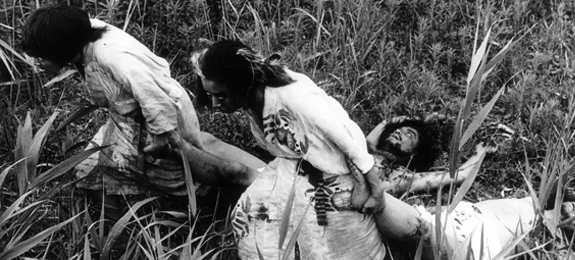
Quick recap: Two women, an old woman and daughter-in-law, make a living by killing soldiers and then selling their armor for money in medieval Japan . One day, the old woman kills a soldier who was wearing a demon mask. She then uses the mask to keep her daughter-in-law from having sex with the creepy guy next door, because that’s apparently how problems were solved back then.

the good old days

the good old days

Fun (?) fact: When the old woman removes the demon mask from the dead soldier, she is greeted with a gruesome, disfigured face. The director has stated that the makeup effects were supposed to symbolize A-bomb survivors and how they were seen as outcasts.

My thoughts: I realize that I have seen a lot of foreign films lately, which has its pros and cons. On one hand, I’m getting to watch something that most people claim they know about, but really don’t. On the other hand, I have to be really cautious to remember that ‘foreign’ isn’t a genre of movie. As I watched Onibaba, I was reminded on several occasions of another Japanese film, The Woman in the Dunes. In reality, there really isn’t much the two have in common, except for their language. This project has become a bit more complicated as I am starting to reassess some of my views on movies.

Since I mentioned genre, I think it’s fitting to add that Onibaba  is considered a horror film to many people. That strikes me as odd because the mask doesn’t even show up until the last half to two thirds of the film. Most of the film is comprised of the daughter in law sneaking out of her hut to get with the creepy neighbor and the old woman being angry about it. I suppose that the first few scenes that show the woman killing the soldiers and then throwing them in a pit may seem scary, but I wouldn’t classify the whole film as ‘horror’. The mask itself was rightfully scary, especially when the daughter-in-law encountered it in the reeds and the final scene where the old woman finds she can’t remove the mask is also unnerving. But not a horror film ,in my opinion.

I'd say this demon was just bad at getting its picture taken, than scary

I’d say this demon was just bad at getting its picture taken, more so than scary

Another reason why I don’t believe Onibaba to be a horror film is because the movie doesn’t center on the mask, but instead the conflict between the two women. Hachi, the creepy neighbor returns from war at the beginning of the movie with bad news. His friend, the old woman’s son, and daugther-in-law’s husband, has been killed. As can be expected, everyone is sad about the whole affair, although not very long because Hachi almost immediately starts hitting on the daughter-in-law. She refuses him at first, mainly because that would be a jerk move, to see another guy while you are still living with your mother-in-law and your husband has only recently died. But soon, feelings overtake her and she starts sneaking out and having sex with him. Now if this had been a modern movie, we might have expected the old woman to sit the girl down and tell her to stop being a jerk. But of course, that’s not what happens. Instead, the old woman tries to convince the girl that a demon will get her if she continues seeing Hachi. The girl doesn’t listen because, you know, sex. So then the old woman tries to come on to Hachi and offer herself instead. He refuses because the old woman is kind of creepy. It just seems like a lot was done to keep the girl from seeing Hachi instead of actually talking to her. I found the situation much more amusing than scary.

On a different note, I am once again surprised by what was allowed back in 1964. There is lots of random nudity and of course sexual scenes. I’m pretty sure there is male frontal nudity as well because at some point the young couple just said ‘screw it’, and started running around naked to piss off the old woman. The scenes where the soldiers are killed are also violent, almost on par with what you might see today.

This actor really played up the role of 'creepy neighbor' more so than 'sexy man'

This actor really played up the role of ‘creepy neighbor’ more so than ‘sexy man’

Final review: 2/5. The movie ends when the old woman realizes that she is being punished for meddling in between her daughter-in-law and Hachi but also Hachi gets killed so everyone learns a valuable lesson about something. I wouldn’t sit through this again or even recommend it.

Up next: Cleo from 5 to 7 or Brazil