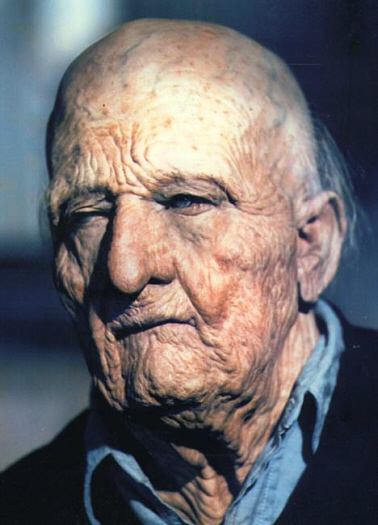
#213- The Bird with the Crystal Plumage

Quick recap: A man witnesses a woman being stabbed and observes something ‘off’ about the assault. He takes it upon himself to solve the case, all the while trying to remember the one detail that will solve everything.
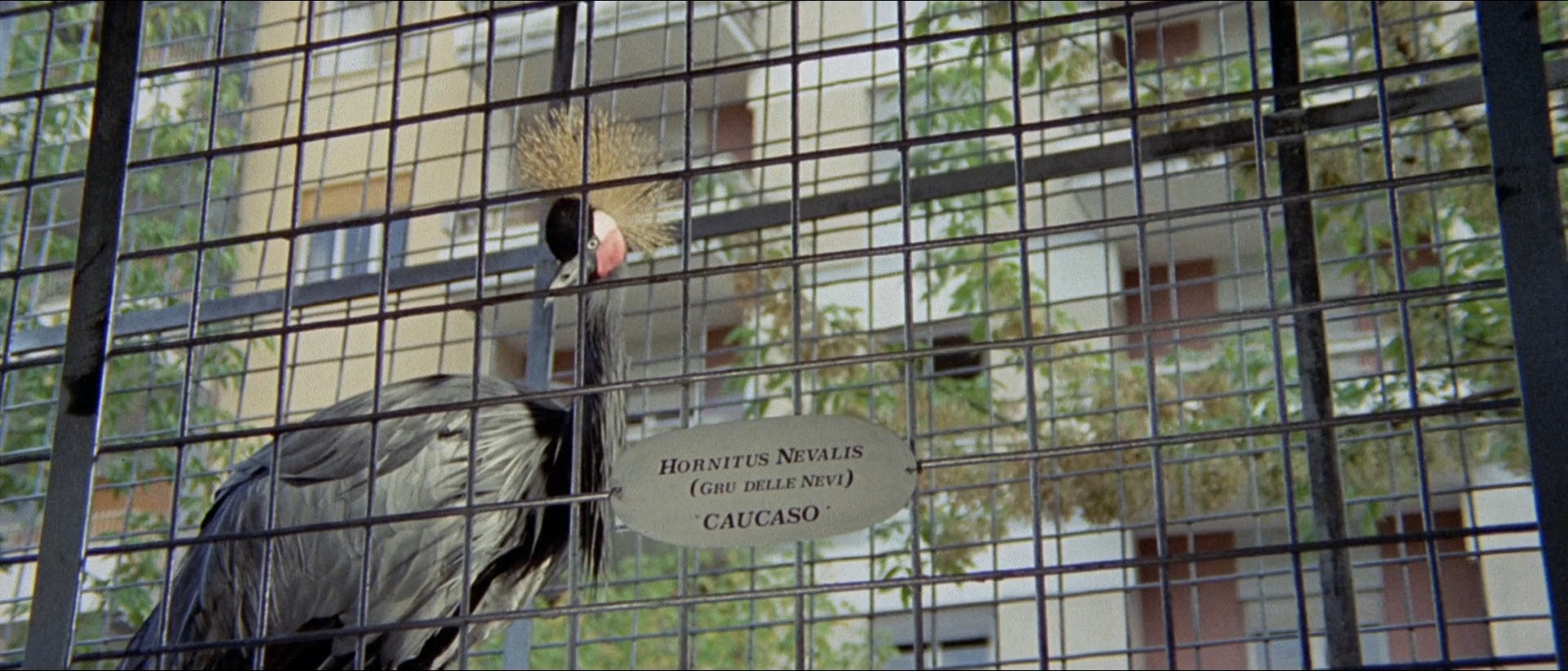
*SPOILER ALERT* It wasn't the bird

*SPOILER ALERT* It wasn’t the bird

Fun (?) fact: There is no such thing as a bird with crystal plumage. Playing the part in the movie is your common household Grey Crowned Crane.
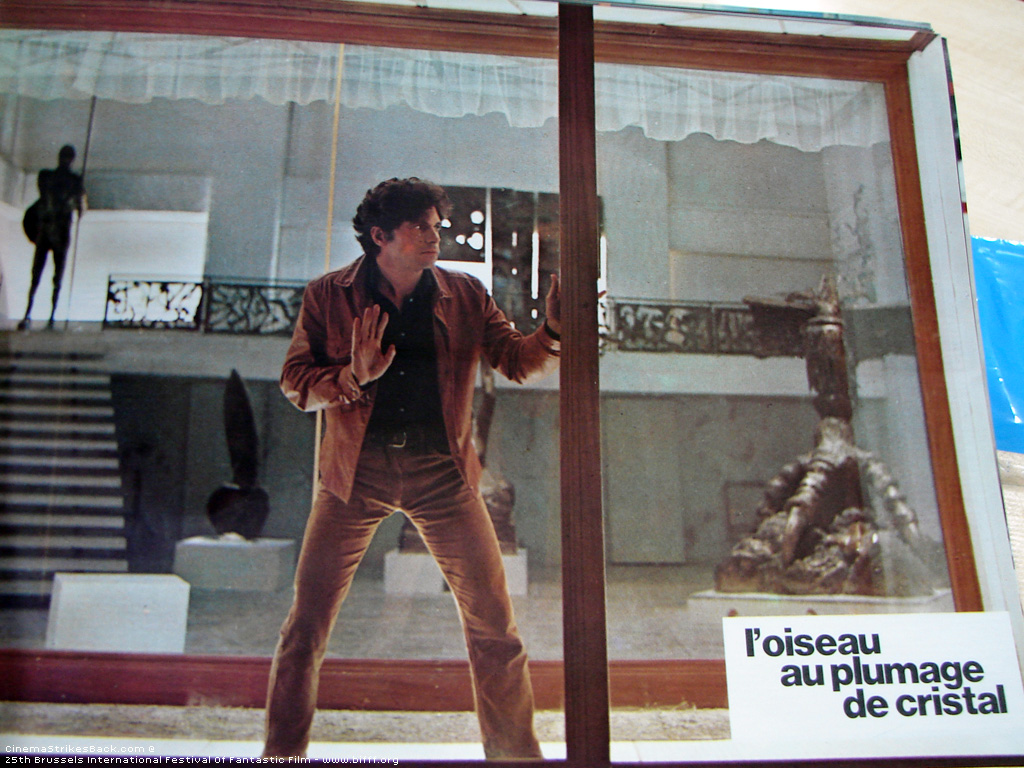
A woman is being stabbed! Now is not the time for your mime routine, Sam.

A woman is being stabbed! Now is not the time for your mime routine, Sam.

My thoughts: Although this movie is listed as horror, it’s really more of a thriller. There’s nothing supernatural or paranormal- just some person killing a lot of people. In that respect, I guess Henry: Portrait of a Serial Killer and Silence of the Lambs aren’t really horror movies, either, but they have more frightening moments than this one. Bird with the Crystal Plumage starts with a person in a black trench coat taking pictures of women. A little creepy, I guess. And then a few moments later the main character, Sam, sees what he thinks is a woman being stabbed. She writhes on the floor covered in blood, and because it’s an art gallery where the doors are pieces of art and can’t open, Sam can’t do anything about it. When the police come, they question him because it’s all really suspicious. It is then revealed that the city has a serial killer and this is one of the victims. At that point, the movie no longer became scary and actually not even interesting because I figured out the ending way before I was supposed to. Suck it, Encyclopedia Brown!

As is usually the case, it was the minor details of the movie that ultimately ruined it for me. It made sense that the police questioned Sam extensively and even took away his passport because he was a valuable witness. It did not make sense, however, to let him take a tour of the forensic lab and give him a how to on evidence. Nor did it make sense to give him details and photographs of the case and expensive equipment just in case the killer called him. I don’t watch many crime shows so maybe this is a thing, but I imagine that it’s generally not a good idea to make your star witness also a detective.

Regarding the serial killer, it turns out that it was the woman Sam saw getting stabbed that night. What really happened, is that she was trying to stab her husband, as serial killers are wont to do, and somehow stabbed herself? That part wasn’t very clear. If so, she kind of sucked at her job. Her husband also helped kill people or something, but some scientist guy explained at the end that he was under some psychosis and didn’t do it on purpose. And not to be sexist, but once I realized that the killer was a woman, I stopped being even a little frightened. Her laugh at the end was supposed to be scary but it came off as annoying. Seriously, focus on stabbing and stop laughing about it and MAYBE you would have a higher body count. It really shouldn’t be that difficult. As for how the bird fits into all of this, Sam’s friend is some bird scientist and heard a bird sound when the killer called him. He really built up the whole thing, saying it was a very rare species only found in one part of the world, but that there was one in Italy. ‘Where??’, everyone wondered out loud and after a dramatic pause, the man said, ‘the zoo!’, and everyone rushed off excitedly. Sometimes it makes you wonder where the line is that separates ‘good’ movies from those perfect for Mystery Science Theater 3000.

Final review: 1/5. I could see it as a midnight showing with a small cult following, but that’s about it.

Up next: the final film for Horrorfest

#212- Suspiria

Quick recap: A young woman joins a prestigious ballet academy and realizes she should have done some research first about all of those murders.

With a place as red as this, you'd be crazy NOT to do all of your murdering here

With a place as red as this, you’d be crazy NOT to do all of your murdering here

Fun (?) fact: The director’s original idea was for the ballet academy to host little girls, but when he noticed the horrified looks on the crews’ faces, he decided to change the characters to women. Not wanting to exert any extra effort because let’s face it, writing in all of those murders takes a huge chunk of your time, the director kept all of the dialogue as is.

death by barbed wire, totally appropriate for little girls!

death by barbed wire, totally appropriate for little girls!

My thoughts: On my ever-changing, wildly biased and sometimes inaccurate list of monsters that scare me, witches tend to rank at the bottom. With the exception of the Blair Witch Project, witches seem more cool to me than scary. Not saying I advocate murder, but I like the idea of being able to cast whatever spells I want and get people to do my bidding. And if you know me, you know I have TONS of bidding that needs to be done. The witches in Suspiria (SPOILER ALERT: They are witches) fall more in the ‘scary’ spectrum than ‘not scary’, but I’m still not convinced I should be fearing for my life.

If you are someone who loves gory stuff, Suspiria is perfect for that sort of thing. There are many wonderfully bloody deaths from the get-go, which kept the plot interesting but didn’t really freak me out. The manner of deaths were also creative, which gave the witches a chance to show off. What impressed me about the film was that it was the little details that stuck with me, such as the creepy little boy and the maggots raining on all of the girls’ heads (that part wasn’t so little, I suppose). The color in the movie was also very off-putting. It reminded me of an old technicolor movie, but more vivid hues and less eye sores. Of everything mentioned though, it was the musical score that creeped me out the most. It’s hard to describe, but it totally sounds like a horror movie soundtrack. The director apparently played the score while filming and it even creeped out the actors.

The one drawback to the film is the acting. As mentioned before, the director didn’t feel like editing the script after changing the characters, so the dialogue seems weirdly childish. It didn’t bother me too much, but it also meant that I wasn’t very invested in the characters. I won’t give away the ending, but when Suzy figures out the academy’s secret purpose, I realized that I didn’t really care one way or another if she lived or died. There was never any background on her and it just seemed like if they didn’t kill her, it would be some other unlucky ballerina. On the other hand, the witches killing whomever they liked made the movie slightly scarier than if they just targeted her.

Final review: 4/5. Worth watching if you love horror movies

Up next: HorrorFest!

#198- Little Big Man

Quick recap: A 121 year old man recounts his various adventures growing up in the wild west.

lbgunfighter

Fun (?) fact: I’m sure there’s some really interesting stuff out there about this movie, but what stuck out most to me was that Dustin Hoffman is 78 years old. No one else seems to think anything of this, but I’m still trying to wrap my head around it.

I don't see him looking like this at 121, but you never know

I don’t see him looking like this at 121, but you never know

My thoughts: As with anything Native American related, it’s usually very difficult to pull off anything that isn’t completely offensive, so I didn’t have high hopes going into Little big Man. In fact, I had already planned some of the snark I would say on this post related to such insensitivity. Alas, that version won’t happen because I thought everyone did a really good job (impressive, even) with the subject matter, managing to create something hilarious and heartbreaking and giving me the motivation to learn more.

Little Big Man is mostly about Jack Crabb’s (played by Dustin Hoffman) relationship with the Cheyenne nation. As a child, his entire family was wiped out from the Pawnee tribe, except for him and his sister, and a member of the Cheyenne took him in. His sister ran away, but he stayed until he was a young adult and became an honorary brother. Sure, there were some questionable things like the manner of speech the Cheyenne had and their various traditions, but overall, they were seen in a very positive light. Crabb fights with white men at some point and once he is discovered as one of them, he is shipped off to a town to learn some religion. It’s from here that the movie begins to bounce back and forth. He goes through every Western cliche you can think of ( helper at a medicine show, gun fighter, helping a woman at a whorehouse, and so on), but that’s what made the movie funny. This is a tall tale, you see, and I never really got whether or not we are supposed to believe it ( think Big Fish), but it was very entertaining, nonetheless.

One of my reasons for liking this movie so much is the way Crabb always finds his way back to the Cheyenne. He is white, yet it is with these people that he connects with the most. There were several stereotypical characters, but they were portrayed with compassion, especially compared to the white people Crabb encountered elsewhere.  The scenes where Custer and his men tore through the villages killing women and children were very difficult to watch and it was shocking, compared to the lightheartedness of the rest of the movie. This movie was made in 1970, at the height of the Vietnam war so there were many parallels to what was going on in that part of the world at the time.

The movie isn’t perfect and my biggest annoyance was how Forrest Gumpy the plot felt at times. For example, Crabb meets up with Wild Bill during his gun fighter stage, and sees him accidentally kill a man. Seven years later, the two meet up again at a bar and out of nowhere, a kid comes in and shoots Wild Bill dead. It turns out the kid was the son of the man Bill killed earlier and Crabb just happened to be there when it all went down. I have nothing against Gumpy, but it got old after awhile knowing that some ironic thing was about to happen.

Final review: 4/5. For a long film, I didn’t get bored once

Up next: Orphans of the Storm

#195- All that Jazz

Quick recap: Joe Gideon is so busy with his job as a choreographer, as well as keeping up with his girlfriend, ex-wife and daughter that he doesn’t pay attention to a life threatening heart condition.

Always with the jazz hands, or 'Fosse hands', since this is basically a biography about Bob Fosse

Always with the jazz hands, or ‘Fosse hands’, since this is basically a biography about Bob Fosse

Fun (?) fact: Shirley MacLaine says that she is the one who gave Bob Fosse the idea of All that Jazz while he was recovering from a heart attack.

John Lithgow in All that Jazz

John Lithgow in All that Jazz

My thoughts: I had no idea who Bob Fosse was before watching All that Jazz, which is kind of ridiculous considering my love of Chicago and my like of Cabaret. Not knowing who he was didn’t detract from the film, even though it is a thinly veiled biography about his life. Instead, I researched his life afterward and it made the ending (which I’ll get to in a minute) all the more sad. I think that if I had known about him beforehand, it wouldn’t have had the same emotional impact that it did.

Essentially, All that Jazz is about a dying man who either doesn’t know he is dying, or refuses to believe that he is. The very first scenes show Joe Gideon in his element, casting the dancers for his new show and flirting with just about everyone. And then there is a scene with Gideon where he appears to be backstage with a woman all dressed in white. He is flirtatious with her as well, and it took me awhile to figure out the structure, that this wasn’t part of his real life, but a way for the audience to gain insight into who he was and where he started. Throughout the entire movie, I don’t think I could call Gideon loveable or even very likeable, but a part of me still rooted for him, and even during the final number where he sings about dying, I hoped he would pull through. In a weird way, I was in my own state of denial that this would be the ending, even though Fosse foreshadowed the death from the very beginning with the woman in white. I also loved the scenes that started each day, with Gideon in the shower, popping pills and then doing jazz hands in the mirror. His energy is drained eventually until he can’t even say his line, ‘It’s showtime, folks!’.

I could go on for several more paragraphs about this movie but I’ll skip ahead to the scene that impacted me most. As Gideon slips further and further into his own mortality, he starts hallucinating about the people he cares for, in the form of musical numbers of course. The final number is the one that did me in, with Gideon singing, ‘I think I’m gonna die’. It’s the perfect finale and lasts for almost 10 minutes, as he sings and works his way through the ‘audience’, full of friends, family and co-workers he wants to say goodbye to. What made this so sad for me was that all of this was going on in his head and he never actually got a chance to really say what he wanted to say. I wouldn’t say that his life was filled with regrets, but he was the sort of person who lived for the moment, and not really the future.Had he taken better care of himself, this could’ve all been prevented. It just seemed like a realistic depiction of how many people die, with loose ends. The woman in white shows up and Gideon starts moving toward her, as the number begins to wind down. It was beautiful the way he was shown slipping away, and then the last scene was of the dead body being put into a bag. It was such a cold, jarring ending that made me feel as if I had lost someone I personally knew, and wasn’t really watching a movie.

The 1979 Best Picture nominee ÒAll That JazzÓ will be screened as the next feature in the Academy of Motion Pictures Arts and SciencesÕ ÒGreat To Be NominatedÓ series. The Bob Fosse film, based on FosseÕs own life as a womanizing, drug-using choreographer, will screen on Monday, May 7, at 7:30 p.m. in the AcademyÕs Samuel Goldwyn Theater. Several members of the cast and crew, including actors Deborah Geffner, John Lithgow and Kathryn Doby; film editor Alan Heim; associate producer and assistant director Wolfgang Glattes; executive producer Daniel Melnick; production sound mixer Chris Newman; production designer Philip Rosenberg; cinematographer Giuseppe Rotunno; and music editor Michael Tronick will participate in a post-screening discussion. Pictured here: Roy Scheider (center) and dancers.

Final review: 5/5. I’m tempted to watch it again before having to mail it back to Netflix, I loved it so much

Up next: The Kid Brother