#123- Dead Man

A big thank you to S for recommending this movie. My favorite part was that it was an ‘art house’ film that didn’t make me want to drink heavily. 

Quick recap: Johnny Depp plays William Blake (not the poet), an accountant on the run from the law. After murdering a guy, Blake is shot. Thus begins his journey as a dead man (wanted for murder) and a dead man (because he got shot).

Johnny Depp pre judging himself on later film roles

Johnny Depp pre judging himself on later film roles

Fun (?) fact:  Many of the lines spoken by Nobody are taken from the real William Blake’s poetry.

My thoughts: My thoughts on Johnny Depp the actor are as follows: I have none. I’m aware of his career and I’ve seen many of his films but I wouldn’t call him a favorite by any means. Or even an actor that I hate (yeah, Bill Paxton, you’re still number one for that). I don’t really think it’s that big of a deal that he has done so many films with Tim Burton because he is well suited for those roles. It is nice, however, to watch a movie like Dead Man and be reminded how talented Depp really is.

Of the many aspects of the film, it was the scenery I was drawn to most. I read trivia that cinematographer Robert Müller ‘s idea to shoot in black and white was based off of Ansel Adam’s photographs. For a fantasy film, the setting was entirely realistic and I imagine that’s exactly how it would’ve looked and felt back in the 19th century. With the school year starting, my wanderlust has picked back up and I now find myself fantasizing a trip up north to make my own trek through the woods that Blake and Nobody rode through.

images

What interested me most about Dead Man is that although there are plot elements, the emphasis is really on the journey. There aren’t any monologues concerning Blake’s thoughts on his impending death or what he will leave behind. He is just along for the ride and for whatever happens. The scene where Nobody brings him to his tribe is a great example of this, as Blake just lays there and watches what is being done around him. He doesn’t fight death or argue about it. It just is.

Final review: 5/5. I’m shocked at this rating because immediately after watching it, I had planned on giving it just a 3. Considering I’m still talking about it to people and thinking about the meaning behind some parts, I felt it best to bump it up to a more deserving score.

Dead-Man-6

Up next: The Thin Blue Line

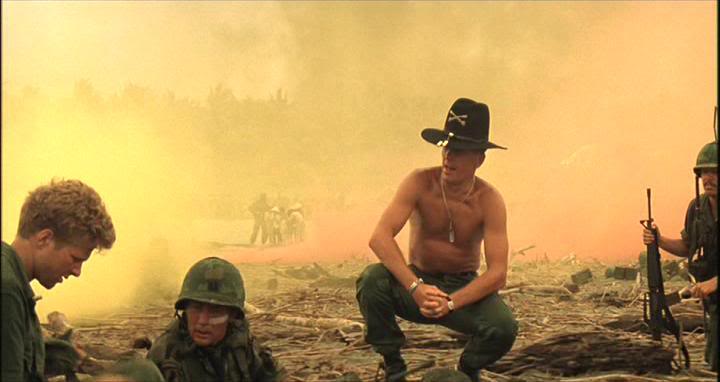
#113- Apocalypse Now

Quick recap: During the Vietnam War, Captain Willard is sent on a top secret mission to assassinate Colonel Kurtz, who has gone insane.

also considered to be a fine surfing film also considered to be a fine surfing film

Fun(?) fact: The making of Apocalypse Now is so interesting that there is a documentary about it called ‘Hearts of Darkness: A Filmmaker’s Apocalypse’,so I’ll save the good trivia for when I watch it. However, one of the most interesting aspects of this film is how much of it is ad-libbed or improvised altogether, such as the beginning scene with Martin Sheen and Marlon Brando’s speech as Colonel Kurtz.

My thoughts: I give up. After having been proven wrong time and time again, I can no longer say I dislike war movies. Just as ‘foreign’ is not much of a genre, neither is ‘war’. Maybe I’m still not big on WWII era films (I’m sure I’ll be proven wrong soon), but Vietnam era films will always be a source of fascination with me.

Apocalypse Now is great for so many reasons- the acting, the soundtrack, the cinematography, everything. I was hooked from the first scene and felt a little disappointed when it was over because I could’ve watched it for several hours. I especially loved the mounting apprehension as the crew came closer to their encounter with Kurtz. And then actually finding Kurtz was every bit as evil and creepy as I had imagined it would be. As insane as he was, his fortress or compound or whatever it was called practically screamed, ‘This is what war really is’.

Which leads me back to the beginning where I admit that I don’t hate war movies. I don’t enjoy the killing and technical talk, but I do love a movie with a deeper meaning. Like most high schoolers I was forced to read ‘Heart of Darkness’, which this movie is based on. I remember hating it, not because it was hard to read (it wasn’t), but because I couldn’t identify with it. In fact, the only thing I remember from that whole book is the phrase ‘British Imperialism’, which I am too lazy to find out if that was the meaning or not. But Apocalypse Now totally means something to me, that as pithy as it sounds- war is hell. I loved the exploration of sanity and how someone could go so far away and yet still make logical sense in the context of war. War makes everyone a little insane and it changes you. As Captain Willard said at the beginning, ‘When I was here, I wanted to be there’ when I was there, all I could think about was getting back to the jungle’.

apoc13

Final review: 5/5. Because of course.

Up next: Wild Reeds

#106- The Conversation

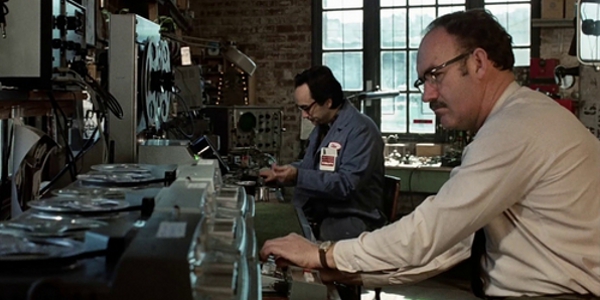
Quick recap: Surveillance expert Harry Caul (Gene Hackman) records a conversation for a mysterious client and comes to the conclusion that the couple he heard are going to be murdered. I’d say this is a good lesson about the dangers of eavesdropping, but that’s this guy’s job so this is more of a story about doing a job really well.

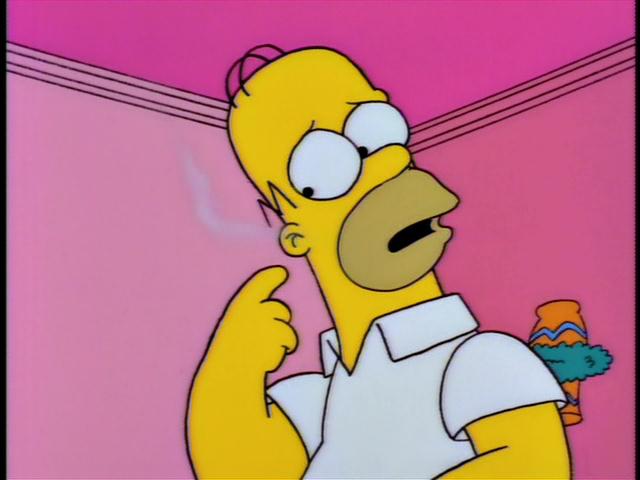
Homer: Marge, my ears are burning! Marge: Homer, we weren't talking about you. Homer: No, my ears are really burning. I wanted to see what was inside so I lit a Q-Tip Homer: Marge, my ears are burning!
Marge: Homer, we weren’t talking about you.
Homer: No, my ears are really burning. I wanted to see what was inside so I lit a Q-Tip

Fun (?) fact: Continuing with my coincidence fact series, The actress who plays Ann in The Conversation played Laurie in American Graffiti. It’s like the 6 degrees of Kevin Bacon except nothing like it all, and much more boring. You’re welcome!

My thoughts: With a title as simple as The Conversation, I knew that the movie was either going to be awesome or worse than The Dead, which at least gave me hope that someone would expire by the end of the movie (Spoiler alert: no one did).  But with The Conversation,  I already knew I was getting something that every movie has, except for all those silent films, of course. Luckily, director Francis Ford Coppola cut to the chase and showed the aforementioned conversation first. What was said between the couple sounded a little off but gave no indication or hint as to how the rest of the movie would turn out.

Don't be fooled! This is The Conversation, but there is no actual conversation going on right now Don’t be fooled! This is The Conversation, but there is no actual conversation going on right now

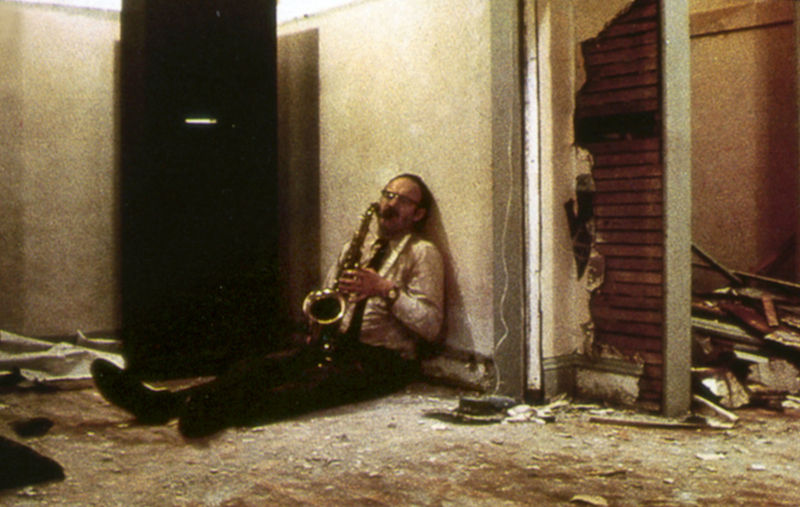
As you can imagine, The Conversation is an introspective film that gives more information about Harry Caul than the actual mystery of the couple. Caul is an anti-social man who would rather listen in on other people than give any information about himself. He is also extremely paranoid, which makes sense when your job is to basically spy on other people. On the other hand, he spends so much time lost in his world that he misses all these big clues around him. For example, during a convention about spy equipment (which is just as interesting as you can imagine), a competitor slips a ballpoint pen into Caul’s pocket that will record his conversations the rest of the night. IRONY! I knew the second I saw the pen what it actually was, but Caul didn’t think twice. As he becomes more concerned about the fate of the couple, Caul decides to destroy the tapes instead of handing them over and potentially having blood on his hands. After a drunken party at the spy convention, he sleeps with a woman who-you guessed it- stole the tapes! It was completely obvious what was going to happen which I thought was silly except after thinking about it, the whole scene just made me feel even more sorry for Caul and understanding his loneliness.

I have to stop here. At this point, when the tapes were stolen I was prepared to give this movie a 2/5 because although some of it was interesting, it was also rather boring. But then, as Caul followed the couple to the hotel room to find out their fate, my opinion changed. I LOVED this movie. The ending was much more complex than I ever expected it would be and I have many questions. Although this movie is 40 years old, I’m going to hold off revealing anymore spoilers. Francis Ford Coppola, the guy who directed the Godfather movies, has said that The Conversation is one of his personal favorites and I completely understand why.

8095-the-conversation

Final review:  5/5. I’m tempted to watch the movie again to see what other clues I might be able to pick up that will help me with the ending.

Up next: E.T

#100- Shawshank Redemption

Special thanks to Mike for requesting this movie! I especially appreciate that it wasn’t a French film.

Quick recap: Andy Dufresne, former banker, is now a prisoner serving a life sentence for the murder of his wife and lover. Although he has been wrongly convicted, all is not lost as Dufresne now has plenty of time to devote to his hobby of rock carving. 

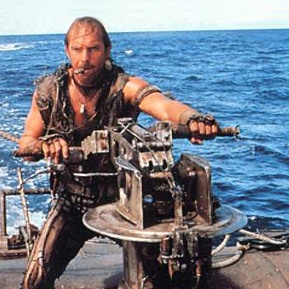
Fun (?) fact: Normally I don’t find trivia about actors who were considered for a role to be very interesting. However, I could practically hear the Sad Trombone of Regret when reading that Kevin Costner turned down the role of Dufresne to star in ‘Waterworld’.

Yeah.

Yeah.

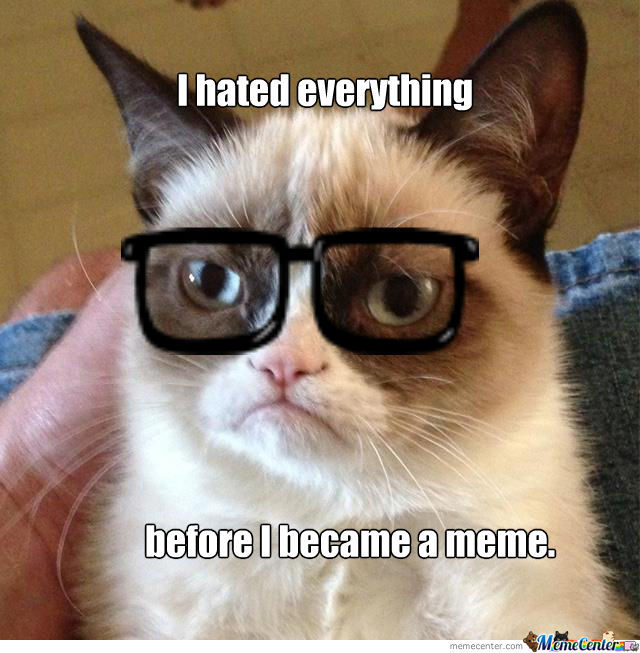
My thoughts: I chose Shawshank Redemption as my hundredth movie because I feel it to be one of my biggest pop culture holes. Considering it is currently ranked as the #1 movie to see according to IMDb, I decided to go ahead and watch it. One thing you should know about me is that the more something is recommended to me, especially with a plea like, ‘you will love it!’, I most likely will not. I prefer to find things I love on my own and there’s just something about loving something that everyone else does that makes it less special. Totally doesn’t make me a hipster, though. (Side note: The Lumineers and Mumford and Sons are dead to me.)

I hate this meme too

I hate this meme too

All that to say that as much as I tried to find fault in this movie, I couldn’t find one. And I tried really, really hard. I had a whole set up written about how schmaltzy and too convenient the ending is, but after thinking about it, I don’t know if I would’ve enjoyed something darker. It did bother me how quickly the entire prison warmed up to Andy but then again, this is Stephen King we are talking about. That’s kind of his thing: good vs. evil in the most simplest of terms. Andy is Good, supernaturally Good. His one character flaw of helping the Warden funnel money into secret accounts is actually another example of Goodness. And the Warden is evil and so must be destroyed by the power of Good. So in terms of how a King story is supposed to turn out, this one is spot on.

The acting is flawless, the scenery beautiful and tragic, and the plot runs at a perfect pace. As for what I took from the film- not much. The theme that hope keeps us alive in the most dire of circumstances is not a new one and Shawshank Redemption, although flawless in many ways, doesn’t completely sell the idea to me. Andy had hope for getting out but he was also really smart and in the end, saved himself. It wasn’t hope so much as a detailed plan. And as for his friend Red, he had hope that eventually got him out of prison but what really saved him in the end was a good friend.

I was sucked into Shawshank Redemption from the very beginning. I’m definitely glad I chose it for #100 because it was a great reminder why I’m doing this project in the first place.

Final Review: 5/5.

Up next: A very special announcement and a recap of what I’ve watched so far