#84- Terms of Endearment

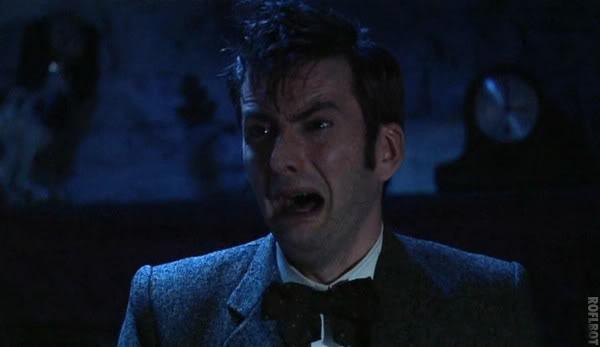
Quick recap: Terms of Endearment follows the 30 year relationship between a mother and daughter. When something bad-DAMMIT. I can’t do this. Damn you all to hell, Terms of Endearment. Evil incarnate is what this movie is.
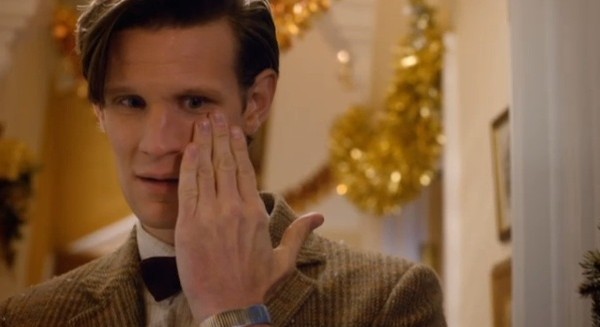
doctor-who-cry-600x327

Fun (?) fact: As a gift for directing the movie, Matt Groening gave James L. Brooks a book of ‘Life in Hell’ cartoons. Brooks loved it so much, he got Groening to create cartoon shorts for the Tracy Ullman show. And that’s how The Simpsons was created!

My thoughts: Before I go any further, I need to confess that yes, I did in fact cry. I’m not proud of it, but at least I fought hard until the very end. As you can probably pick up on, I’m not the most sensitive when it comes to schmaltzy things. Anything Nicholas Sparks makes me physically ill  as well as movie theaters that have ‘girlie nights’. UGH. I mean, if you  want to show Ferris Bueller, DO IT. Don’t label it ‘girlie night’ and slap on some discount wine special with the purchase of sushi. It cheapens the film and isolates a good portion of moviegoers who would’ve gladly gone otherwise. /rant

Back to the movie. If this film has any strength to stand up to other Oscar Winners, it does so with the strong acting. Every actor was believable which is probably why I was able to suspend my hatred for anything cheesy and let myself be free with my emotions. I absolutely loved Shirley MacLaine (damn you, James L. Brooks for making me love Shirley MacLaine). Debra Winger grew on me as the movie went on, but her laugh never did. I read that she was trying to get over a cocaine addiction while filming so I don’t feel so bad. Jack Nicholson of course was wonderful as well, but this ‘arrogant jerk who turns out to be a good guy’ is kind of his thing.

jennifer-lawrence-jack-nicholson

For all the ‘girlies’ who came here to read a gushing review of the film that totally destroyed their every emotion, it’s time to stop reading.

I was into the mother/daughter relationship from the beginning because I am a daughter who happens to be close to her mom. I totally got the endless phone calls and how much they shared with each other. The entire relationship seemed completely authentic, even leading up to Emma’s death. (Oops. SPOILER ALERT: Emma dies.) The plot started to fall apart  towards the end as Emma got closer and closer to death. For one thing, making the decision as to who would keep the children seemed way over the top. Maybe that was a thing back then, but Flap was a perfectly decent father. He should’ve just sucked it up and raised his own children instead of pawning them off to Aurora so that he could continue his love affair with that other woman. Then again, that would’ve saved like 10 minutes of drama. The last 30 minutes of the film is basically, ‘are you crying yet? no? Let me put in a scene where Emma says goodbye to her children! That didn’t do it? How about Aurora screaming at the nurses to help her daughter who was in pain? No? Dammit. You are totally going to cry when Emma actually dies. There we go! Just in case, let’s add a few more scenes to keep you crying.’
10th-crying-doctor-who-34018480-600-347

Final review:  4/5. You couldn’t make me sit through that again, though.

Up Next: All About Eve


#76- Groundhog Day

Quick recap: Phil Connors, local weatherman, is sent every year to the town of Punxsutawney to report on Groundhog Day. After a bad day  makes him hate the town even worse, Connors wakes up the next morning and realizes he has to repeat the holiday over again. And again. And again. And again. And……you get the point.

Fun (?) fact: Many people have been stuck in their own time loop (SEE WHAT I DID THERE?) trying to calculate how long Groundhog Day lasted for Connors. The official estimate is 10 years, although I would say close to 30. One recent calculation came to over 1000 years.

I should try this with my cats!

I should try this with my cats!

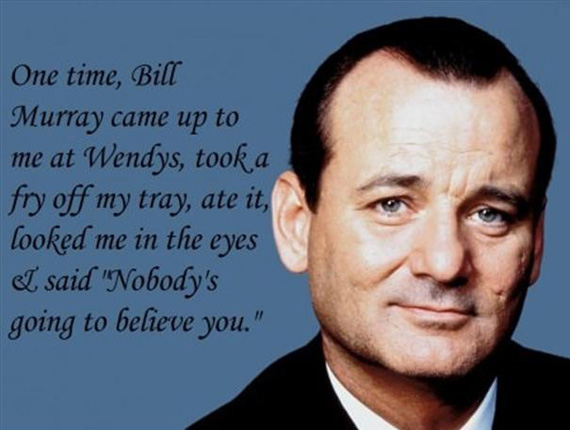
My thoughts: As you may have picked up on, the Internet loves to obsess over certain celebs. One of the earliest examples was Chuck Norris when people started making up facts about him. And then everyone collectively realized that Norris was a hardcore christian and slowly backed away. More recently, Bill Murray has been the target of such adoration. He recently did a Reddit AMA and answered hard hitting questions like ‘Why the hell did you do those Garfield movies?’ I’m not normally one to get on the Internet bandwagon (except with doge, because that stuff is hilarious), but for once I believe the attention given to Murray is justified.

how I wish this were true

how I wish this were true

I can’t say I have seen too many of Murray’s movies, but I’ll go ahead and put my money on this being one of his best. I came into this movie thinking it would be just a comedy, nothing too special. And this movie definitely is funny. There were several scenes I loved, but mainly watching Murray’s expressions was good enough. At one point, as he realizes he will be stuck reliving the same day over and over again, he decides the only way out is suicide. He drives his truck off  of a hill, he jumps from a building, he stands in front of a car to get hit. The tone became much more dark and the true horror of the situation started to sink in for me. I have no idea what I would do if I were stuck in a time loop, but I imagine it would drive me insane rather quickly. Murray manages to convey the underlying seriousness with humor instead of veering into the ‘sappy moral lesson’ path.

I wouldn’t necessarily say that there was a moral lesson in Groundhog Day. The reasons are unknown as to how Phil Connors got into this situation, although I think it’s just bad karma from being a jerk. It is only after he realizes that being nice to people gets you stuff that he is able to escape to February 3. I don’t think it would hurt for a people to let that one sink in for a bit.

no reason for this picture except that I really like the doge meme.

no reason for this picture except that I really like the doge meme.

Final review: 5/5. I could see myself watching this as a yearly tradition because in all seriousness, Groundhog Day is kind of a stupid holiday.

Up next: The Postman Always Rings Twice


#74- Mr. Deeds Goes to Town

Quick recap: After a distant uncle leaves him millions, Longfellow Deeds moves from an idyllic small town to the big city. Once there, he is  taken advantage of and laughed at for such shocking things as giving donuts to a horse and playing the tuba. To make matters worse, the girl he falls in love with turns out to be an undercover reporter who has been writing all the sensational stories about him in the newspaper.

Fun (?) fact: The verb ‘doodle’ originated from this movie as well as the term ‘pixelated’, which was a popular word for a few years and then died out.

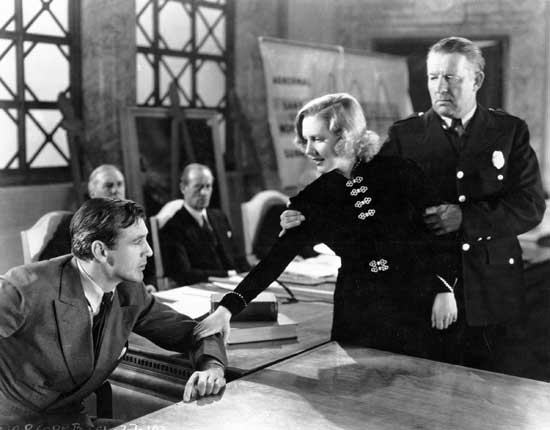
My thoughts: There is nothing I enjoy more than an American classic movie, provided I see the following: a spinning newspaper montage, a fainting lady, a climactic courtroom scene, and a random musical number. And boy howdy, did this movie deliver. After the 4th or so spinning newspaper montage, I realized that I had reached American classic movie heaven.

courtroom scene!

courtroom scene!

Seeing as how Mr. Deeds Goes to Town is labeled as a ‘screwball comedy’, I knew there wouldn’t be much thinking involved. I was disappointed with the first 10 or so minutes of the film because I couldn’t understand a word anyone said because they talked so fast. After I turned on the subtitles, however, I really started to enjoy myself. This movie is about as predictable as they come, and that’s okay sometimes. It was relaxing to find myself laughing over the sillier parts and rolling my eyes through the mushier ones. I think I was most surprised by the amount of heart this film had. Gary Cooper as Longfellow Deeds was the perfect fit. He was adorably naive, and yet was sometimes the sanest person around. I genuinely felt for him when the writers made fun of his poetry and my heart broke when he realized the woman he was in love with had secretly been making fun of him the entire time. Plus, Gary Cooper has a strong resemblance to Bill Nye that endeared him to me even more.

bow ties are cool

bow ties are cool

Mr. Deeds Goes to Town is adequately entertaining, but for me, really shines in a historical context. The way the small town is described is not what was really going on, but instead what Americans expected in the Great American Dream. In many ways, this movie sparked that idea of quintessential small town values trumping anything the big city has to offer. The tie in to the Depression was also an apt one. As Deeds tries to do good by not becoming a cynical fat cat, he ends up falling short of his own expectations when he realizes all the farmers he could be helping with his fortune. The scene were the farmer barges in on Deeds and points a gun at him was a little schmaltzy, but the movie’s heart was in the right place.

I felt the courtroom scene went on too long and all loose ends were tied up a little too neatly. As more and more witnesses came forward with their shocking tales of Deeds, I wondered how he could possibly explain away every person’s complaint, but somehow he did . I knew from the first few minutes of the film that I would get a happy ending, but I suppose I was hoping for a little more substance than what I got. Then again, this is an American classic, and a courtroom scene is a necessary trope.

Final review: 4/5. I’d watch again just for Gary Cooper.

Up next:The Bride of Frankenstein 


#70- City Lights

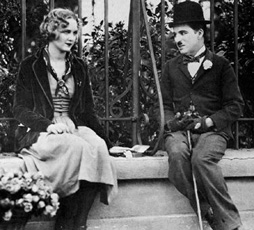
Quick recap: Charlie Chaplin plays the Tramp, a guy just trying to get by. As he bounces along the city, he falls in love with a blind woman and becomes friends with a millionaire who only seems to like him after he has been drinking.

City-Lights-Charlie-Chaplin


Fun (?) fact: The gibberish heard at the beginning of the film as the statue is being revealed was done by Chaplin. It is the first time his voice can be heard on film.

My thoughts: I was lucky enough to get to enjoy City Lights on the big screen at the Alamo Drafthouse. I almost went insane at the beginning of this project, sitting through all of those silent films. Many of them were good, but it still wore on me after awhile. It’s the very reason I decided to change things up and watch the movies in a random order, rather than chronologically. My love for the silent film almost returned with Metropolis and now I can fully embrace it again with this film. These early films were created for the big screen and I doubt I would’ve enjoyed Chaplin as much if I had been sitting at home. One of the best parts of the experience was not the movie itself, but being able to participate as an audience member. We collectively swooned when the Tramp was courting the Blind Woman and laughed when he got himself into another situation. I don’t use the word often but it was delightful, being a part of this. I felt like I had been transported back in time, watching it as if it had just come out.

city-lights-3


I admit to not knowing much about Chaplin before watching City Lights. I knew him as a silent film star and to me that meant a lot of slapstick. At the time this film was made, ‘talkies’ had started creeping into the moviegoer’s experience. Despite the trend, Chaplin firmly believed that he could make a successful silent film, and he was proven correct tenfold, seeing as how this movie is considered as one of the greatest of all time. From the very first scene, when the Tramp is napping on a statue that has just been revealed to the public, I was hooked. Chaplin had a way to convey emotions so eloquently without saying a word. He is charming, to the point of being adorable. He is a good person, just trying to get by. And when bad things do happen to him, he takes it all lightly and pushes forward. One of my favorite scenes that show what a genius Chaplin is, occurs right after he and the Millionaire have fallen into the water. The Millionaire invites the Tramp back to his house, and as they ascend up the steps, he turns around and grabs the flower he had bought from the Blind Woman. It was such a simple gesture, but the way he does it conveys all of the love that he has for this woman.

I was a little apprehensive about seeing all the slapstick comedy because it’s not really my thing. I was worried that the outdated form would distract me from the movie, but it did the opposite. Instead, it showed me the beauty of a perfectly timed bit. The scene where the Tramp becomes a boxer in order to earn money for the Blind Woman is like watching ballet. It was very funny, but also beautifully done. I think I laughed hardest during the scene when the Tramp swallows a whistle and makes a sound every time he breathes. Once again, Chaplin has no need to say anything because his face is so full of expression.

city-lights-prizefighter


And of course, the ending. The ending to City Lights is considered one of the greatest ever done. Not because there is anything spectacular, but because of its simplicity and once again, beauty. Throughout the film, the Tramp does what he can to become closer to the Blind Woman. He cares for her daily after she falls ill and does what he can to find money so that she can continue to live in her apartment. Somehow, the Tramp is able to get enough money to also help the Blind Woman see. The final scene happens when the two meet for the first time and she can finally see. The Blind Woman had been convinced the Tramp was actually a millionaire and the expressions she conveys as she realizes it is really this man in tattered clothing, is perfect. But the real beauty of it all is watching Chaplin as he is so excited to be seen and so, so hopeful. I am not a very emotional person when it comes to movies, but this one really got to me. It was also comforting to hear other audience members sniffling as the lights went back on.


city-lights-1931-charlie-chaplin-silent-movie-review-image-42Final review: 5/5. Of course. If had to choose one movie to make people watch from this list, this would be it.

Up next: Cleo from 5 to 7.