#70- City Lights

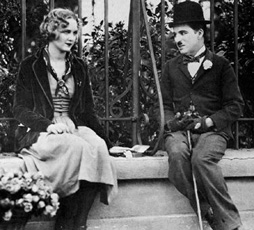
Quick recap: Charlie Chaplin plays the Tramp, a guy just trying to get by. As he bounces along the city, he falls in love with a blind woman and becomes friends with a millionaire who only seems to like him after he has been drinking.

City-Lights-Charlie-Chaplin


Fun (?) fact: The gibberish heard at the beginning of the film as the statue is being revealed was done by Chaplin. It is the first time his voice can be heard on film.

My thoughts: I was lucky enough to get to enjoy City Lights on the big screen at the Alamo Drafthouse. I almost went insane at the beginning of this project, sitting through all of those silent films. Many of them were good, but it still wore on me after awhile. It’s the very reason I decided to change things up and watch the movies in a random order, rather than chronologically. My love for the silent film almost returned with Metropolis and now I can fully embrace it again with this film. These early films were created for the big screen and I doubt I would’ve enjoyed Chaplin as much if I had been sitting at home. One of the best parts of the experience was not the movie itself, but being able to participate as an audience member. We collectively swooned when the Tramp was courting the Blind Woman and laughed when he got himself into another situation. I don’t use the word often but it was delightful, being a part of this. I felt like I had been transported back in time, watching it as if it had just come out.
city-lights-3


I admit to not knowing much about Chaplin before watching City Lights. I knew him as a silent film star and to me that meant a lot of slapstick. At the time this film was made, ‘talkies’ had started creeping into the moviegoer’s experience. Despite the trend, Chaplin firmly believed that he could make a successful silent film, and he was proven correct tenfold, seeing as how this movie is considered as one of the greatest of all time. From the very first scene, when the Tramp is napping on a statue that has just been revealed to the public, I was hooked. Chaplin had a way to convey emotions so eloquently without saying a word. He is charming, to the point of being adorable. He is a good person, just trying to get by. And when bad things do happen to him, he takes it all lightly and pushes forward. One of my favorite scenes that show what a genius Chaplin is, occurs right after he and the Millionaire have fallen into the water. The Millionaire invites the Tramp back to his house, and as they ascend up the steps, he turns around and grabs the flower he had bought from the Blind Woman. It was such a simple gesture, but the way he does it conveys all of the love that he has for this woman.

I was a little apprehensive about seeing all the slapstick comedy because it’s not really my thing. I was worried that the outdated form would distract me from the movie, but it did the opposite. Instead, it showed me the beauty of a perfectly timed bit. The scene where the Tramp becomes a boxer in order to earn money for the Blind Woman is like watching ballet. It was very funny, but also beautifully done. I think I laughed hardest during the scene when the Tramp swallows a whistle and makes a sound every time he breathes. Once again, Chaplin has no need to say anything because his face is so full of expression.

city-lights-prizefighter


And of course, the ending. The ending to City Lights is considered one of the greatest ever done. Not because there is anything spectacular, but because of its simplicity and once again, beauty. Throughout the film, the Tramp does what he can to become closer to the Blind Woman. He cares for her daily after she falls ill and does what he can to find money so that she can continue to live in her apartment. Somehow, the Tramp is able to get enough money to also help the Blind Woman see. The final scene happens when the two meet for the first time and she can finally see. The Blind Woman had been convinced the Tramp was actually a millionaire and the expressions she conveys as she realizes it is really this man in tattered clothing, is perfect. But the real beauty of it all is watching Chaplin as he is so excited to be seen and so, so hopeful. I am not a very emotional person when it comes to movies, but this one really got to me. It was also comforting to hear other audience members sniffling as the lights went back on.


city-lights-1931-charlie-chaplin-silent-movie-review-image-42Final review: 5/5. Of course. If had to choose one movie to make people watch from this list, this would be it.

Up next: Cleo from 5 to 7.


#65- Brokeback Mountain

Quick recap: This is the one about the gay cowboys.

yay, homophobia!

Fun (?) fact: Annie Proulx, author of the short story of which Brokeback Mountain is based on, sent autograph copies to the two main stars. She addressed one to Jake Gyllenhaal but the other she accidentally addressed to Ennis instead of Heath Ledger, because she felt he was the perfect representation of that character.

2571


My thoughts:  I saw Brokeback Mountain for the first time in 2005 at a small theater in Lufkin, Texas. I had recently ‘come out’, so to speak, as liberal and felt that this is the sort of movie I should see. I can’t say that I have always been an ally for LGBT rights, but in sitting in that theater and listening to the slurs being yelled out to the screen from the audience, I knew it was the right thing to do.

brokeback_mountain

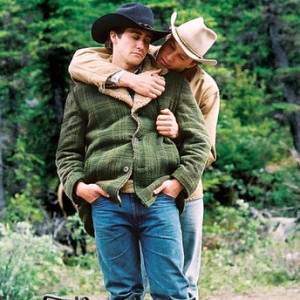
I don’t believe Brokeback Mountain to be the best representation of the gay culture, past or present, but I do think the movie serves a purpose to a certain extent. For a girl growing up in Texas, I really didn’t have much knowledge about what it meant to truly be gay. I guess I always saw it as a sexual thing, since that is what everyone focused on, instead of the more simple idea that two people love one another. And then when I saw the relationship between Jack and Ennis in the movie, it really opened my eyes to the whole concept of homosexuality. In watching the film a couple of nights ago, I still didn’t find the sex scene very romantic, or many of the other scenes when the characters made out. But I recognized the love and passion the two had for each other. It was even more evident when contrasted with their marriages to the women they settled with. The kicker for me was the last scene with Ennis and the shirt. I normally don’t hold back on spoilers,but I did on that one because I reacted to it the same way I did back in 2005. It broke me.

As for the ‘technical’ aspects of the film, I felt that Jake Gyllenhaal was more recognizable as a gay character but it was Heath Ledger who really owned the emotional mess his character was in. And because of that, I agree with Proulx that his acting was more believable. The scenery was gorgeous and still makes me want to visit the area at some point in my life. I also loved the choice of music: simple so as not to distract from the plot, yet helping the emotional scenes resonate even more.

Despite all of the victories this year for LGBT rights, we are far from over. There are many places where being called ‘gay’ is still the worst thing you can say to a person. And even for the more liberal cities in America, a stereotype still lingers as to what ‘gay’ looks like- and it’s certainly not a pair of cowboys. I’m not sure people who are homophobic would watch this movie and turn their beliefs around, and in fact, with a few of the explicit scenes, it’s bound to cement what they believe even further. But the movie is a good reminder of how things used to be, and in many parts of the world, still are. And hopefully, maybe in 20 or 50 years, Brokeback Mountain will be the kind of classic that we look back on and have trouble fathoming a world in which so much inequality and hatred existed.

brokeback-mountain2-300x300


Final review: 4/5.

Up next: Murmur of the Heart or Kiss Me Deadly

#57- Amelie

Quick recap: Amélie is a girl with a big imagination. Growing up with a neurotic mother and ‘iceberg’ father, Amélie had only herself for comfort. She is now an adult and continues to see things in a different light than everyone else. After returning a man’s treasure from when he was a boy, Amélie decides to start living her life helping others. Oh, and she falls in love because this is a French film after all, so it’s kind of expected.

This movie was SO French

This movie was SO French

Fun (?) Fact:  Amélie was a direct inspiration for the short lived tv show Pushing Daisies. It’s an underrated masterpiece, if you ask me.

I also sort of have a thing for Ned. And Kristin Chenoweth.

I also sort of have a thing for Ned. And Kristin Chenoweth.

My thoughts: Oh, boy. My mind is all over the place for this review. Even now, over 24 hours after watching Amélie, I still don’t really know how I feel about it. On one hand, the movie has elements I normally love: it’s quirky, it’s gorgeous, the characters are interesting and it’s French which always adds a touch of class to anything. On the other hand, it’s very quirky. And French.

I suppose I should begin with Amélie herself. I was immediately drawn into the film from just the opening sequence, which pictured a young girl playing with ordinary objects and having a wonderful time. The back story for Amélie’s childhood did a great job in setting the tone for the rest of the film and quickly gave all the information needed to understand the main character. Amélie as an adult is just as adorable as when she was a child. She still retains a child-like quality to her, especially when it comes to seeing the good in other people. After finding an old treasure box that had been left behind by a young boy decades ago, Amélie decides to track him down and give him some happiness. It was a very sweet moment, as well as much of the first half of the movie. At some point, the quirky things Amélie does seem to become tedious and not so adorable.

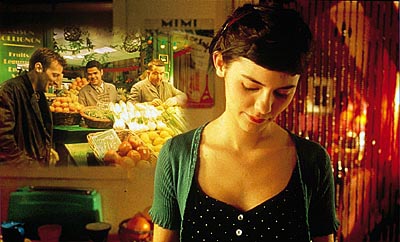
I think the whole plot of Amélie falling in love with a just as quirky guy is what made me begin to question how I really felt. It completely makes sense for Amélie to refuse to meet Nino, seeing as how she was so rarely interacted with during her childhood. With every near interaction, I found myself becoming more impatient and less enchanted with all of the characters. But then, there was the scene in which Amélie imagines what a life with Nino might be like and it was so realistic in terms of how it feels to have an unattainable crush, that I couldn’t help but be drawn in again. The ending, which I won’t give away now, fit perfectly and made me once gain rethink how I felt about the whole thing.

imagining a different outcome

imagining a different outcome

Final review: 3/5. In the end, it isn’t a movie I crave to see again, although watching Amélie made me want to rewatch Pushing Daisies and pick up French for the billionth time.

This is about all I understand these days

This is about all I understand these days

Up next: Fargo

#43- Spring in a Small Town

Quick recap:  A wife has grown tired of her daily life- chores, shopping, and taking care of her ailing husband. One day a man shows up who turns out to be the husband’s best friend but also the wife’s former love. Drama ensues as the two fall madly in love again. Once in awhile they remember that the husband is still around and sick to boot, and they feel like jerks in the end.

Fun (?) fact: The Communist party buried the film after its release in China because of lack of politics. It wasn’t until the 1980’s that people really started to appreciate the movie.

My thoughts: I audibly groaned when I found out this movie was next on the list because the whole thing seemed like torture to watch: a black and white foreign film about love and loss. Bleck. I especially winced as the opening credits came on the screen because they were jumpy and the audio kept going in and out. The opening scene is of the wife walking along the city wall as she does a voiceover explaining the unhappiness that is her life. It caught me off guard, to see such a ‘modern’ filmmaking tool such as voiceover to tell a story. I know this wasn’t the first film to do so, but it was still impressive to see, considering what the US had been churning out at the time.

As the plot revealed itself, I was calmed by its simplicity. Foreign films have a reputation as being hard to follow and I admit that I don’t have much experience watching films from China. So this was a pleasant surprise. ‘Simplicity’ might not be the best word to use to describe the film because the emotions that are laid out for the audience are quite complex. The friend cares deeply for the husband and his health but he is also still in love with the wife. He is a good person and really, all of the characters can be described as ‘good’. I felt sympathy for everyone, even the wife as she must make a decision to stay or go. Her love for her husband was apparent but she also had to reconcile with the reality that she had married a very sick man who was unable to give her what she needed.

Above everything else, I was mostly blown away by the fact that the entire story is told in two settings and between 5 characters. Big budget films can draw audiences in, but in the end, sometimes simplicity is needed to truly tell a story.

url


Final review: 4/5. Modern audiences can still appreciate the story, although it isn’t for everyone.

Up next: All the President’s Men