#62- Citizen Kane

Quick recap: Charles Foster Kane, newspaper magnate, dies and his last word is ‘rosebud’. A reporter is sent out to investigate what the word means, in hopes of getting to the bottom of who Kane really was.

1f01_015


Fun (?) fact: It’s no secret that William Randolph Hearst wasn’t a fan of Citizen Kane, seeing as how the main character parallels many points from Hearst’s life. Orson Welles has stated several times that the inspiration for Kane was based off of several sources, not just Hearst. Nevertheless, one time Welles and Hearst were in an elevator together, during the San Francisco premiere of the movie. Kane asked Hearst if he would be attending and Hearst ignored him. As he got off on his floor, Welles replied, ‘Charles Foster Kane would have accepted.’

pretty sure I have a thing for Orson Welles now.

pretty sure I have a thing for Orson Welles now.

My thoughts:  I can predict that this post is going to be more rambling than usual.I’d like to say it’s because it will be hard for me to describe the greatness that is Citizen Kane, but in all reality it’s mostly because I have the flu. As an early Christmas present to all of my readers, here is a helpful tip for you: the flu shot is bullshit.

Citizen Kane has been a movie I have been wanting to watch for a long time because it’s on everyone’s ‘best of’ list. It’s also a movie I have dreaded watching because it’s on everyone’s ‘best of’ list. And seeing  as how Psycho turned out, I turned my expectations way down. Luckily, from the first few minutes I was hooked. I’m a fan of non-linear movies or really any film that defies traditional storytelling and this movie is the father of them all. It starts out with the death of the main character and the viewer only finds out who Kane was through flashbacks. I especially loved the newsreel scene at the beginning, announcing Kane’s death. It was so realistic PLUS it had my favorite old movie trope- spinning newspapers!!

I think the reason I loved this movie so much is how Charles Foster Kane is brought to life. Each person interviewed had a different perspective on Kane, some negative and some positive. I went from feeling sorry for Kane as he was taken away from his home and instead brought up by the bank to swooning over him as he refused to acknowledge his vast amounts of money, only wanting to help the poor. And then as he became even more wealthy, his personality began to change.  The pivotal scenes showcasing the segue from All-American Good Guy to Kind of a Jerk happened during his first marriage. At the beginning of the marriage, he and Emily can’t stay away from each other. Both are in good spirits and have high hopes for the future. But with each scene, all set at the breakfast table but with different years, the couples drift apart physically and emotionally. It was a powerful way to show the damage being done.

As Kane continued his rise to fame and money, he became even more eccentric- buying statues and other works of art and then doing nothing with them. It is during his second marriage that he decides to build an estate, Xanadu. He and his wife relocate here and it is at Xanadu that I could finally see what Kane had become. The scene where Susan is begging to not have to sing again is heartbreaking, as well as when she finally leaves him.  The estate itself is ornate and gorgeous but at the same time desolate and depressing. It was the perfect place to match what Kane had become.

I could write a whole post focusing on the special effects and cinematography of Citizen Kane but there isn’t much to say that hasn’t already been analyzed a million times over. My two favorite aspects of what makes this such a remarkable movie are 1) the makeup effects turning Kane from his early 20s to old age. It was so hard to believe it was the same person at times and it wasn’t until after the movie that I found out that Welles was only in his early 20s himself when he made the movie. And then 2) I had no idea this was a thing, but I loved how the camera focused. This is called ‘deep focus’. I can’t really describe it but basically it wasn’t just an actor staring into the camera and saying his lines.
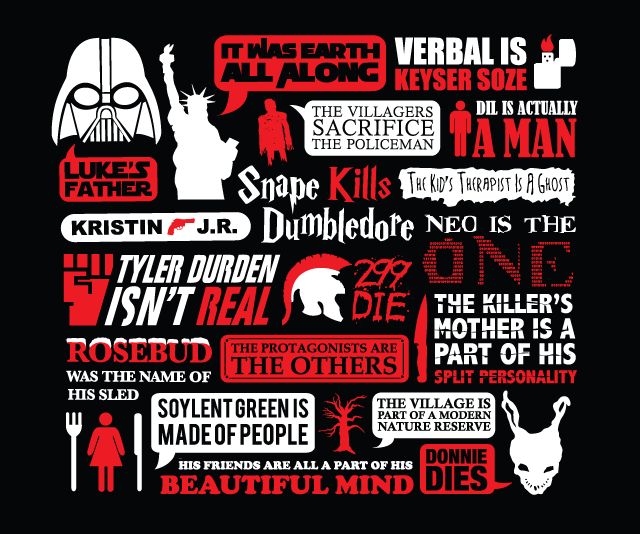
it's not a spoiler for a movie made in the 40s.

it’s not a spoiler for a movie made in the 40s.

Final review: 5/5. This movie lives up to all the hype and then some. It is truly a must see for anyone.

Up next: let’s go with Woman in the Dunes. If I keep putting that title here, I will eventually watch it.
 

#61- Psycho

Quick recap: This is the one with the shower scene.

hqdefault


Fun (?) fact: Alfred Hitchcock tested how scary Mother’s corpse was by placing it in actress Janet Leigh’s dressing room and then hearing how loud she screamed.

psycho_mother_s_day_card_by_michaeljlarson-d651715


My thoughts: If I had to choose one movie that I am most ashamed to have never seen, it would be Psycho. It is one of those movies I know the entire plot and even some quotes, but until last night had never sat down to watch it. I think the two things that surprised me most were 1) Marion dying in the middle of the film (for some reason, I always thought it was at the beginning) and 2) how attracted I was to Norman Bates. I’m sure the latter will be dissected in future therapy sessions, but for now, I’m sure I wasn’t the only one with these thoughts.

and such a polite boy. A little stabby at times, but then again, aren't we all? and such a polite boy. A little stabby at times, but then again, aren’t we all?

In thinking further about my thoughts before and after the movie, the character of Marion confounded me more than anything else. I’m not sure what I had pictured her character would be-maybe just an unlucky woman who shows up at the motel, instead of what she turned out to be: A Woman of Ill Repute. Which is my favorite kind of woman, although the statistics aren’t that favorable for such a person surviving in a horror film. I think I actually said out loud, ‘she’s dead!’ when she stuffed the $40,000 into her purse. And as for that Infamous Shower Scene, I was ultimately underwhelmed. I suppose I have been desensitized to such violent scenes thanks to modern films and the news, but still, I was at least expecting a bloodier scene. Instead, the murder scene looked more like that time back in college when I was stupid enough to walk barefoot outside and then step on a shard of glass. I’m sure audiences of the 60s would’ve practically fainted if they had seen my dorm room that night. Marion also doesn’t do any good fighting back. She just screams and lets this guy stab her repeatedly. She is kind enough to turn around several times, though, and give Bates even more stabbing opportunities. What a gal.

The most legitimately scary part of the film was that Bates had kept his mother as a corpse. The corpse itself was also creepy, although it also reminded me of a dried apple. If the film had ended with Bates being caught, I would’ve been satisfied. After all, I mostly believe that evil needs no further explanation. I think the audience already assumed that Bates was dressing up as his mother and murdering people, so why spell it out further? Then again, this was the same audience who, even though this was a black and white movie, fervently believed they had seen red blood during the shower scene. And also, there were faintings during the showing of the film. As a side note, was fainting just a fashionable thing to do back then?Was it a way to woo a suitor? In either case, I’m glad we as a society have mostly grown up in that respect.

Maybe this should be a new category for my blog: Things that shouldn’t bother Mary, but they do. It really annoyed me that Hitchcock tried to pass off Norman Bates talking as his mother when it obviously wasn’t. I know he didn’t want to spoil the surprise, damn him, so he recorded women doing the voice instead of Anthony Perkins. But it also sort of ruined the explanation for me, that he was a schizophrenic who had become his mother, because obviously he didn’t inherit her vocal cords.

Final review: 3/5. I won’t say I was disappointed in the film, because it is very well made and Hitchcock is the master of suspense. But it also didn’t quite live up to the hype.

Up next: Woman in the Dunes


#60- Slacker

Quick recap: There is really nothing to recap, seeing as how this movie has no plot. Instead, the focus is on Austin, Texas and all its eccentricities.  This movie is ‘Keep Austin Weird’ before there was ‘Keep Austin Weird’.

RIP Leslie

RIP Leslie

Fun (?) Fact: This was the film that inspired Kevin Smith to direct ‘Clerks’.

My thoughts: As any sane person would do, I groaned as loudly as I possibly could when realizing I would be watching a plotless movie. And even worse, a plotless movie set in Austin. I don’t hate anything about Austin, but I do hate when directors make assumptions about Texas. I felt like this would be two hours of my life that I would never get back.

The movie opens with the director, Richard Linklater, in a taxi cab discussing his thoughts on alternate realities. What immediately drew me in was the accent. It’s hard to describe, but a Texas accent, especially a Central Texas accent, is very different from a regular southern accent. If you don’t listen carefully it might sound accent-less, but there is just the very hint of a twang at the end of a word in a sentence. I’m not even sure most people would pick it up, but the tiny detail let me know that I was dealing with someone who was quite intimate with the Lone Star State. It also made me wonder if people in other parts of the real world would really appreciate this movie as much as someone who has frequented Austin many, many times. It reminded me of another Texas-centric movie- Bernie. That movie centers around the real life East Texas town of Carthage. There were so many details in that movie that only a native Texan would pick up on. When looking up information about Slacker,  I realized that both movies are directed by Linklater, who is of course, from Texas and still lives here.

Linklater pondering life if he had stayed at the bus stop

Linklater pondering life if he had stayed at the bus stop

There are many reasons that this movie is special, but the main one is how perfectly it captures the town. As far back as I can recall, Austin has been known for its weirdness. It exists almost as a separate entity from the rest of Texas. People pride themselves not just on their weirdness, but on their welcoming nature. Most of the conversations in the film are one sided, with one person spouting a conspiracy theory or philosophy of life. The listener in the scenario is at best trying to learn something and at worse, merely polite. I especially loved the scene halfway through the movie where a JFK assassination conspiracy theorist attempts to make small talk with a girl. It is evident that this guy breathes conspiracy and he even wears a shirt with a picture depicting the murder of Lee Harvey Oswald. In the beginning, he tries to engage the girl, asking her about a class they took together at some point, but then he just can’t contain his excitement anymore and starts to lay out the case for his theory. She finally is able to leave the conversation, but does so in a way as to not make the guy feel embarrassed. He can continue delving into his passion without any fear.

jfk2

Even now, although there have been efforts to improve the situation, its hard to walk down any street in Austin and not be accosted by at least one homeless person. It can be annoying after awhile, especially having had too much to drink on 6th street, but in the daylight, it almost becomes an adventure. It’s definitely not for everyone, but in talking to the people who are ‘out there’, you are truly embracing the spirit of the city. I guess that’s why it was so disheartening when I traveled there a couple of years ago, prepared to encounter all sorts of people. Instead, all I could see were tourists. In many ways, the city has let the secret out and everyone is flocking to see it themselves. It’s exciting to see all of the new bars and and restaurants popping up, but makes me wonder if they are there to ‘Keep Austin Weird’ or to satisfy the needs of visitors. I loved watching a time in Austin’s history when it was just a big ball of crazy and everyone was out to find themselves.

Getting back to the idea that this movie is plotless, Linklater is still able to tell a story. It becomes a story of a place and not about people, but still a story. He also manages to weave all of the characters together in some way, which I loved. One person talks to another, and then that person walks off and you see his story. And then whoever this person passes becomes the next story. It really showcased how even though Austin is a city, it’s also a tight-knit community of misfits.

buying Madonna's Pap smear is a thing

buying Madonna’s Pap smear is a thing


Final review: 5/5. If there is one thing Texans love, it’s being represented accurately. I don’t really care if the rest of the world watches Slacker or not, but it should be required viewing for everyone living in Austin.

Up next: Psycho. Finally.

#59- The Thin Red Line

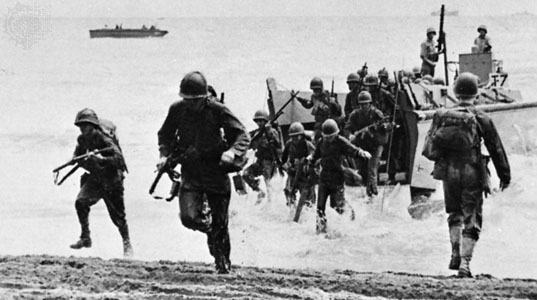
Quick recap: War is hell, you guys. Especially during World War II. The focus of this story is on the battle at Guadalcanal against the Japanese.

Guadalcanal_grave


Fun (?) Fact:  The original cut of the film was just under 6 hours in length. In getting the film ready for release, many stars like John Travolta and George Clooney were almost completely cut out of the film. Adrian Brody in particular had a major role during filming, but by the time the movie had been shortened, he was left with about 5 lines.

300px-Marines_rest_in_the_field_on_Guadalcanal


My thoughts:  Before I get to my review, first a little background: when I finish watching a movie for the blog, the very first thing I do is go to random.org, which gives me the next number to watch. I then go to a list and find the movie that corresponds to the number chosen. So, this movie was chosen several weeks ago and actually I had planned on watching something else, until a friend suggested this one. All that to say that it was completely unintentional to watch a movie about war so close to Veteran’s Day. And since it happened that way, I would feel like a jerk if I turned this into a lighthearted post. I’ll lay off the memes for now (no Hitler cats this time), but there will be a double dose the next time around (Hitler cats for all!)

Seeing as this was my first Terrence Malick movie, I knew nothing of his director trademarks. Which I suppose is a good thing because it makes everything seem fresh. There are a billion war movies out there, but this one has its own perspective and to me, stands out above many others. One of the more brilliant parts of the film, and now I know, a trademark, is the focus on nature. At first, the long shots of the forest and ocean seemed to slow everything down, but later became poignant once the battle started. In a way, it made the war seem even more real, rather than just watching people’s heads being blown off. I’m still not sure the entire meaning, but in focusing on the birds after watching mass casualties, it was as if to say that war is hell, but life will continue. This island is being torn up from both sides, and yet, life continues. And after everyone has left, the earth will repair itself,albeit with scars, and then life continues.

url


The movie did seem to drag on from time to time. I’m not a big fan of war movies to begin with, so I admit to some bias against the genre. The first battle scene just seemed to continue forever, and it was frustrating to keep up with everyone. I would see someone die on screen and then try to remember if they were a main character or not. Which I guess is another point of the film? The characters were ultimately not as important as the themes, such as nature. Once I gave up trying to find everyone, I enjoyed the movie much more. And in looking back, I imagine that the many battle scenes are much closer to how it really was- no one knowing who all was alive or dead, everyone on their own, trying to survive. That’s not to say that anyone was selfish, but in that situation, I wouldn’t be thinking about America, just about keeping myself alive.

It’s hard to say, but I feel like Malick did a wonderful job capturing how frightening war really is. I know about World War II and the sacrifices made, but seeing it through the eyes of these young men made me stop and think. Many were just kids, with about as much experience as the next guy. They were forced into something they knew next to nothing about and were told to fight. And through all the terror and pain, they did their job and they did it will. It might not be the message of the film, but it’s the one I’m taking home.

iguadan001p1


Final review: 4/5. The movie went over my head many times, especially during the voice-overs. It was all very philosophical and confusing, for the most part. This isn’t your typical shoot ’em up war movie and not everyone will appreciate it. But I think it’s an important film, and it’s refreshing to see a different story being told.

Up Next: The Lady Eve