#130- The Burmese Harp

Quick recap: Set during World War II, this movie follows a group of Japanese soldiers who have just crossed over into Burma, the main character being a guy who plays a Burmese harp. After being told the war is over, the Burmese Harp guy goes on a mission to find another group of soldiers to ask them to surrender instead of fighting to their death. The soldiers refuse and are all killed. Burmese harp guy is supposed to go back to his group who are currently in an internment camp but instead decides he would be more useful in other places.
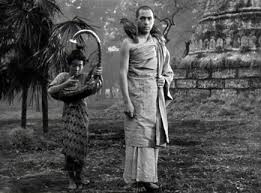
url

Fun (?) fact: Godzilla’s requiem theme from the 1954 movie ‘Gojira’ can be heard during several parts of this film. Because nothing goes better together than a story of a Buddhist monk and Godzilla.

My thoughts: The Burmese Harp is a war movie in the sense that it is set during World War II and the characters are all soldiers. Thankfully, and I say that solely because I have had more than my share of war movies lately, the theme is less war centered and revolves instead around pacifist themes. Yay for not having to sit through confusing battle scenes and lots of blood and guts. Everything is coming up Mary!

The downside of making this sort of movie is that pacifism is sort of dull. The Burmese Harp is a beautiful film, don’t get me wrong, but ‘beautiful’ can only keep my attention for so long. The whole thing reminded me of reading Siddhartha when I was in high school. It too is a beautiful book about a man’s journey to spiritual fulfillment, but just know that if you choose to read it, don’t expect there to be much,if any, action. The only real action this movie has is when all of the Japanese soldiers are killed when they refuse to surrender. Even then you never really see a fight, just the aftermath. Also, that scene happens during the first half hour of the film while the next hour and a half is filled with a lot of walking and singing. Lots of walking and singing.

One thing I did enjoy about this film is watching Mizushima, the Burmese Harp guy, realize his calling. After being injured, he begins to make his way back to the internment camp to join his squad. On the way, he steals a Buddhist robe and also begins to take on the role of a monk. His journey takes him all the way across Burma where he sees bodies strewn about. He begins to bury and burn the bodies, hoping to give them a little bit of dignity in the end. I’m sure it must have been a very difficult decision to stay in a foreign land, adopt a new lifestyle and never see your friends again. But that’s sort of the point of being a monk, to put others before yourself.

I feel a little guilty for not being as in to this movie as I would’ve liked to be. It seems right up my alley, especially since I find myself identifying more with the pacifism side than the war side. But it just didn’t do much for me. I feel like this movie was made more for the Japanese people than me as an American. There was plenty to identify with and learn from, but in the end I felt like it would be more powerful for those who have lived through the horror directly.

Final review: 2/5. Not my cup of tea but a beautiful film, nonetheless.

Up next: HORRORFEST 2014

#129- Gimme Shelter

Quick recap: This documentary follows the Rolling Stones on their worldwide tour in 1969, although the focus is mainly on the tragedy at the Altamont Speedway December of that year.

The post will be Mick Jagger heavy. Deal with it.

The post will be Mick Jagger heavy. Deal with it.

Fun (?) fact: Meredith Hunter, the guy who was stabbed by the Hell’s Angels, was not actually murdered during ‘Sympathy for the Devil’ but instead ‘Under My Thumb’.

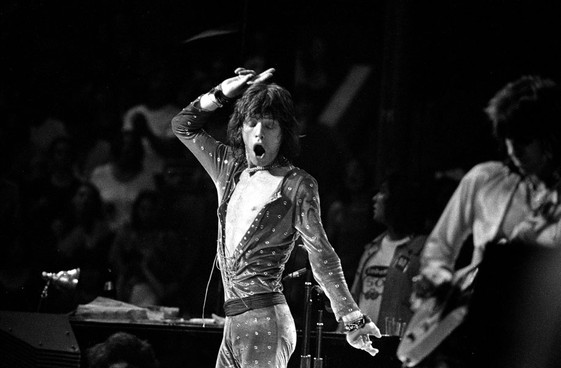
RollingStones1972PA090311

My thoughts: Mick. Jagger.  Oh my god, Mick Jagger. I know that the documentary touched on a few complex issues in the music world, but let’s just sit for a minute and appreciate Mick Jagger. Go ahead. Take a minute. I’ll be right here.

Good? Ok. So I’ve never been a big Rolling Stones fan, although I certainly appreciate their talent and influence on virtually every rock band in existence. I think the reason I never got into them is because I’ve only heard their biggest hits on classic rock stations and it never occurred to me just how important they were/are. After watching Gimme Shelter, I get it. What’s funny about that is that this isn’t the sort of music documentary that most people are familiar with: a lighthearted look at a hard working group who spend long days on the road, meet with thousands of fans and still manage to find time to goof off.* Gimme Shelter is a critical look at The Stones and their decision to hire Hell’s Angels to protect them as well as the counter culture movement in general.

* The only music documentary I am familiar with. Unfortunately, not on this list.

* The only music documentary I am familiar with. Unfortunately, not on this list.

My take on the whole thing is that everyone had a hand in this and yet who’s really to blame? Starting with the Rolling Sones, when it was announced they would be doing a free concert at a speedway, I knew things wouldn’t end well. They were one of the biggest groups at the time, if not the biggest. Practically the entire country would try to come to this. Which leads to their decision to use the Hell’s Angels to protect them. I read that there is a Hell’s Angels in Britain that the Stones used before, but they were much less violent. It seems that they didn’t know what they were getting into until it started getting out of hand. Which leads to the audience’s part in all of this. There were over 300,000 people in attendance that night and I would guess that most there were on something. People showed up expecting a Woodstock but instead it turned ugly and violent. Meredith Hunter’s death is incredibly sad, but as it was later noted, he had pulled out a gun and one of the Hell’s Angels stabbed him in self-defense. It’s hard to say how this all could’ve been prevented except to maybe have not had the concert at all.

It’s powerful enough to see the crowd start to get out of hand and even more powerful to actually watch as the death occurs. The Stones keep playing during all of this although they do say at some point that a doctor is needed. I imagine that stopping the concert at this point would’ve been useless because that would’ve probably started a riot. So it isn’t until the end of the movie that we see The Stones sitting and watching the footage of the concert and feeling the weight of their consequences. And it isn’t even that they are to blame necessarily, but that there are consequences to everything, especially with  such explosive fame as theirs.

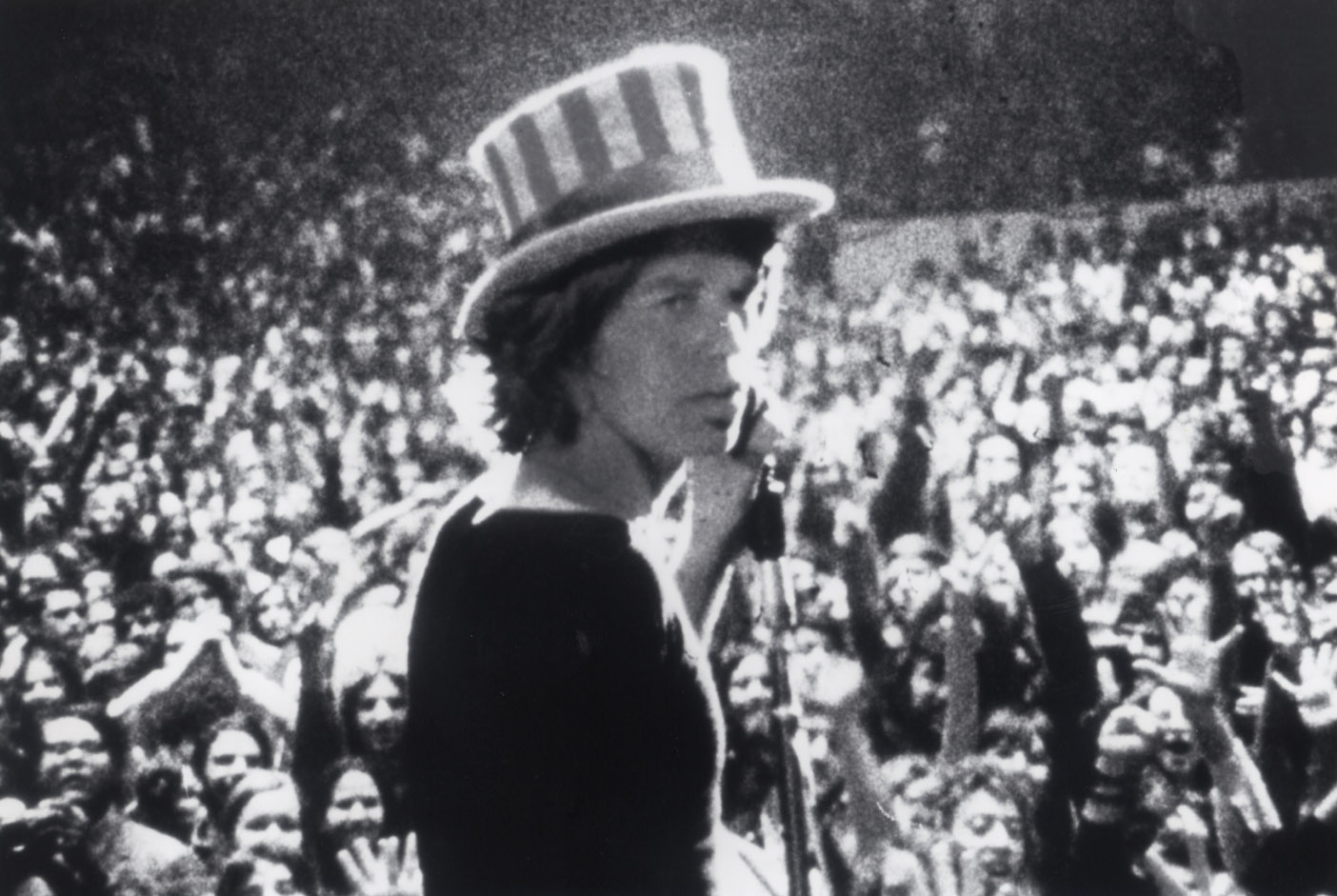
Gimme-Shelter_image2

Final review: 4/5. A little slow at first but very powerful at the end.

Up next: The Burmese Harp

#128- Hearts of Darkness: A Filmmaker’s Apocalypse

Quick a recap: This is the ‘making of’ documentary about Apocalypse Now, the movie where everything that could go wrong, did go wrong.

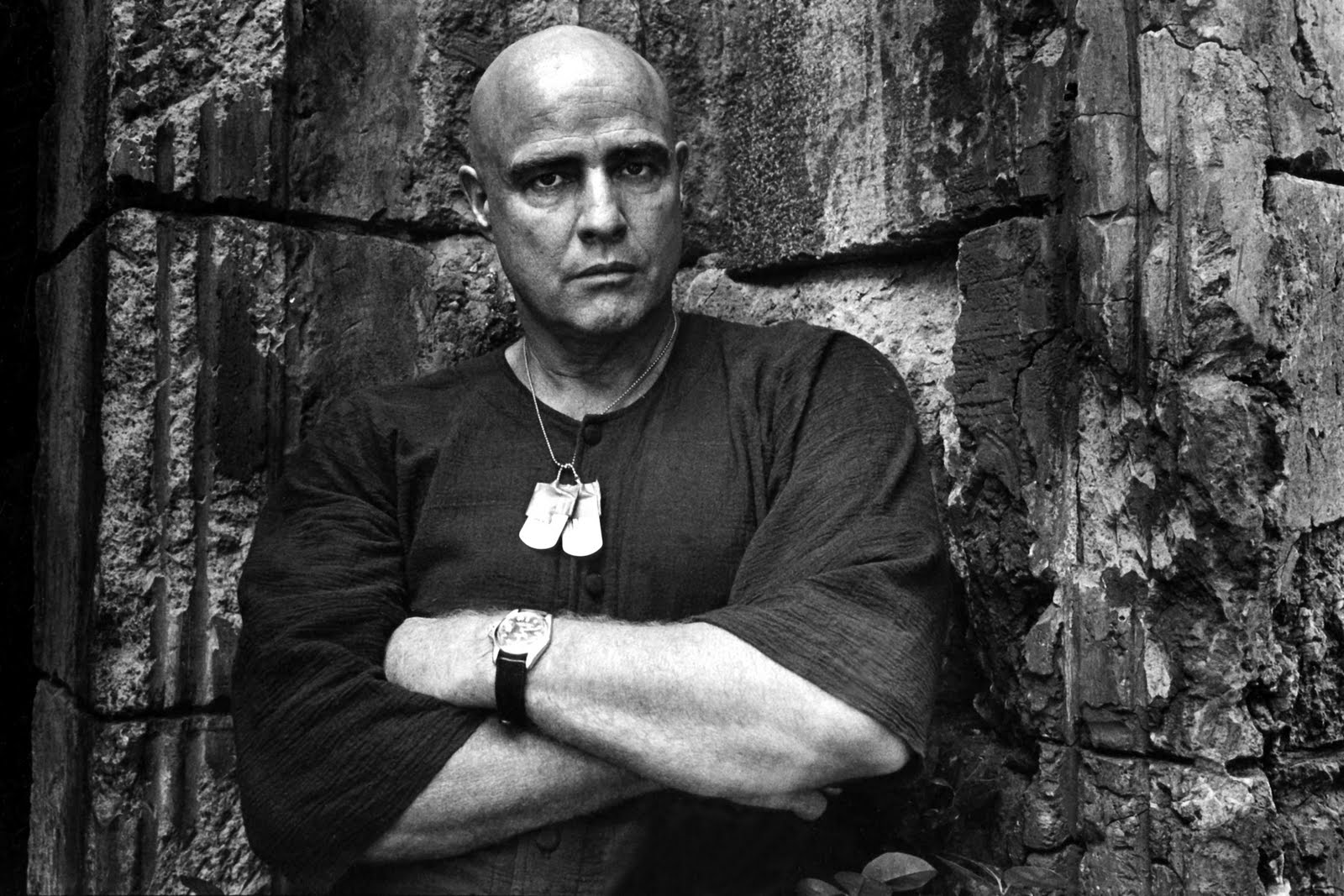
Annex - Brando, Marlon (Apocalypse Now)_12

Fun (?) fact: It’s really difficult to find ‘fun facts’ about a movie that is basically ‘fun facts’. So instead, here is a fact about Francis Ford Coppola: George Lucas has said he based the character Han Solo off of him.

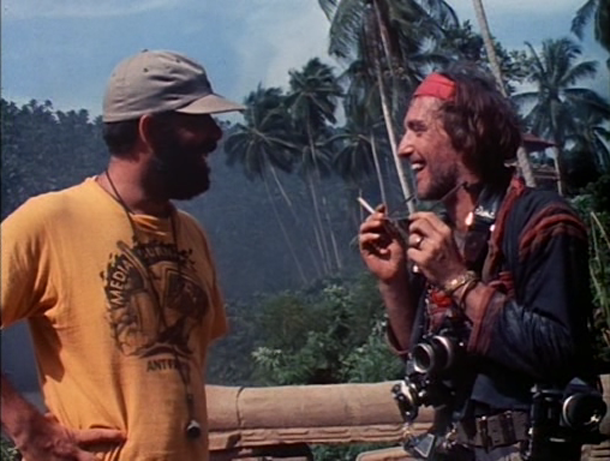
directing Dennis Hopper would probably have driven me to the brink of insanity more so than any other issue the film had

directing Dennis Hopper would probably have driven me to the brink of insanity more so than any other issue the film had

My thoughts: After watching a movie on this list the very first thing I do is head to IMDb and Wikipedia for trivia. Most of the time I’m greeted with subpar information about who might’ve been cast in a lead role or who didn’t get along, but then sometimes I land on a goldmine like Apocalypse Now. I don’t know if I could call it the biggest disaster in movie making, but it was pretty bad: shooting in the Philippines during a civil conflict, a typhoon, Martin Sheen’s near fatal heart attack, going way over budget, everything Marlin Brando…..and the list goes on. The distinction this movie has over other disasters, though,  is that it continued to plug along and what was finally released to the public is one of the best movies ever made.

Which makes me wonder how this documentary would be viewed had Apocalypse Now been a bomb. Part of the joy of watching this was seeing all the chaos and knowing that in the end a masterpiece would be created. I loved watching the process of how it all came together and it gave me more appreciation for the director knowing all the fires that must be put out daily between the actors, production crew and even the setting. At the same time, watching Coppola talk about his plan for how the movie would play out, one has to wonder how anything less than a disaster was to be expected. This isn’t some romantic comedy starring Reese Witherspoon; this is a war movie, with the full war experience and big themes woven all through each scene. Knowing this side of the story makes me love the end result even more.

My drawback to this documentary is a big one: I didn’t find it all that interesting over all. I learned nothing new about how the movie came to be, although I was deeply interested watching Coppola and his methods. I blame the internet for this one more so than the movie. Had I seen Hearts of Darkness in 1995, let’s say, it would’ve been shocking to find out everything that happened. As it stands now, all I have to do is read an article on Wikipedia and I’m good to go. What’s left is a compelling enough story about a director and the lengths that he must go through, but not compelling enough for me to enjoy myself very much.

heartsofdarkness

Final review: 3/5. As a personal preference, I’m not a huge fan of ‘making of’ documentaries to begin with.

Up next: Gimme Shelter

127- Singin’ In the Rain

Quick recap: A group of actors and their movie studio go through a tough transition from silent films to ‘talkies’.

also lots of hijinks. Trust me on the ridiculous level of hijinks

also lots of hijinks. Trust me on the ridiculous level of hijinks

Fun (?) fact: These crazy kids just gotta dance: Fred O’Connor was in bed for a week following his ‘Make ‘Em Laugh’ number, Gene Kelly performed a few numbers with a fever, and Debbie Reynolds was just a hot mess. Kelly criticized her constantly, making her cry on several occasions. I couldn’t confirm this but apparently Fred Astaire saw her crying one day and helped her with the dancing.

Reynolds should have tried tappa-tappa-tappa

Reynolds should have tried tappa-tappa-tappa

My thoughts: ‘I just love Gene Kelly so much,’ an older woman sitting next to me at the Alamo Drafthouse sobbed to no one in particular. I had gotten to the theater half an hour early so that I could watch the related clips the Drafthouse likes to show before each movie. It’s one of my favorite experiences at this particular theater and it always helps get into the right frame of mind before watching something new. Going early to the theater also gives me a chance to scan the crowd and try to sum up the core audience. Tonight there was a healthy mix of older people and young children. And this sobbing woman. She glanced over at me, hopeful perhaps for a sympathizer, but I was not the right person for that. I have never seen anything with Gene Kelly and after the disaster that was High Society, have not been the most keen to watch a 1950s musical. As with most movies of this caliber I was interested to see what the big deal was and especially why this woman would be so moved to tears.

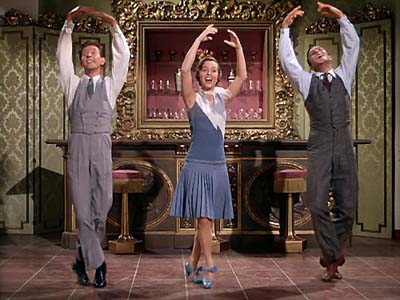
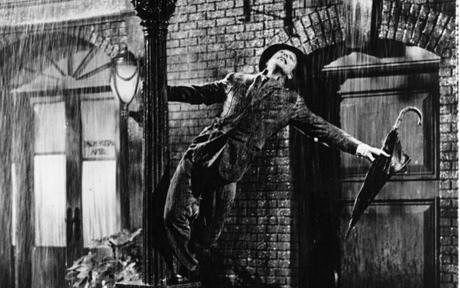
Almost immediately, I could tell this was the movie for me. The humor was authentic and I found myself laughing out loud at many scenes (especially the scene during the ‘Dueling Cavalier’ when the audio messes up and Lina Lamont sounds like a man). And of course the dancing. Oh my god, the dancing. I could watch Gene Kelly and Donald O’Connor for hours. Is it too late to take up tap lessons? I, like most people, have seen the iconic ‘singing in the rain’ scene before and wondered what the fuss was about. It didn’t seem too difficult to pull off, but then again that’s why I am reviewing movies and not out at some studio practicing my plié. I see now how talented Kelly was (as well as O’Connor) and how much of their life was dedicated to this perfection. I quickly snuck a look at the sobbing woman, who was now literally sitting on the edge of her seat and silently mouthing the words to the musical number currently on the screen. It dawned on me that maybe this wasn’t some sort of schoolgirl crush but instead a pure admiration for dance. I could feel it a little now, also.

I didn’t fall in love with the music as much as the dancing and acting. The songs were catchy enough. In fact, I added ‘Singing in the Rain’ to my classroom playlist, although I don’t think my 3rd graders got as big a kick out of it as I did. But there was also a cheesy level that I couldn’t quite get past. Case in point, ‘Moses’. The song is a silly one, almost too silly for me to enjoy. ‘Good Morning’ I love for Debbie Reynold’s voice (if that was even her), but once again not very complex lyrically.

The movie ended and I was a little disappointed that there wasn’t more to watch. In the short hour and a half, I had become addicted to the constant motion and color. I dreaded leaving the theater, back to reality. Singin’ in the Rain is a perfect escape in many ways and as evidenced by the audience that night, means something very special to many people. I too was caught up in at all. I looked over at the sobbing woman, curious to see if she had the same disappointment as I did. She smiled at me serenely and walked down the aisle out the door.

Singin_In_The_Rain_1118339c

Final Review: 5/5.

Up next: Hearts of Darkness