#135- A Nightmare on Elm Street

Quick recap: Years afters burning to death from a mob, Fred Kruger haunts the dreams of teenagers and murders them while they sleep.
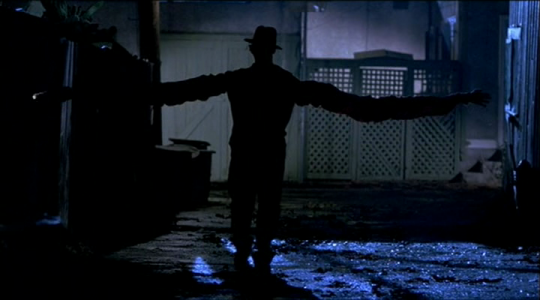
Freddy's here.....for hugs

Freddy’s here…..for hugs

Fun (?) fact: The idea of Nightmare on Elm Street comes from a real story in which 3 men from Cambodia had a nightmare and then refused to sleep. When they did finally sleep from exhaustion, the men simply died. The phenomenon is now called Asian Death Syndrome, which also sounds like a cool band name. 
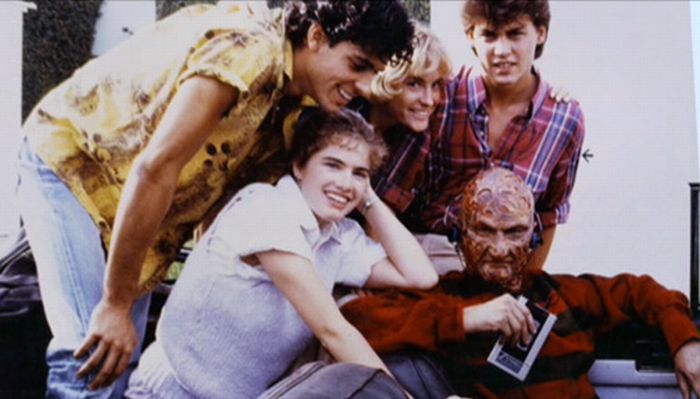
SO 80s

SO 80s

My thoughts: I find it fascinating how, in the horror genre, it is the monster who people end up rooting for instead of the victim. Whether it be Michael Myers, Jason Voorhees, or Freddy Krueger, they all have some sort of a fan base. Based solely off the first Nightmare on Elm Street, I can sort of see the allure although not that much because he’s a child murderer and basically spends his time popping out and slashing teens. Busty teens, I might add.The final scene where everyone is back alive and piled into the car (which turns out to be Krueger) was the perfect amount of dark humor that made me begin to understand why so many people gravitate towards this movie.

Comparing it to Halloween, which I do because it was also about murdering teenagers, there were more scenes that creeped me out during Nightmare on Elm Street. The ‘scariest’ for me was probably when Nancy fell asleep in school and dreamed that she followed a trail of blood to the boiler room. Seeing her friend in the body bag was also sufficiently creepy. The actual murder scenes weren’t scary so much as gross. Once again, buckets of blood just doesn’t do much for me, horror wise.  I also felt a little more threatened than I did watching Halloween because everyone has nightmares so I could certainly relate to that. Luckily they don’t happen as much anymore because my mind is usually occupied with something else…….

ewanmcgregorkilt

Final review: 4/5. Also worth watching if you are into nostalgia because this movie screams 1980s!

Up next: Horrorfest…..

#124- The Thin Blue Line

Quick recap: A documentary from Errol Morris, who attempts to prove a man has been wrongly convicted of murder. The story takes place in Dallas, Texas where there has never been any controversy with pegging the wrong guy for murder.

nothing to see here. Move along.

nothing to see here. Move along.

Fun (?) fact: After having his conviction overturned (SPOILER ALERT. I should really do those sooner), Randall Adams sued Morris over the rights to his life.

My thoughts: I had been looking forward to this documentary for awhile A) because I love documentaries and B) because Errol Morris appeared on ‘Wait, Wait Don’t Tell Me’ and was pretty funny. Thinking back a bit, there haven’t been many documentaries I have disliked, not even Dear Zachary, which completely broke me until I wished I could no longer feel feelings. Considering all these things, The Thin Blue Line seemed like a slam dunk perfect rating from me.

The case itself is pretty straightforward: A drifter by the name of Randall Adams comes to Dallas looking for a job. Along the way he meets up with teenager David Harris. The two drink a little, smoke a little and watch a movie or two. Later on at night, a man is pulled over by a cop. As the cop walks up to the car he is shot several times and dies. Seeing how it’s the 70’s, it’s really difficult to find the person who did the shooting because all the police have to go on is a poor description of a vehicle. There was another cop in the car that night who was supposed to get out and back her partner up, but instead sat in the car sipping a milkshake. After the officer was shot she dropped the milkshake and allegedly fired shots into the fleeing vehicle. About a month later David Harris reemerged in his hometown, bragging about killing a cop so that somehow led police to arrest Randall Adams instead.

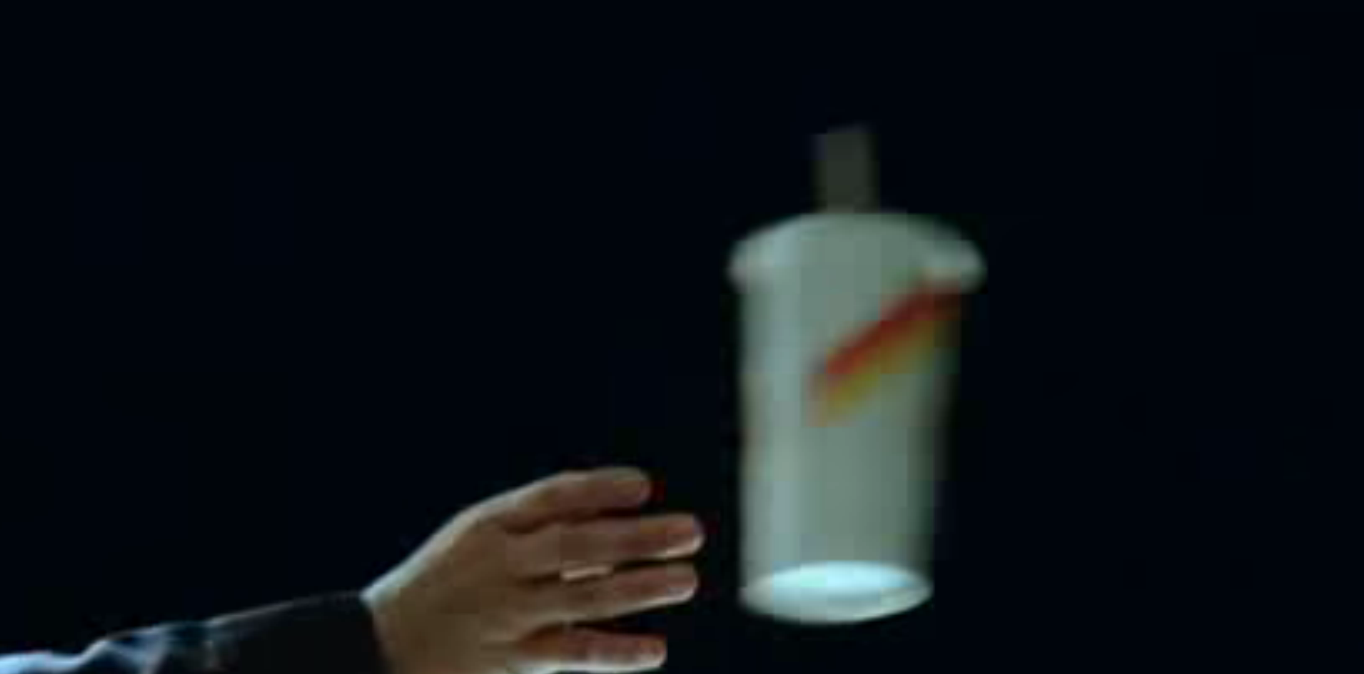
there was a lot of time spent on this milkshake

there was a lot of time spent on this milkshake

To cut to the chase, I feel like Adams was probably innocent (and the court agreed too because his case was overturned) but I don’t believe Morris made an ironclad argument. There were a lot of details that showed the ineptitude of the investigators- focusing on Adams from the beginning and then finding evidence to back them up, as well as the witnesses who claimed to have driven by as the cop pulled someone over. But there were also a few unanswered questions for me: Harris said he was a ‘scared 16 year old kid’ but he had already done a lot of crimes so why did this cop scare him enough to shoot? And it was also never answered where Adams was the night of the murder. Could he have been in the car?

Moving away from my super scholarly arguments, I mostly disliked this documentary because it was SO literal. A person mentions that it was after midnight and you see a clock pointing to midnight. An investigator mentions hypnosis and there’s a watch swinging back and forth. The investigator mentions the police officer throwing her milkshake out the window and then that’s what you see because it’s apparently really difficult to imagine that. The reenacted scenes were also a little hokey. I like that Morris continued to use the description of Adams instead of Harris so that the audience could see how little belief that theory held, but I got tired of watching the cop get shot 10 different times. The milkshake getting tossed never got old though. I hope it was at least a strawberry flavor.

letici-kelimek

Final review: 2/5. Meh.

Up next: Jaws at the Drafthouse.

#122- Cinema Paradiso

Quick recap: A film maker recounts his life as a young boy in 1950’s Italy when he fell in love with movies.  

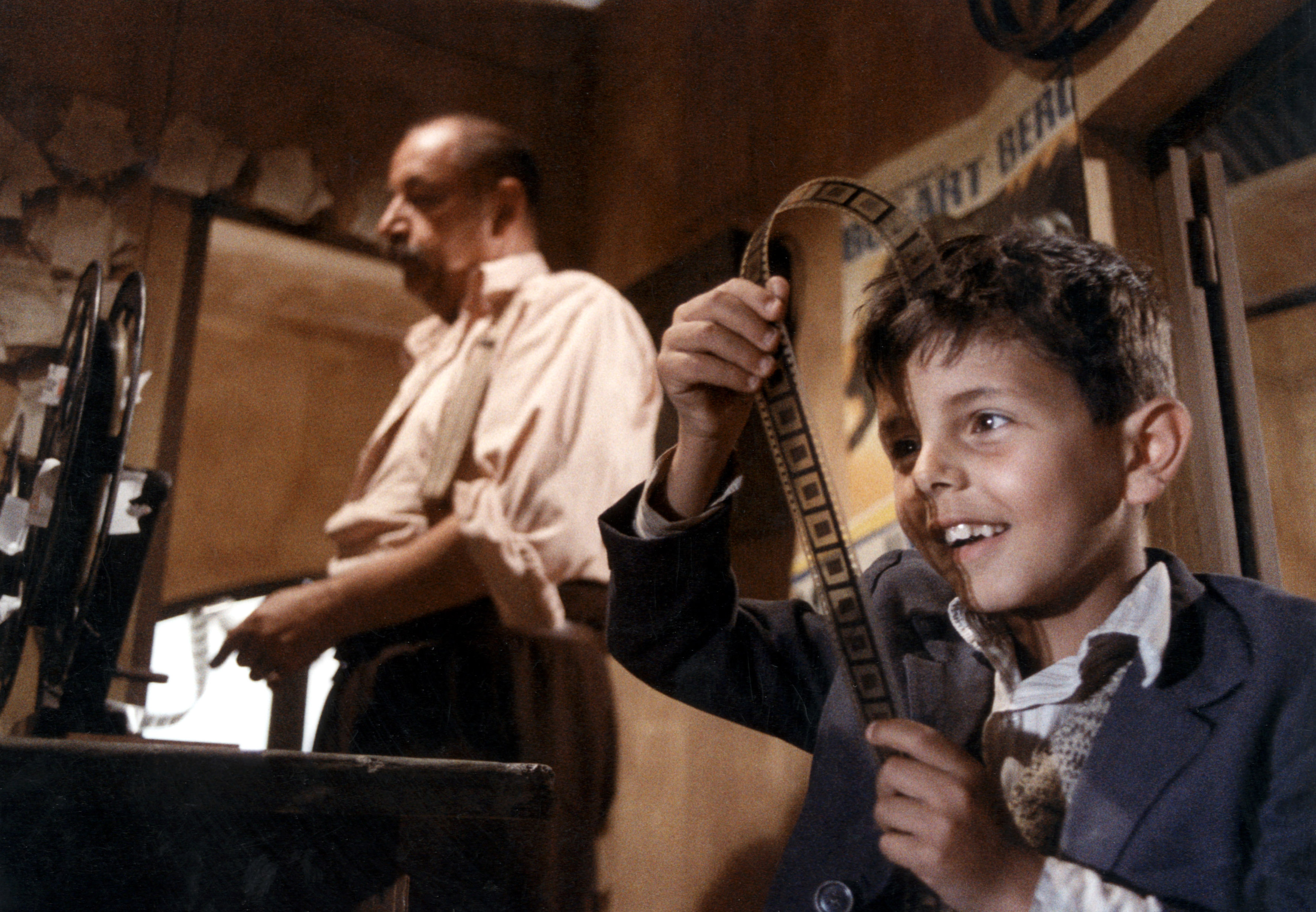
specifically, Toto fell in love with the dirty scenes his mentor Alfredo took out of the film

specifically, Toto fell in love with the dirty scenes his mentor Alfredo took out of the film

Fun (?) fact: Filmmaker Giuseppe Tornatore meant for Cinema Paradiso to be an obituary for movie theaters as a whole but when his movie was successful he quietly dropped that idea.

My thoughts: My feelings on Cinema Paradiso have been difficult to put into words because my thoughts are all over the place. I enjoyed the movie very much and might even recommend it to someone looking for something different to watch. But was it a ‘good’ movie? When I die, am I going to look back and say, ‘thank god I had the privilege of seeing this movie’? To the second question first, probably not. To the first, well- that’s the hang up.

I want to like this movie. It’s right up my alley- foreign, not well known, quality acting, an interesting plot. On paper, I should be raving about how this movie changed my life and yet here I am. The problem lies in that Cinema Paradiso is really two films. I watched the much edited version streaming on Netflix, but the original is almost 3 hours long. Maybe that would’ve changed my mind by watching the full thing ,because the pacing seems really off. The first half of the movie is about Toto as a boy, finding a true friend in film projectionist  Alfredo. It’s unbearably sweet how the two interact and help each other out. I especially connected with the concept that movies are magical and bring people together. It reminded me of watching random classic films on tv as a kid. I never really understood what was going on, but it felt important and something that should be respected. When the Cinema Paradiso burns down, Alfredo is caught inside and Toto saves his life. By this point, I was completely hooked.

And then, in one of my least favorite movie tropes, Alfredo (who has been blinded by the fire) is feeling young Toto’s face. The camera moves toward him and then when it goes back to Toto, he has magically turned into a teenager. Yuck. Teenage Toto isn’t nearly as interesting as super adorable kid Toto. He has become very sweet and quiet, not the hellraiser I was used to in the beginning. And he’s in love, of course. The rest of the movie revolves around him trying to get the girl while Alfredo has taken on a ‘wise sage’ role. He convinces Toto to walk away from his job as a projectionist, move to Rome, and never come back. And so he does, which includes dropping the girl he has loved. It isn’t until 30 years later, following Alfredo’s death, that he returns to his old town. Sure, he’s a big shot filmmaker now, but he doesn’t seem all that happy with his life. I think the director was trying to show that following your dreams means making sacrifices but besides the career, he doesn’t seem too successful.

The one redeeming scene comes at the very end of the movie, as Toto sits in a private movie theater and finally watches all the pieces of film Alfredo had cut out for being too ‘obscene’. It’s basically just a supercut of people making out, which is a little weird, but also sweet. This scene didn’t make up for the second half of the movie, but it helped a little.

Final review: 3/5. That was a hard one.

Up next: Dead Man

#119- Out of Africa

Quick recap: A somewhat biographical story of the Baroness Karen Blixen, who goes to Africa and then later gets ‘out of Africa’. And also falls in love with Robert Redford, because didn’t we all at some point?

Robert Redford can make hair washing look hot

Robert Redford can make hair washing look hot

Fun (?) fact: In one scene, Meryl Streep (Blixen) had to fire at a lion. She was promised the lion would be restrained but he was not, so her fear is real. It’s kind of like when I think one of my cats is asleep next to me, only to find out they aren’t and I have left my feet uncovered. It never ends well.

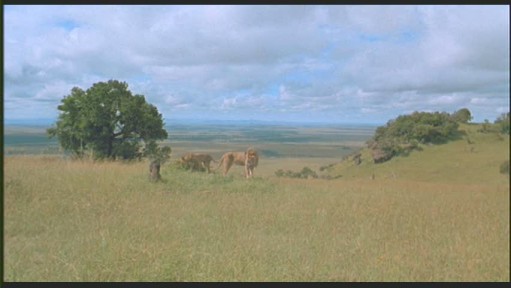
But the lions hung out on Denys' grave at the end of the movie so all was forgiven

But the lions hung out on Denys’ grave at the end of the movie so all was forgiven

My thoughts: For a lady who ran a plantation  all by herself in Africa while surrounded by lions and war, Karen Blixon’s life onscreen is rather dull. If I had to attribute it to one thing, I think the reason the movie didn’t really resonate with me is that it is framed as an ‘epic romance’. I’m not saying that because I don’t really like romance movies, but because the story is about a woman’s life in Africa.I felt that there were many scenes that could’ve been grittier and shown more emotion. There were so many opportunities to show how fierce and strong she was, but instead we see that she struggles until Denys (Robert Redford) strolls up and saves the day and in the end, all that’s really been injured is Blixon’s hair. She also had Syphilis during the movie but I don’t think many people would consider that a fun adventure.

I could go into the offensive colonial mindset that was present throughout the film, but considering that’s how Blixon presented her world  in her writing, I suppose Out of Africa was accurate in that regard. I also liked Denys’ opposing viewpoint that the indigenous tribes were fully formed people who didn’t really need to be civilized. Blixon fought for workers to have their own land and not be split up so I’m glad she realized what was best.

I suppose I am contradicting myself a little bit, but what I loved most about Out of Africa was the gorgeous scenery when Denys and Blixon went on adventures and faced danger. It was beautiful and almost made me want to see the landscape up close. Almost. So while I didn’t find the action all that exciting, the scenery made up for it.

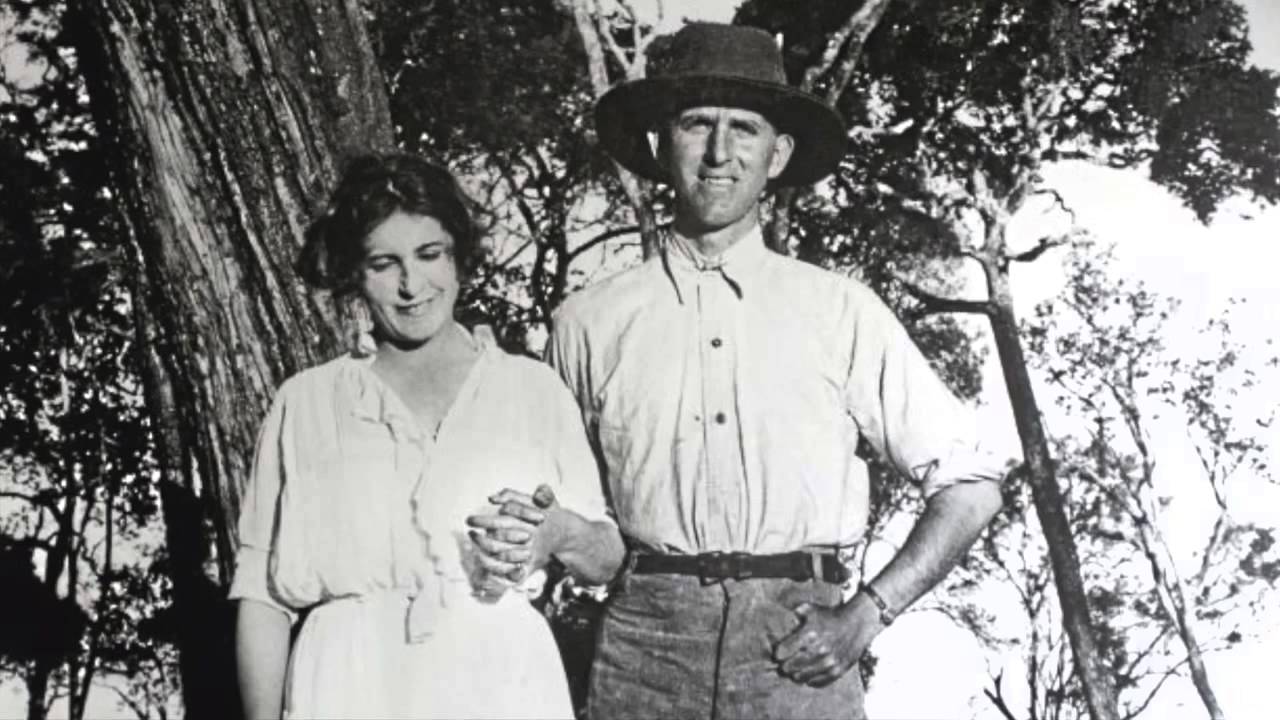
the real Karen and Denys

the real Karen and Denys

Final review: 2/5. Almost a 3, especially considering how much I loved Streep’s performance but in the end a 2 because it was so LONG.

Up next: Murder, My Sweet