#152- The Life of Emile Zola

Quick recap: Emile Zola was a French writer in the 1800’s who wrote several books about the state of his country. He was most famous for an article called ‘J’Accuse’ where he condemned France for wrongfully imprisoning  Alfred Dreyfus for suspected treason.
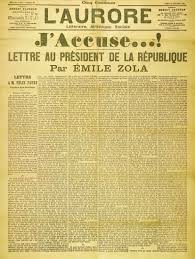
This movie is chock full of newspaper montages!

This movie is chock full of newspaper montages!

Fun (?) fact: Emile Zola was maybe murdered? OOPS, sorry.

*spoiler alert* Zola dies and was maybe murdered. You know how much I hate giving away the endings to films almost 80 years old.
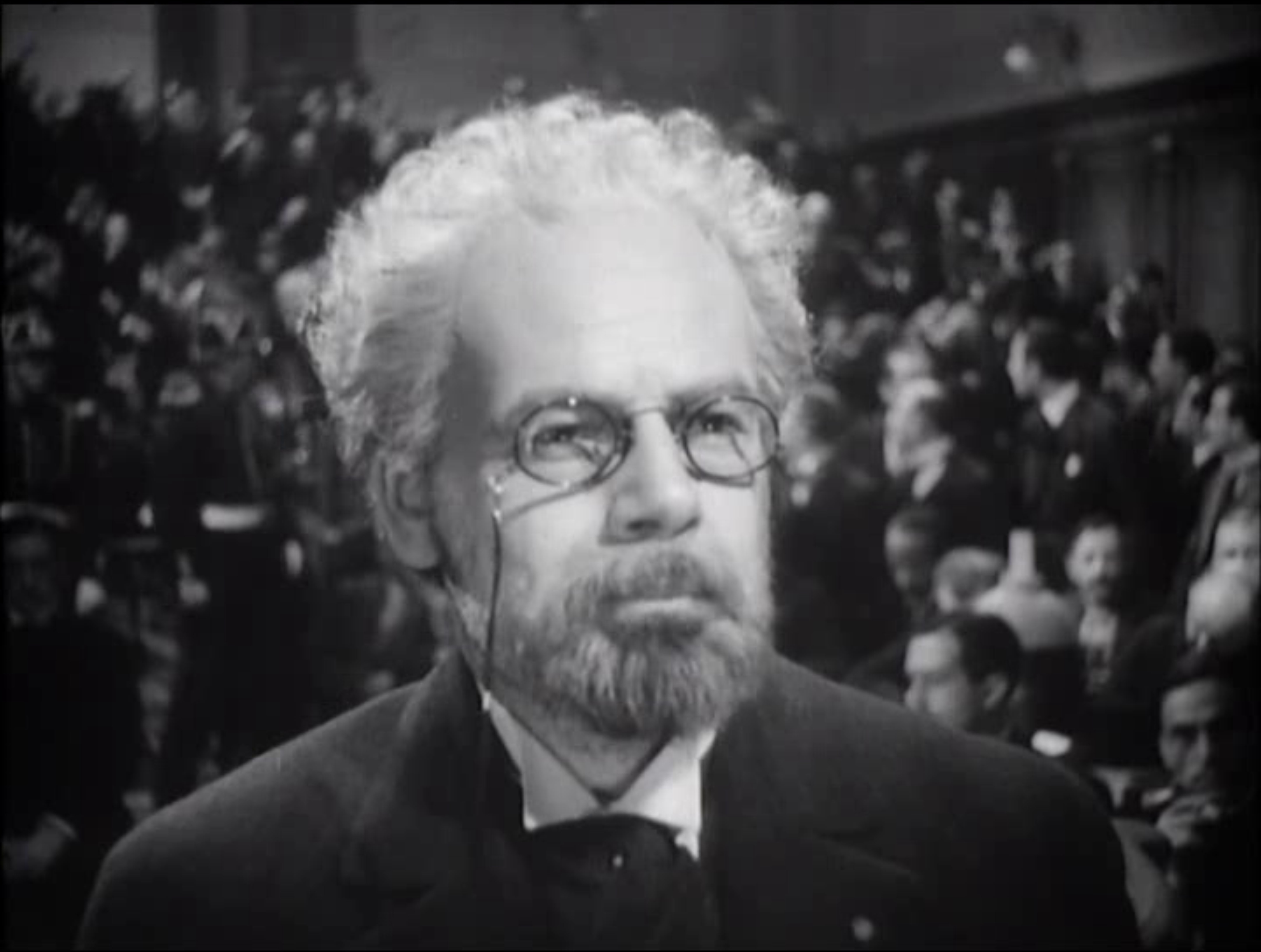
He looks like a more dignified Colonel Sanders. Sorry, had to get that out of my system.

He looks like a more dignified Colonel Sanders. Sorry, had to get that out of my system.

My thoughts: Although I love getting to watch some old favorites like my last film review, there is something satisfying about sitting down to watch a movie that I know nothing about. Before last night I had never heard of the name ‘Emile Zola’ or any of his works. I won’t go so far as to say that I am a fan, but it’s nice to have knowledge about something previously unknown to me.

I thought The Life of Emile Zola was a French film but actually it’s an American one about someone French, which means British accents for some reason. That’s a pretty common thing even now (I’m looking at you Tom Cruise in Valkyrie) but it still annoyed me a tiny bit. Despite this, the acting was superb. Even though this film was made in 1937, it felt like it could’ve easily been made in the 50’s. Paul Muni, who played Zola did a remarkable job, especially during his 6 minute speech in the courtroom at the end of the movie.

Emile Zola waters down actual events into something less complicated, a fact that makes sense given the time but also makes me a little angry. For example, in real life Dreyfus was wrongly accused and convicted partly because he was Jewish. This film came out right in the middle of the rise of Hitler and so movie execs didn’t want to take a stand. So the word ‘Jew’ is seen exactly one time in reference to Dreyfus and never uttered once. Like I said, it makes sense but also diminishes from the story a little.

Final review: 3/5. I really did enjoy this film and stayed interested almost the entire time, considering this was just about a writer’s life.

Up next: Straw Dogs

#146- Steamboat Bill, Jr.

Quick recap: William ‘Steamboat Bill’ Canfield is a-you guessed it- steamboat captain. When he receives word that his son is coming to visit (and whom he hasn’t seen since he was a baby), Steamboat Bill looks forward to having a strong, muscular man such as himself to help with chores on the ship. Instead, he gets this guy:

That stare is going to haunt me for years to come.

That stare is going to haunt me for years to come.

Hilarity then ensues.

Fun (?) fact: One of the most famous scenes in this movie occurs when William Canfield Jr. (played by Buster Keaton) is almost crushed to death by the side of a house. This scene is later recreated for an episode of Arrested Development by none other than the character Buster.

not caused by a loose seal

not caused by a loose seal

My thoughts: I have discovered a perk to silent movies: I can watch them when The Kid is awake since I don’t need sound to understand them. Hearing the music coming from my computer, he came over to investigate. He watched for about two minutes before declaring the whole thing, ‘silly’ and then walking away, presumably to torture the cats. An apt, although quite succinct review, if I ever heard one.

I had heard of Buster Keaton before, although I have never seen anything he has been in. I always thought of him as another Charlie Chaplin, mainly because those are the only two silent film stars I can name. I do see similarities, though Chaplin seems much sweeter in his movies. Keaton plays the part of the ‘awkward son’ very well, and I admittedly laughed during the scenes where Bill Sr. tried to change Bill Jr.’s look into something more masculine. On that note, most descriptions of Steamboat Bill Jr. call Keaton a ‘dandy’, which I suppose is an appropriate adjective although one not used very much anymore. Dandy just seems like such a……. ‘dandy’ word. I’m not sure what I would call him, although with the ukelele and beret, ‘hipster’ might not be too far off.

You don't understand my prog rock, DAD

You don’t understand my prog rock, DAD

The relationship between father and son lacked the warmth I had come to expect from silent films. Sure, in the end, father learns to accept son, but it was only at the very end and after Jr. had saved Sr.’s life. Jr. only won favor because he finally ‘manned up’. Then again, this is the 1920s we are talking about, so maybe my expectations were too high. Mostly, I thought of another father and son while watching this movie:

That's right, I like to reference movies I just reviewed

That’s right, I like to reference movies I just reviewed

Finally, the typhoon scene is what most people know about this movie, but I just found it…..weird. Maybe it was because it just looked like someone turned on a heavy duty fan on a clear day or maybe it was because houses don’t fall down like that, I don’t know. I didn’t find it very funny and thought it a weak ending to the story.

Final review: 3/5. Not the best, but I’m hoping to enjoy other Keaton films more.

Up next: October (Ten Days that Shook the World)

#143- Amores Perros

Quick recap: Three seemingly unconnected stories are told, although everyone crosses passes with another at some point. Each story has something to do with love as well as something to do with a dog. Thus, Amores Perros.

Octavio y Susana, a story about a guy who is in love with his brother's wife. He also makes money dog fighting.

Octavio y Susana, a story about a guy who is in love with his brother’s wife. He also makes money dog fighting.

Fun (?) fact: For once, I put my 3 years of Spanish to good use because I knew that ‘Amores Perros’ means ‘love dogs’. Awww, love dogs. I love dogs! Upon doing some research, I found out that it is actually an expression, meaning roughly, ‘love’s a bitch.’ Oh.

Daniel y Valeria, a story about a guy finally getting to be with his mistress, a model. She has a horrible car accident and ultimately loses her leg.

Daniel y Valeria, a story about a guy finally getting to be with his mistress, a model. She has a horrible car accident and ultimately loses her leg.

My thoughts: In its synopsis, Netflix said Amores Perros was the ‘Mexican Pulp Fiction‘. That excited me because I love me some Tarentino. He has a way of mixing outlandish gore and humor so that you can’t help but fall in love with his movies. I also love the idea of other Tarentinos out there, with their own beautiful, twisted ideas in other countries. But then I watched the first scene, which featured a dying Rottweiler, completely covered in blood, and I knew that I had stepped into something closer to Funny Games than Pulp Fiction. Damn.

El Chivo, a story about a former hitman who now wants to be reunited with his estranged daughter.

El Chivo, a story about a former hitman who  wants to be reunited with his estranged daughter.

The dying dog scene was traumatic all by itself, but then the next scene featured a dogfight with people around the arena sweeping up the buckets of blood and hauling off dead dogs. The movie had a disclaimer before the opening credits that no animals were actually harmed, but everything was so realistic. As I looked up trivia about Amores Perros, I learned that the dogs were actually just playing and the director edited the scenes to make it look like fighting. As for the dead dogs, they were just heavily sedated. That’s all well and good and legally I can see how that wouldn’t be considered ‘harmful’, but most dogs if given a choice, wouldn’t care to be knocked out for a long amount of time.

So, as you can see, it was nearly impossible to get past all the gruesome dog deaths. It reminded me of all of those people who whine that they can’t sit through movies like Marley & Me, knowing that the dog will die in the end. They have no idea that there is much worse out there. And for those people who have watched Marley & Me as well as Amores Perros, what the hell is wrong with you??

Besides torturing dogs for two and a half hours, the theme of love also carried throughout the movie. And by love, I mean people being awful to each other. In the first story, Susana is married to Ramiro who abuses her and robs people on the side. His brother Octavio is in love with her and shows it by practically raping her every chance they are alone together. So, basically what I took from this movie is that people who are mean and cruel to dogs are also awful people in real life.

Final review: 3/5. I see why so many people love this movie, but it was just too much for me.

Up next: Monty Python and the Holy Grail

#142-Close-Up

Quick recap: Close-Up is a semi-documentary about a man who pretended to be famed Iranian director Mohsen Makhmalbaf and was later arrested for it.

Not Mohsen Makhmalbaf

Not Mohsen Makhmalbaf

Fun (?) fact: All people involved in the case play themselves, although many of the scenes are recreated.

Not Mohsen Makhmalbaf

Not Mohsen Makhmalbaf

My thoughts: If you are looking for a documentary with twists and turns, this isn’t it. It’s simply about a man pretending to be someone else. I knew this going into the film but a small piece of me still expected there to be something shocking at the end, like Sabzian murdering everyone or actually being the director Makhmalbaf. It always annoys me when directors take creative license with the truth (*ahem* Foxcatcher) by exaggerating or making up events, but in this case I could’ve handled a bit more suspense.

That’s not to say I didn’t enjoy Close-Up. Being a bit underwhelmed with the case made it possible for me to instead focus on the people involved. As I’m sure the director intended, I felt sorry for Sabzian from the moment he entered the screen. From his story, we learn that he is just a poor man with a minimal wage job who ran with the chance to be seen as a famed director because he wanted respect. His mother is also in the film and she is even more sad than Sabzian. They seemed like good people, even though he was caught up in a case like this. There were many times that the family implied there were ulterior motives to take money and burgle the house, but that doesn’t seem likely. As one of the family members put it, Sabzian was a sick man, the sickness being poverty, and the only way to get better and stop doing illegal things would be to get a decent job and find something to do with his life.

The family’s account of the deception seemed straightforward enough, yet I found it hard to believe that they were really all that hurt by Sabzian. They seemed like decent enough people but there were times, especially when the father became suspicious, that it felt more like they were just being cruel instead of turning him into the authorities. In a couple of the scenes it felt like Sabzian was being mocked, although that could also be because he really wasn’t that good of a fake and gave himself away so easily.

The most powerful part of the film arrives at the end as Sabzian meets up with the director he impersonated. After buying a plant for the Ahankhah family, Makhmalbaf and Sabzian ride to the family’s house where the director becomes the mediator between the two parties. The apology felt real and gave me hope that everything turned out ok.

Not Makhmalbaf

Not Makhmalbaf

Final review: 3/5. An intriguing film about truth but not really something that kept my attention for long.

Up next: Amores Perros