#218- Detour

Quick Recap: There are many reasons why hitchhiking is a bad idea, one of them being that you might be accused of murder.

24waeew

Or it might be Rodney Dangerfield. You just never know!

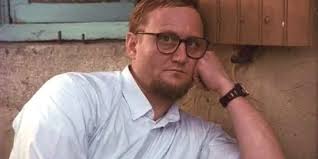
Fun (?) fact: Tom Neal, who played the main character Al, was convicted of killing his wife in 1965. I’d add something witty here, but that’s just sad and Tom Neal was an asshole.

detour-1945-1

Tom Neal is an example of someone you wouldn’t want to pick up.

My thoughts: As I have most likely mentioned before (but am currently too lazy to verify), I have an extreme fear of being accused of a crime I didn’t commit. There are some people who go so far as to save all their receipts for the sole purpose of having an alibi in case they are in a situation that would warrant it, but (as mentioned before) I’m too lazy to do that. Plus, knowing my luck, if I did keep all of my receipts and was accused of a crime, the prosecution would probably use that as evidence that not only was I guilty, but that it was premeditated. And exhibit B would probably be this entire paragraph, so it’s for the best that I get on with the review and stop incriminating myself.

So…..Detour. IMDb calls this film one of the best B-movies ever made, which, on the surface sounds like an oxymoron. I get it, though. Director Edgar G.Ulmer had a very small budget and instead of trying to create what would’ve been really bad scenery, he just had fun with it. Case in point, the beginning of the movie shows Al hitchhiking his way west and later heading east. There wasn’t a budget to show both directions, so Ulmer simply reversed the film. The result is Al hitching with his left thumb and riding in cars where the driver is on the right side. There are also many scenes where Al is staring off into the distance as his voice explains what he is thinking. Low budget, yes, but the story is simple enough to have not needed an expensive set.

The main plot of the film is about as outlandish as you might expect: Al hitchhikes to LA to reunite with his girlfriend and along the way gets picked up by a really rich guy. The rich guy dies and Al realizes that if he calls the police, it’s going to look really suspicious. So he instead buries the body, switches identities and continues on his way. Being the idiot that he is, Al picks up his own hitchhiker, who just happens to be a woman that knew the dead rich guy and now she is in on what happened. The two fight about what to do and in one of the best (worst?) scenes I’ve encountered on this list, the woman locks herself in a hotel room to call the police on Al. On the other side of the door, Al pulls as hard as he can on the phone cord and when that doesn’t work, kicks down the door. That’s when he finds the cord wrapped around the woman’s neck and she too is dead. Rotten luck, indeed. It’s such a wonderfully silly story, but somehow, it works. The acting wasn’t great but it didn’t need to be to get the point across.

Final review: 4/5. And thanks to the Hayes code which stipulates that murderers aren’t allowed to get away with their crimes, Al is picked up at the end of the movie and brought to justice.

Up next: The Good, The Bad, and The Ugly

#216- A Woman Under the Influence

Quick recap: Mabel Longhetti is on the verge of a mental breakdown, but she’s probably not as insane as the other adults in her life.

UndertheInfluence_2379461b

Generally how I feel about most things

Fun (?) fact: This movie made Richard Dreyfuss puke, or so he claims.

My thoughts: A Woman Under the Influence is one of those films I can say I appreciate, while in the same breath also vow to NEVER WATCH AGAIN. I embarrass easily, especially when watching other people act strange (wahjah), so watching this all the way through was excruciating. Not as excruciating as watching hours of fan made videos on Youtube about Slappy the Dummy from Goosebumps (courtesy of my 6 year old), but still pretty bad.

Gena Rowlands did a remarkable job playing Mabel, the main character, although I felt she was a little too dramatic at times. It’s never clear what she is suffering from and I really have no guesses. It was as if director John Cassavetes just opened up the DSM and picked out random symptoms from an assortment of mental illnesses. Mabel was at times manic, other times depressive, anxious and also had a thing with flirting with other men. She didn’t call it flirting though, just that she was a warm person.This gets her in trouble at the beginning of the movie when she goes to a bar and starts talking with a random guy, who later drives her home and assaults her.

The real heart of the movie is how the family copes with Mabel. Her husband Nick seems caring at first and fiercely protective. But he is also sort of the worst in that he continues to put her in situations that are inappropriate. I get that Mabel is a grown woman but her mental state is obviously unstable so maybe it’s not a good idea to keep alcohol around? And also probably not a good idea to throw her a huge party when she gets out of the mental hospital when she is clearly not better. And WHY did they have kids? When you look at it from these points, he almost seems like a villain, even though it is clear that he loves her.

When looking up reviews about this movie, many people point out that it’s actually a heartwarming tale of how unconventional families can still function and raise great kids. The three kids in the film do seem stable and the movie ends with them being tucked into bed with their parents kissing them goodnight and telling them how much they are loved. This is shortly after witnessing their mother have another nervous breakdown, cut herself, and then watch as their father hits her. They are fine now, but there is no guarantee that some damage is being done to everyone.

What I like most about the movie is that it has a happy ending on the surface, but there really is no resolution. Mabel is calm at the end of the film and her husband is happy, but it’s only fleeting. Everything will go back to normal eventually and then start to unravel again. The director didn’t feel the need to wrap up the story in order for the audience to feel good because that’s the reality many people with mental illness face everyday.

images

Final review: 4/5. Please don’t make me sit through this ever again

Up next: The Color of Pomegranetes

#215- Juliet of the Spirits

Quick recap: Juliet discovers that her husband has been unfaithful and goes on a journey of self-discovery to gain the courage to leave him.

It was an odd journey, to say the least

It was an odd journey, to say the least

Fun (?) fact: Director Federico Fellini claims to have taken LSD in preparation for the film.

I would've been more shocked had Fellini had instead admitted to not using any drugs prior to directing this film

I would’ve been more shocked had Fellini instead admitted to not using any drugs prior to directing this film

My thoughts: Most women who find they have been cheated on choose to blast girl anthem songs while throwing their man’s things out the door. Not Juliet. She instead turns to mediums, New Age psychoanalysts, sex workers and her own twisted hallucinations for comfort and guidance. At least, I think she did. Juliet of the Spirits was filled with so many symbols and metaphors I wasn’t sure what I was watching most of the time. It sure was pretty, though.

F5-NAOMI_SANDERS-1-Juliet-of-the-Spirits-600x442

But seriously, this film is gorgeous on so many levels. There are scenes that are so colorful that it practically hurts your eyes and scenes where there are just a couple of colors. All of it is beautiful. When I think of the 60s, I think of a lot of yellows, pinks, browns, and oranges and this film had those colors, but the movie still looks timeless. I wouldn’t go so far to say that it could be mistaken for a modern film, but it definitely does not feel dated, color-wise.

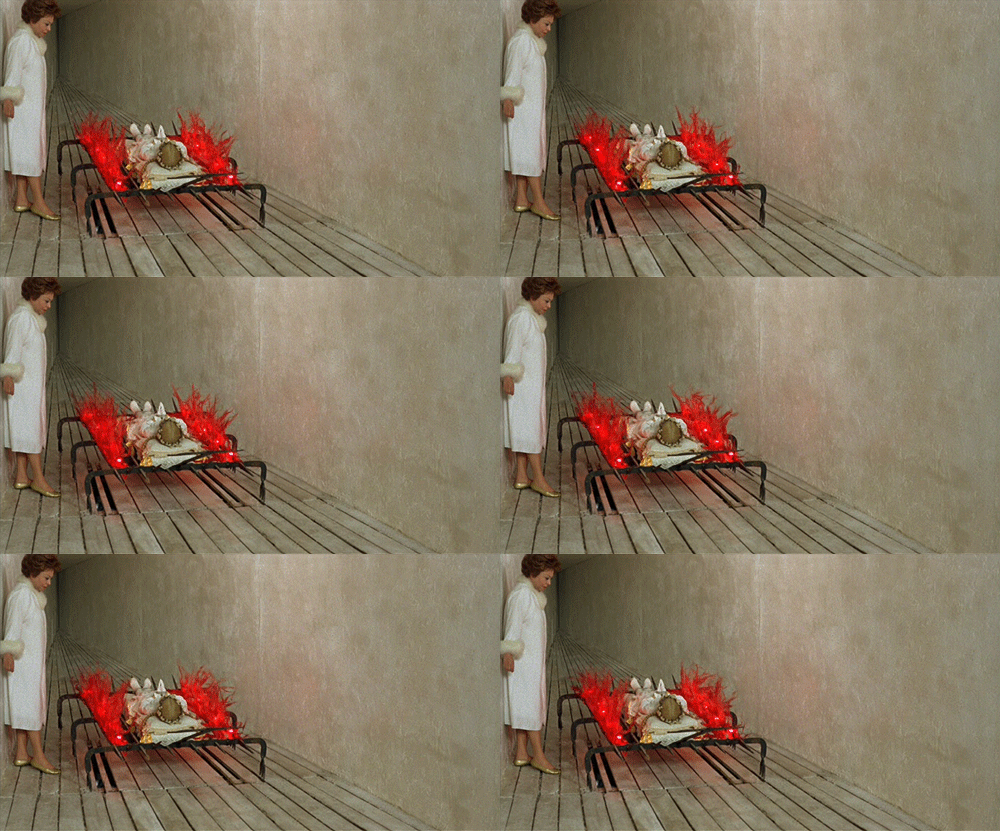
The New Age-y stuff in the film didn’t make much sense because it’s not something I am familiar with, but it did make me curious what rich Italians did back in the 60s. Because according to this film they held séances, made up games where they psychoanalyzed each other, and went down slides after crazy sex. I’m not really sure how all of this helped Juliet, but by the end of the film I think she figured out that she needed to leave her husband. Actually, I’m not even sure that happened. Throughout the film, Juliet has visions of herself as a young child, strapped to a bed of pretend fire. In the end, she crawls through a door in her bedroom and frees the little girl. The two hug and then suddenly it’s daylight and Juliet looks happy. I’ll take a wild guess and say the ending had something to do with freeing herself from the restraints of religion, but I’m not even sure about that.

tumblr_n6srgwBvGB1qc9pwoo1_500

Final review: 4/5. I think I liked this movie?

Up next: A Woman Under the Influence

#214- The Vanishing

Quick recap: A young man and woman, Rex and Saskia, go on vacation together, when Saskia disappears. If that wasn’t bad enough, he starts getting letters from her abductor, driving him to the brink of insanity.

Whatcha thinking about? Oh, I don't know. Murdering stuff, I guess.

Whatcha thinking about?
Oh, I don’t know. Murdering stuff, I guess.

Fun (?) fact: The story is based off of an urban legend where a mother and daughter check into a hotel for the Paris Exposition of 1901. The daughter goes downstairs to a shop and when she returns to the room, her mother is missing and no one she asks knows anything. If this sounds familiar, it’s also been the basis for at least 5 other films.

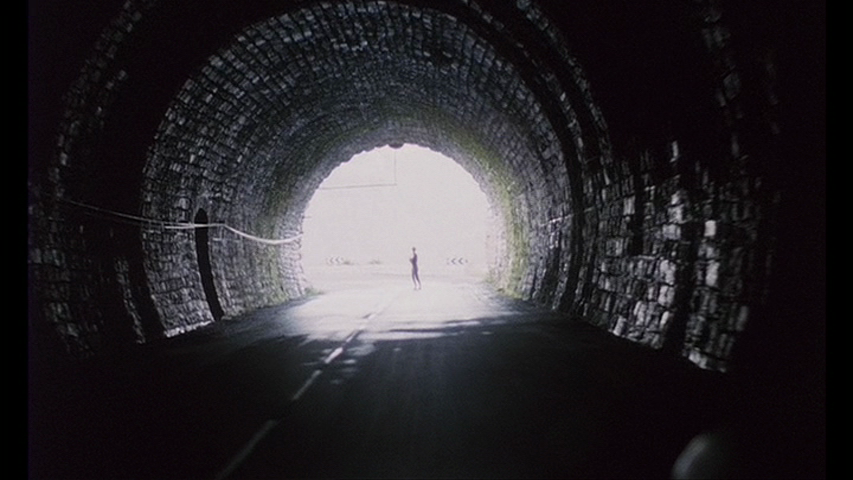
Honestly, being stuck inside this tunnel is the scariest part of this film

Honestly, being stuck inside this tunnel is the scariest part of this film

My thoughts: Now that Horrorfest has come to a close, I realize that my theme this year was actually, ‘horror movies that aren’t’. The Vanishing fits perfectly in the mystery and thriller section, but I just don’t see how horror comes up. The concept of someone vanishing is scary, but not in a ‘can’t turn off the lights’ sort of scary. I really enjoyed this movie, but I’m disappointed to have ended the month without seeing very many horror films.

I’m going to skip through all of my usual stuff about the acting, music, dialogue and what-not to say that the reason to watch this film is for the ending. Spoiler alert now, although this film is from 1988 so if you don’t want to be spoiled about 30 year old movies, the internet isn’t the place for you. Anyway, most of the film goes in the direction I expected it to: girl vanishes, guy looks for her to the point of insanity. What I liked was that interspersed in that plot is the abductor’s story. He’s a totally normal guy, with a family, a job as a professor, and a hobby for attempting to abduct and murder young woman. Perfectly normal. He describes himself as a sociopath, which is thrown around a lot in these films, but really applies to this guy. Sociopaths can still be functioning members of society and many of them aren’t murderous insane people, but they lack empathy, which brings its own set of problems. Raymond, the abductor, isn’t your typical villain because he sees the abduction as an experiment of sorts. I can’t figure out if that makes him scarier or less scarier, but it’s definitely creepy. When he finally meets Rex, he has no problem telling him the story, thus admitting his involvement. It’s not like he is bragging, but at the same time, he seems proud of himself for finally getting the details right and going through the abduction.

The scenes with Rex and Raymond in the car are deeply unsettling. Still not in horror territory, but still unnerving. It’s 3 years later and Rex, as mentioned before, can barely function doing anything else besides looking for Saskia. When Raymond offers him the opportunity to find out what became of her, he turns it down at first because it involves taking a sleeping pill and going unconscious. The decision is really difficult: take the pill and find out what happens and risk dying yourself, or never finding out and continue a life that isn’t worth much anymore. So, he takes the pill and then the next scene is of Rex trapped in a coffin, while Raymond covers him with dirt. It wasn’t unexpected because there is no way Saskia could still be alive, yet I still hoped there would be some sort of twist and everything would be ok. And I guess it is a happy ending, because Rex, although dead, found out what happened, and Raymond has the pleasure of having killed two people. The final scene is of him sitting serenely outside, watching his children play and his wife water the bushes where his victims are buried.

Final review: 4/5 A solid movie but not horror.

Up next: Juliet of the Spirits