#368- Project A II

Quick recap: Having not seen the first Project A, I have no idea why Dragon (Jackie Chan) has so many enemies. I also have no idea how he was able to go from the Navy to Police Sergeant but that’s also a thing, apparently. Maybe it’s his ridiculously good martial arts skills?


It’s easier just to name who doesn’t want Dragon dead

Fun (?) fact: The peppers Dragon ate and then spit in his hands to rub in his attackers’ faces were real
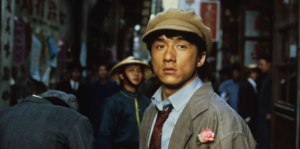
My thoughts: I absolutely love discovering subgenres within a genre. My first realization of this came very early on in this list when I learned ‘foreign’ isn’t a genre, except as an Oscar category. And now I’ve expanded my horizons to learn that there are different kinds of Martial Arts films. Before this list I had only ever seen Crouching Tiger, Hidden Dragon, which is so vastly different than this movie that they shouldn’t be mentioned in the same realm.

Project A II was a lot more fun for me to watch than previous films of similar fighting plots. There is an underlying humor I didn’t always understand but still very much enjoyed, especially during the fighting scenes. It’s one thing to film people punching and kicking people but Jackie Chan adds all these elements that show he is enjoying himself but is also a master. My favorite scene was when Dragon went to confront the big mob boss that ran the district he was policing. He had a few friends with him and it was obvious how outnumbered they were. Yet that didn’t stop Dragon from trying to kick as much ass as possible and also have time to show off. The restaurant they fought in became a sort of playground for both sides as they used everything from couches to the bar to the walls to attack.

This movie is about as straightforward as it gets: good guy comes to town to defeat bad guys. Yet I found myself getting lost in the new characters and trying to figure out who was really the villain. At some point I gave up and just enjoyed the ride. I’m fairly sure events in the film take place in the early 1900s but some of the costumes look like something out of Miami Vice and the soundtrack is full of synthesizer. Jackie Chan knows what we are here for though and he delivers exactly that over and over. Just don’t think too hard and you will love this movie.

Final review: 4/5

Up next: Kiss of the Spider Woman
 

#367- Cairo Station

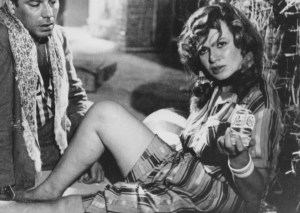
Quick recap: So, there’s this station, see? And it’s in Cairo. And there are a lot of crazy characters who work there, such as Qinawi the disabled newspaper seller and Hanuma, who illegally sells Pepsi (I think?) and her fiance Abu Siri who is a decent guy, mixed up in all the madness.

This was a gorgeous cast of people

Fun (?) fact: There isn’t much out there about this film, unfortunately. The best fact I could find is that Youssef Chahine is the director as well as the main character, Qinawi.

My thoughts: Proof that I know next to nothing about the world around me, I was shocked by how modern Egypt looked in Cairo Station. There was plenty of traditional clothing but there was also a very Western look that I wasn’t expecting. It reminded me of the book Persepolis and how modern Iran was before the Islamic Revolution. Granted, this was only a tiny slice of life in the city but I would’ve loved exploring the underground scene and up-and-coming rock and roll acts.

What I wouldn’t have loved back then? A creepy guy like Qinawi hanging around. It’s genius how the director showed Qinawi’s creepiness throughout the entire movie, even in the first couple of scenes, and yet because he was disabled, I overlooked everything. The pinups that decorated his shack? He was lonely and wanted a woman. Spying on Hanuma as she dressed? It was only because he was worried about her. Buying a knife and repeatedly stabbing a woman? Ok, that’s when I started to have suspicions. But really, I found it so progressive to have the main villain as a mousy disabled guy that everyone pities. And that all the women in the film were creeped out by him but their husbands and boyfriends didn’t believe them. Time and time again, these women were told that they must’ve done something to deserve the lascivious stares and were ignored. It wasn’t until the very end of the film, as Qinawi had kidnapped Hanuma that everyone jumped into action.

Although the main plot was interesting and unique, the subplots were difficult to follow at times. There was one about a union forming and another about a young girl being ripped away from her lover. It was hard to figure out what I was supposed to focus on at times, which I guess is the point of filming in a busy train station. I did love the various ‘artsy’ close-up scenes and dramatic music but it all felt too much sometimes.

Final review: 3/5

Up next: Project A II

#361- Trouble in Paradise

Quick recap: Gaston is one of the best con artists out there. He falls in love with Lily, who is just as cunning as he is. When they join forces to rob a rich woman, however, the plan goes off the rails.

two women in love with the same man? That’s trouble in paradise for sure!

Fun (?) fact: Trouble in Paradise was banned from public viewing once the Hayes Code took effect in 1935. It wouldn’t be until 1958 when people were allowed to watch it again.

So saucy to show a woman’s garter!

My thoughts: Is it possible to name your child Gaston and he not grow up to be a huge jerk? I feel like that name just seals his future somehow. Anyway, This was a fun movie to watch, especially since it was made in the pre-code era. Obviously there have been monumental films made during the Hayes Code but there is something about watching a director have fun with the story and not worry about getting in trouble. I think it also helped Trouble in Paradise feel much more natural than if it had been made just a few years later.

I think I was most surprised by how funny much of this movie was. Many times I’ll watch something and be able to tell that something is meant as a joke but it never makes me laugh. This movie definitely did, many times. My favorite scene is in the beginning when Lily and Gaston have dinner together. At one point she announces to him that she knows he is really a con artist, and he announces that he also knows she is one. They then take turns giving back various objects stolen from one another when the other wasn’t looking. It’s funny but it’s also ridiculously cute to watch these two criminals fall in love. I really liked their chemistry and when Gaston started falling for Mariette, the rich woman he wanted to rob, it made me angry that he picked the wrong woman.

As is also the stereotype in these early films, everything works out in the end. The solution was complicated and I’m still not sure who conned who,  but Lily and Gaston ended back together so that’s what matters. Apparently, director Ernst Lubitsch had what was called the ‘Lubitsch Touch’ which meant adding sophistication and wit to his movies. It’s very clear that Mariette and Gaston just want to have sex with each other but the audience has to read through the lines to figure out what is really said. In a time when raunchiness was starting to show through in many films (and the reason why the Hayes Code was created), it was nice to have a director trust his audience to really get what was going on without having to spell it out.

Final review: 4/5

Up next: Anatomy of a Murder

#358- La Dolce Vita

Quick recap: Marcello Rubini proves that the paparazzi are really just the worst.

Me, getting home from work everyday

Fun (?) fact: I know I’m picking the most obvious one, but it’s still somewhat amazing. The term ‘paparazzo/i’ was coined in this film. Paparazzo is the name of Marcello’s photographer friend who chases down celebrities and the rich in order to get the scoop first.

Everyone, yes EVERYONE in this movie is the worst. Even that kitten in the previous gif.

My thoughts: I wouldn’t round my relationship with director Federico Fellini up to BFF status just yet, but we have certainly spent a lot of time together these last few years. I was introduced to his style with Juliet of the Spirits but it was Amarcord that won me over. I put my trust in him completely as a director. And honestly, with his movies, I felt invincible. ‘ If I can grasp the themes of 8 1/2,’ I thought to myself, ‘then I can understand any movie!’. But it was not to be, alas. Fellini, we’ve had some good times together but I just don’t know if I can forgive you for putting me through this movie.

I guarantee La Dolce Vita is one of those films people who call themselves ‘film enthusiasts’ love to tout as one of their favorites. And it’s not that I think they are full of it. I just don’t GET.IT.AT.ALL. There is not one redeeming quality about this movie whatsoever, except maybe the camera work. The gorgeous shots don’t come close to making up for the 3 hours of watching insufferable people do the most insufferable things like:

gathering friends around to listen to their poetry on vinyl

taking a famous actress around town and wading into a fountain in the middle of the night

trying to start an orgy at a party but no one is really into it so everyone just walks out to the beach and looks at a dead stingray

I had to brush up on the plot on Wikipedia because everything was just so disjointed and weird. One scene is at a site of a supposed miracle and then right after that, Marcello is taking his father out to a cabaret. The passage of time is loosely one week spent on the main character’s life but that’s also not really true because the end of the movie happens possibly years into the future. I know the good reviewer in me should have read on in the article about theme and symbolism but honestly, I was too worn out by watching everyone pick the worst possible choices in life.

Final review: 2/5

Up next: My Fair Lady