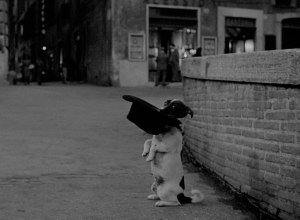
#332- Atlantic City

Quick recap: An aging gangster tries to continue being relevant. He helps a woman with her estranged husband’s funeral, sells coke and gets into a turf war with mobsters.

And starring Susan Sarandon, who likes to take lemon baths

Fun (?) fact: For a movie about gangsters, there’s a surprisingly sparse amount of trivia on IMDb. The best fact I can find is that shortly after filming the movie, Burt Lancaster nearly died from a gall bladder operation.
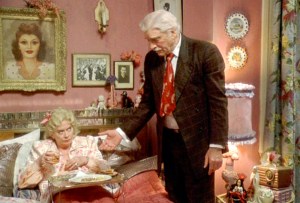
I spent a good chunk of time thinking Burt Lancaster was Matlock. Turns out that was Andy Griffith, so I guess I can’t tell my old white guys apart.

My thoughts: Hey! It’s good to be back, or something like that. I’ve had a couple of months of constant sickness, including losing my hearing for two weeks so you’d think I would’ve chosen a stronger film to celebrate my return to hearing. Unfortunately, that’s not how life goes.

I actually started Atlantic City with high hopes. The beginning was engaging, although Sarandon felt out of place. That could just be because I’ve seen her in so many other roles. In this one, she plays the estranged wife of a drug dealer who apparently knocked up her sister and then took off with her. While I wasn’t too keen on her placement, the guy who plays the deadbeat husband is SPOT ON:
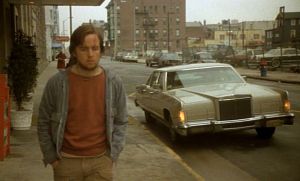
 

Like, so spot on I could imagine what he smelled like. So anyway, Dave (pictured above) comes back with the knocked up sister to sell drugs. From here, a whole bunch of plot stuff happens that I don’t want to get into because a) there’s too much and b) everything plays out how you expect it to, once you know the characters. The other important character is Lou, the aging gangster. He is introduced in the first scene, secretly spying on Sarandon giving herself a lemon bath. She later claims this is to get the fish smell off of her, but I’m pretty sure soap does that. The next scene is of him taking orders from an old lady and running errands for him. So, early on I got the idea that he has a heart of gold but also a mischievous streak in him. Or maybe just a thing for lemon baths.

Skipping ahead to the ending (because I can), Lou eventually shoots and kills two mobsters whom Dave stole coke from. It is revealed that he has a habit of skipping out on friends when their life is in danger, so this is some sort of breakthrough I don’t think most psychologists would endorse. Honestly, the only redeeming part of this movie was the actual setting- Atlantic City. The buildings seemed to have so much character to them and I imagined this rundown resort city, past its prime but ready for its moment. There’s a scene when Robert Goulet drops by to croon and if I didn’t know better, I would’ve thought this was a Lynch film, it was so surreal. There was a part of me that wished I was still deaf so I could just watch the scenes and not have to deal with the wacky plot and subpar characters.

Final review: 2/5.

Up next: Le Samourai

#331- The King of Comedy

Quick recap: Aspiring comedian Rupert Pupkin wants nothing more in the world than to be on the Jerry Langford Show and he’ll do anything to secure his spot.

Fun (?) fact: Robert De Niro, a method actor, said anti-Semitic remarks to Jerry Lewis to get a rise out of him during the scene when he crashes his weekend home. It worked.

My thoughts: This movie was a total surprise- from the time I learned it was directed by Martin Scorsese to my first glimpses of Robert De Niro to the ridiculous ending. And I loved it all, even if the embarrassing moments made me want to hide forever.

With a name like The King of Comedy, I expected something hokey and I was a little disappointed that Scorsese would go for such cheap comedy. But from the very first scene as Jerry Langford tries to exit his building through a mob of rabid fans, I knew I was in for something dark. De Niro is perfect as Rupert Pupkin. I found myself constantly wavering between feeling sorry for him and supremely annoyed. The same with Sandra Bernhard as Masha, although she made me cringe much more than have empathy for her. Rupert and Masha are in this microcosm of fans who are obsessed with a celebrity and they feed off of each other. Rupert, as mentioned above, is an aspiring comedian but about the only practice he does is make tapes of himself pretending to be on the Jerry Langford Show. He is so determined to be there that this becomes his focus, instead of actually honing his craft. And Masha is in love with Jerry and is convinced they deserve to be together.

Rupert’s fantasies of a relationship with Jerry Langford are confusing because they blend in so well with the actual plot. The first one is of Langford begging him to take over the show because he needs a break for a few weeks. It’s very obvious this is a figment of his imagination but the end of the movie has Rupert actually becoming a star because he kidnapped Langford and I can’t tell whether this really happened or not. There’s a point about how obsessive the public can be with celebrities and how fleeting love can be, so it would make sense Rupert lives in infamy just as much as it makes sense he is completely forgotten. Not knowing somehow makes this movie even darker and more sad. And speaking of which, Rupert’s set on tv is so self-deprecating that it physically hurt to watch but the audience loved it. Or did they? I kind of love that I don’t know for sure.

Final review: 5/5

Up next: Atlantic City

#330- Amarcord

Quick recap: stories of various residents in an Italian city in the 1930s

same, most days

Fun (?) fact: Amarcord is a phonetic translation from the Italian phrase ‘A m’arcord’, which means ‘I remember’.

The scene I’m mostly likely going to remember

My thoughts: Seeing as this is my 3rd Fellini film, Amarcord is make or break in regards to how I see him as a director. I was confused but amused by both Juliet of the Spirits and 8 1/2, which is as good a review I’m willing to give Italian cinema. I enjoyed Amarcord the most of the 3 and was proud that this time there was no confusion, except for reading trivia afterwards and learning that there are several scathing rebukes of fascism. Oops.

Without sounding too dramatic, I was completely in love with the movie from the very beginning. I always try to go into a film without knowing much so that I can make an unbiased judgement.Which, in turn, lead me to believe  ‘Amarcord’ was some woman. The first part of the movie starts with a bonfire to celebrate the start of spring and then there’s a scene at a religious school. I patiently waited for ‘Amarcord’ to show up and I grew more excited to see how all the characters would all connect. And then I eventually realized that this was more a vignette style of story rather than one centered on a handful of characters. Somehow this realization made the movie infinitely more interesting and I wish that I could go back and watch the beginning again so I can soak up everyone.

Growing up in a small town, I could connect to this Italian town somewhat. My tiny Texas town was decidedly less depraved than this one but there were ‘characters’ that stood out and tall tales that have been passed down for generations. And even though it’s become somewhat of a trope, I loved how Fellini used seasons to indicate the passage of time. Small towns live on traditions and this one is no different. Also, I totally wish mine had an endurance car race like the Mille Miglia or a boat expedition to see the new luxury cruise. We mainly just had parades and football games, although those came with their own set of problems for the locals to discuss again and again.

Even though there is a sad scene, the movie ends with a wedding, as the seasons drift right back toward spring. The whole experience was lovely and makes me wonder if I have been too harsh on Italian cinema recently.

Final review: 5/5

Up next: The King of Comedy

#328- Umberto D

Quick recap: A sad old man makes sad choices about his dog.

This movie is sad.

Fun (?) fact: Most of the actors in the film weren’t professional. The main character, Umberto, was played by a professor of Linguistics and the maid was played by a woman who had shown up to the audition to support her friend.

PSA: Don’t watch this movie if you have a heart

My thoughts: I’m starting to catch on to the idea that if an old Italian movie is on my list, it’s going to be sad. Even movies like 8 1/2, which are supposed to have comedic elements end up leaving me in a state of depression I can’t shake. And don’t even get me started on Rome, Open City. Good lord, that movie should come with a warning.  So, when you look at films like Umberto D from this perspective, it’s downright pleasant considering what it could’ve been.

The movie starts with a protest by old men whose pensions aren’t enough to sustain them. One of those men is Umberto. His story is especially sad because his only companion is a dog who loves and trusts him unconditionally. There’s a bigger story here about how the elderly are treated and the lengths some of them go to in order to survive, but, let’s be real, all I cared about was the dog. At one point, Umberto is going to be evicted from his apartment and knowing that he can’t support his companion, looks to find a caretaker. The only one in his price range refuses to take the animals out for walks and keeps them in deplorable conditions. The poor dog shivers at the sight of the bigger dogs and it broke my heart to see Umberto have to make such a hard decision. In the end, he decided to look for another solution. I was relieved but that scene showed me that there were no easy answers.

Some other solutions Umberto tries: checking himself into a hospital until his pension check arrives and he can pay his rent, giving his dog away to a little girl who played with him and the most heartbreaking- trying to take his and the dog’s life on the railroad tracks. Luckily, the dog freaked out and ran away at the last second because I wouldn’t have been able to endure the other result. The movie ends with Umberto and the dog walking through the park. Nothing is resolved- neither of them have a shelter or food, but they are both still alive and they are both together, which is I guess the moral of the story? Honestly, I’d just rather not think about this movie anymore if I don’t have to.

Final review: 4/5 But good luck being able to sit through this without calling your doctor and being prescribed an anti-depressant.

Up next: The Right Stuff