#175- Raging Bull

Quick recap: Jake LaMotta was a talented boxer in the 1940s and also a huge jerk.

aww true love <3 (This was wife #2 of 7, btw)

aww true love ❤
(This was wife #2 of 7, btw)

Fun (?) fact: To make the sound effect for punching, sound technician Frank Warner squashed melons and tomatoes

Raging_Bull_wallpapers_3685

My thoughts: Is it wrong to like a movie simply because it is the ‘anti-movie’ of something else? I didn’t love Rocky because it felt too inspirational and didn’t match up with my belief that boxing is a very violent sport. Raging Bull definitely shows the opposite and cutting all the inspirational crap endeared it to me a bit. I’ve never been a fan of sports movies precisely because they are too sweet and rely heavily on the flawed character to save the day. Jake LaMotta is ALL flawed character (and still alive at 98!) and no real redemption, which made it the perfect ‘anti-Rocky’.

Without a doubt, Raging Bull should be seen for the acting alone. Joe Pesci and Robert De Niro were phenomenal as brothers Joey and Jake LaMotta. I have no idea how accurate the film is, but De Niro’s performance especially made me believe that I was watching the real thing. Most people are impressed by the boxing scenes and how realistic they were (and many did involve real punching), but I was more impressed by how well De Niro was able to show his character’s downfall. The final scene where LaMotta is practicing the monologue from On the Waterfront, many years after giving up boxing was the perfect ending to such a sad movie.

Final review: 5/5. Not my favorite movie, but a masterpiece nonetheless.

Up next: the Umbrellas of Cherbourg
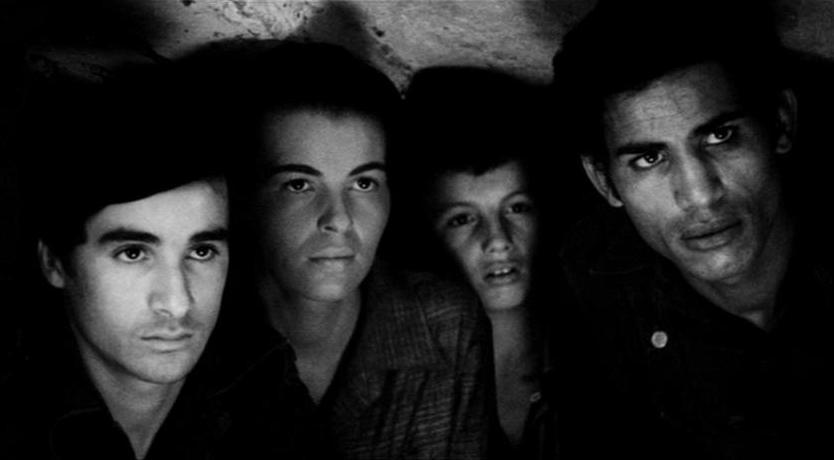
#173-The Battle of Algiers

Quick recap: Although I’d like to just sum up the movie by saying, ‘It’s about the Battle of Algiers, duh,’ I’ll resist the snark for now. Algeria is a country in Africa that up until the early 1960s was under French rule. This movie tells the story of the uprising that lead to the country’s eventual independence.

No, not an up and coming indie rock band

No, not an up and coming indie rock band

Fun (?) fact: The Pentagon screened this movie in 2003 for officers heading into Iraq, where we had a little invading of our own to do. They passed around fliers that said, ‘How to win a battle against terrorism and lose the war of ideas.’

The Clash is now stuck in my head.

The Clash is now stuck in my head.

My thoughts:  This movie made me sad for many reasons, a big one being that I can’t make fun of it because it was actually good. I had all these witty things planned about The Battle of Algiers, which I can never use now because I was absolutely fascinated the whole time. Oh, and the gruesome torture scenes. Those were sad, too.

I was only slightly aware of what the Algerian war was, and the little information I had came from the movie Wild Reeds.  I understand why it’s not heavily talked about in the US: a) because it had nothing to do with us and b) because it makes the French government look really bad. When I think of Colonialism, I think of the early 1900s, not the 1950s so it was weird to merge that time period with something so antiquated. I wasn’t able to find how accurate The Battle of Algiers was, but the main events are all true. The movie is shot documentary style, and it made it feel like I was watching a history lesson or a special on the news.

Adding to that style of filmmaking, most of the actors in the movie were mostly unknowns who were cast because of their resemblance to the real people involved. The movie is subtitled in French so I can’t really get a feel as to how the acting shapes up, but I will say that everything felt ‘real’, especially the riot scenes. The torture scenes were incredibly difficult to watch but even more so were the effects of the bombings from the Algerians as well as the French. It’s simply hard to believe that such a thing happened in modern times.

Final review: 5/5. Many scenes are hard to watch, but the movie provides a great beginning point for someone wanting to expand their knowledge.

Up next: The Matrix

#170- Blue Velvet

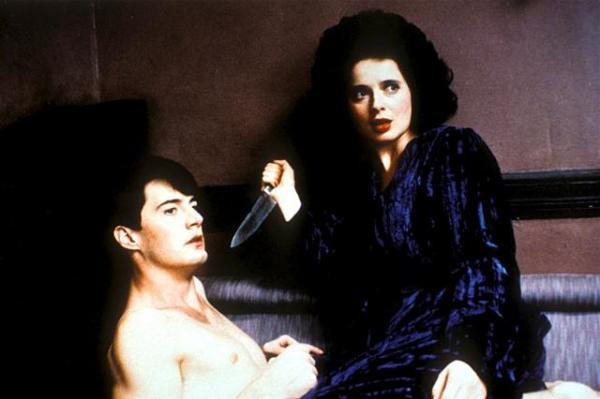
Quick recap: Jeffrey Beaumont, played by Kyle MacLachlan, is home from college to help his father, who has been injured. He finds a severed ear in a field one day which leads him to all sorts of messed up stuff. ALL SORTS.

Like this!

Like this!

Fun (?) fact: ‘Actors considered for the role’ trivia is mostly dull and pointless. I mean, Ewan McGregor was considered for the role of my husband but in the end I went with someone else. I could literally say anyone else and no one could dispute me because I only considered them. But in this case,the trivia is interesting because SO many actors flat out turned down a role in Blue Velvet because they were so disturbed- Val Kilmer, Molly Ringwald, Helen Mirren. Even Roy Orbison initially turned down a chance for his song to play in the film but later came around and even made a music video for the movie.

And this!

And this!

My thoughts: I learned recently that apparently I have ‘ a thing’ for Kyle MacLachlan.  I first encountered him in Desperate Housewives where he largely remained unnoticed to me. And then he resurfaced on Portlandia as The Mayor, and became one of my favorite characters. It wasn’t until Twin Peaks, however, that I truly realized this crush and have embraced it ever since. David Lynch must feel the same way I do, since he has cast him in so many of his projects.

I think it's the mutual love of coffee and pie that drew me in

I think it’s the mutual love of coffee and pie that drew me in

It’s no surprise that I thought Kyle MacLachlan did a fine job as Jeffrey Beaumont in Blue Velvet, as well as Laura Dern, who played Sandy. The movie wasn’t really about them, and although they are central to the story, I have a feeling David Lynch knew his other characters would be so insane that he had to put in a couple of boring people to even it out a bit. And, oh man, are those other characters INSANE. Everyone always refers to Anthony Hopkins, who played Hannibal Lector, as the ultimate psychopath, but he is a kitten compared to Dennis Hopper, who plays Frank in this movie. Frank is evil manifested and I think I’m still traumatized by the rape scene. This might not be a popularly held sentiment, but Dean Stockwell as Ben is just as creepy, if not more so. He looked like a mix between French Stewart and the Master of Ceremonies from Cabaret.

The plot was a little slow moving for me with many scenes feeling like I was watching some sort of a dream, which I guess is Lynch’s trademark. The music is also very similar to Twin Peaks, and actually, so is the premise. I think it’s hilarious how many people were offended by Blue Velvet and then a few years later, decide to give Lynch his own tv show, which has some of the most insane scenes that I have ever sat through. America, as an offended mob, can be a rather fickle crowd. Blue Velvet is for a very particular set of people, meaning if you like Lynch, you’re going to like this and if you don’t, this certainly won’t win you over.

Final review: 4/5

Up next: Being There

#167- The Jazz Singer

Quick recap: The son of a well respected Jewish Cantor, Jakie Rabinowitz, is expected to follow in his family’s footsteps. Instead he becomes a jazz singer because that’s how you rebelled in the 1920s.

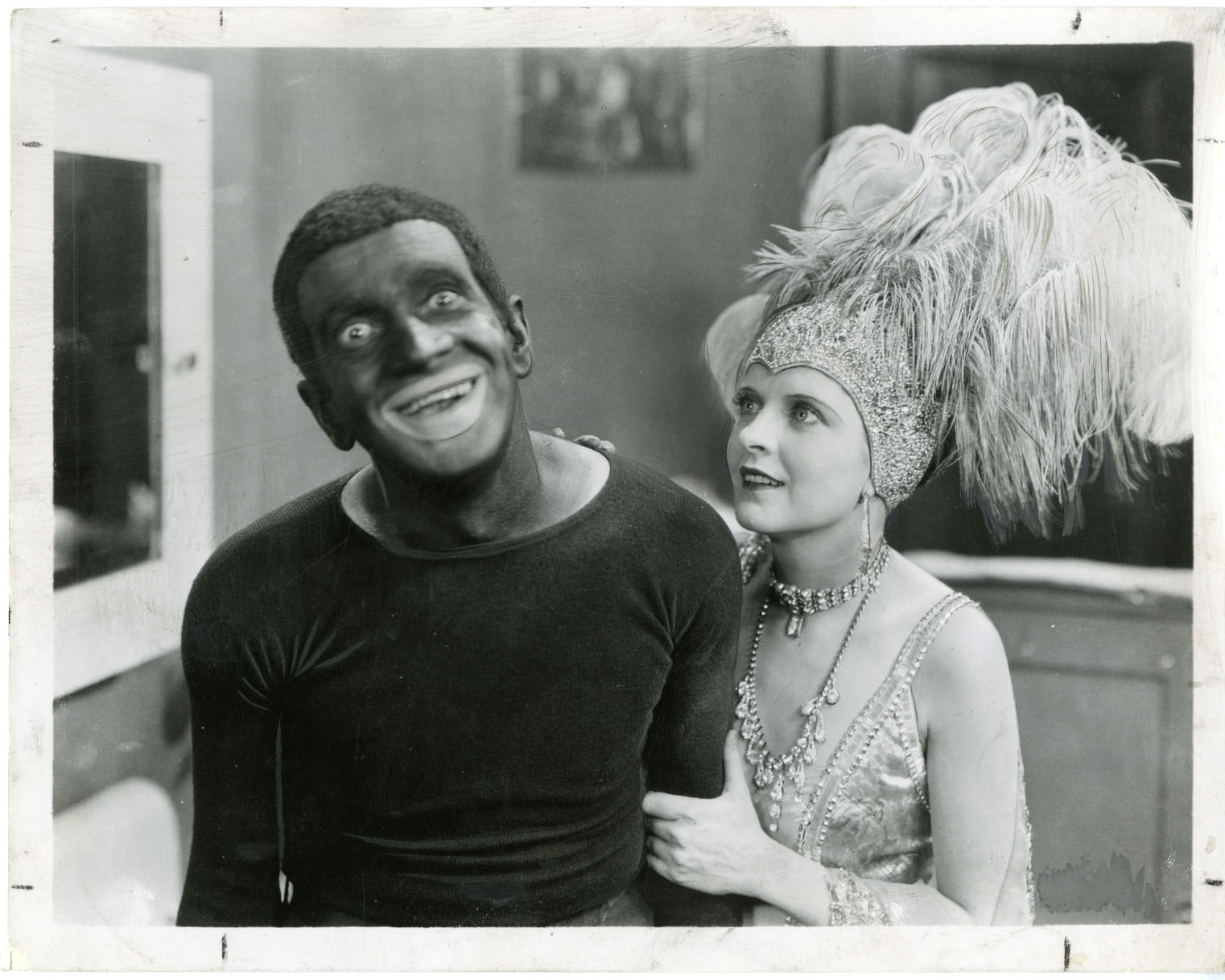
it's the Black Face that ultimately won his parents over.

it’s the Black Face that ultimately won his parents over.

Fun (?) fact: Although The Jazz Singer was the first movie with audible dialogue, it did not mean that movie studios stopped making silent films. The technology was still really expensive at the time, often doubling the budget of a film.

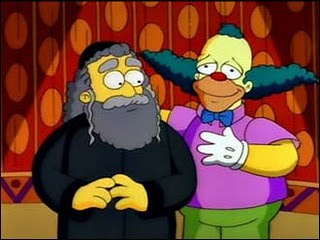
the episode 'Like Father, Like Clown' is an homage to 'The Jazz Singer'

the episode ‘Like Father, Like Clown’ is an homage to ‘The Jazz Singer’

My thoughts: The Jazz Singer is one of those movies I know is important and yet before last night, I didn’t know anything about it except that it had sound and was about a jazz singer. Never in a million years would I have predicted it would be about the battle between tradition and the modern Jewish family because it seemed like a light hearted, fluffy comedy musical.

Starting with the positive, I thought the story was sweet overall with the father finally coming around and welcoming his son back into the family before dying, although he never actually told his son that. Small details, I suppose. Moving on, I also appreciated the pace of the movie since silent films have a history of dragging on during certain times. The audio can only be heard in a couple of scenes along with the singing and it surprised me how excited I got when sound was introduced. I of course have grown up with ‘talkies’ as have most people alive today, and yet there is something special about witnessing something for the first time, like people in the 20s did.

What I didn’t love about The Jazz Singer is Al Jolson. I realize he is ‘the jazz guy’ and deserves to be the main character, but the dude creeped me out. First of all, the movie ages him from a cute 9 or 10 year old boy to a man in his late 40s who looks like he has been cooped up in the morgue for the past 20 years embalming dead people. At no time did I see Jolson as cute or sexy or anything other than ‘creepy undertaker’.

jazz-singer

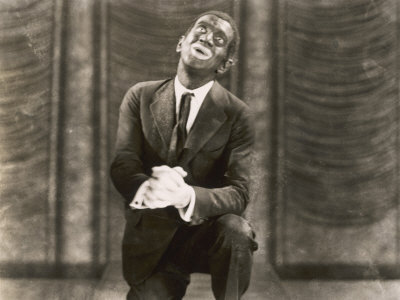
The whole ‘blackface’ thing was also more racist than I imagined, if that were even possible. The movie is about a minority (the Jewish people) and how they come to terms with tradition versus modern times. And Jakie, played by Jolson has this revelation that he needs to be ‘true to my race’ as he is in blackface! The end of the movie is supposed to be sweet as Jakie’s mother is in the audience and her son sings a song about her (‘Mammy’, seriously). All I could think about is that maybe Jakie’s father had a point and he should’ve stayed a Cantor instead.

NOPE. Now he just looks like a racist creepy undertaker.

NOPE. Now he just looks like a racist creepy undertaker.

Final review: 2/5. Yay for historical importance but the rest of the movie is a little ridiculous.

Up next: The Adventures of Robin Hood