#370- Pierrot le Fou

Quick recap: Ferdinand Griffon is tired of his bougie lifestyle so he takes off with ex-girlfriend, Marianne, who is maybe wanted by terrorists or something. Whatever the case may be, the two of them leave a trail of dead bodies in their wake and enough symbolism to last me the rest of this list.

I wish I knew how to quit you, French New Wave cinema

Fun (?) fact: Here is what director Jean-Luc Godard said about his film, in the most French way possible :  “it is not really a film, it’s an attempt at cinema. Life is the subject, with [Cinema]Scope and color as its attributes…In short, life filling the screen as a tap fills bathtub that is simultaneously emptying at the same rate.”

My thoughts: As I sit here drinking my canned wine after a full meal of hot dogs and potato chips, I cant help but feeling a little offended that Godard hates American culture. To be fair, it is American cinema he hates, although I doubt he felt anything sentimental towards the actual citizens. And so Godard set out to make a film that both satirized and showed his love for all things America. Which I think he did. Or did not. Hell if I know, actually.

Pierrot le Fou is the weirdest film to describe because although it has a linear plot about two lovers on the run, I never understood what they were running from or why they were killing so many people. But then I read up on trivia and saw that it was a satire and it kind of reminded me of the first time I saw Austin Powers. I thought the movie was hilarious but I only understood about 40% of it because I had never watched a James Bond film before. That’s what this movie is. If I had watched the films Godard was referencing, I think I would’ve understood what was going on a little better but since I didn’t, I just kept waiting for something to make sense. There are a few funny elements in the film but many of them are dark  I wasn’t sure if it was French humor or something else. I like to imagine audiences back in the 60s watching Pierrot le Fou and cackling every time Ferdinand reads a book or when Marianne pulls out her dog purse. But I felt left out of the joke.

That’s not to say that I was bored to tears or anything by this movie. The colors are gorgeous and so are the actors. I kept watching to see what would happen, even if I didn’t understand every little thing going on. The dialogue spoken was also confusing, like watching the Thin Red Line again. If I had turned off subtitles and just watched the action, I think I would’ve walked away from this with a much higher regard for Godard.

Final review:2/5

Up next: Toy Story

#366- Tabu: A Story of the South Pacific

Quick recap: Matahi and Reri are lovers who live in paradise. Everything is perfect, except for the fact that Reri has been chosen as a Forever Virgin as sacrifice to the gods. Oops.

Finally sinking in how messed up this whole thing is

Fun (?) fact: I assumed ‘Tabu’ to either be a lost island in the South Pacific, or some very complicated ritual a select group of natives followed. Turns out, it literally means ‘taboo’, as in, Reri becomes off-limits, or tabu, to other men. What a let down.

look at that………scenery!


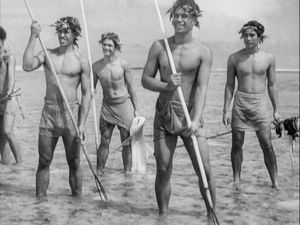
My thoughts: Do you remember when you first discovered National Geographic magazine? You were probably in 5th grade or maybe middle school and the first time you opened one up you told yourself it was just for the articles since you wanted to be an archeologist after all. But inevitably there was always, ALWAYS some photo shoot about an Amazonian tribe who had never heard of the concept of clothes and that, unfortunately, would be the exact second your teacher chose to walk by. That, my friends, is how this movie felt to watch. I tried my best to pay attention to the plot as best as I could but like that very first National Geographic photo spread many years ago, the tribe….aesthetic…..was hard to ignore.

Despite this movie being made in 1931, it’s not the worst when it comes to representing an indigenous tribe. Director FW Murnau filmed in the South Pacific and hired mostly locals. The beginning of Tabu is about as stereotypical as you can get with youths running around naked and just enjoying nature. But at the same time, it just didn’t feel exploitative . It surprised me how a silent film about a non-white group of people could come off as so humane. For example, there is a huge feast for Reri before she heads out to be a Forever Virgin (meaning no man can ever look or touch her again) and of course the girl is absolutely devastated. I loved how fed up the elder was that he had to deal with such drama, but it felt realistic. And so did Reri and Matahi’s relationship. They really seemed to care for each other, even though both were super näive when it came to being an adult.

As I went over the basic facts with my nine year old the next morning, as I sometimes do, I realized that this is actually a very tragic film. Almost 90 year old spoiler alert: Matahi and Reri run away to a different island only to be tracked down by the elder rather quickly. He threatens to kill Matahi if the girl doesn’t give in to her fate and she finally agrees because she loves him so much. Matahi refuses to give up however and follows her ship as far as he can until he finally succumbs to exhaustion and drowns. So basically the movies ends on a downer, except for the gods, who finally got their Forever Virgin.

Final review: 3/5. The nudity is pretty good too.

Up next: Cairo Station

#361- Trouble in Paradise

Quick recap: Gaston is one of the best con artists out there. He falls in love with Lily, who is just as cunning as he is. When they join forces to rob a rich woman, however, the plan goes off the rails.

two women in love with the same man? That’s trouble in paradise for sure!

Fun (?) fact: Trouble in Paradise was banned from public viewing once the Hayes Code took effect in 1935. It wouldn’t be until 1958 when people were allowed to watch it again.

So saucy to show a woman’s garter!

My thoughts: Is it possible to name your child Gaston and he not grow up to be a huge jerk? I feel like that name just seals his future somehow. Anyway, This was a fun movie to watch, especially since it was made in the pre-code era. Obviously there have been monumental films made during the Hayes Code but there is something about watching a director have fun with the story and not worry about getting in trouble. I think it also helped Trouble in Paradise feel much more natural than if it had been made just a few years later.

I think I was most surprised by how funny much of this movie was. Many times I’ll watch something and be able to tell that something is meant as a joke but it never makes me laugh. This movie definitely did, many times. My favorite scene is in the beginning when Lily and Gaston have dinner together. At one point she announces to him that she knows he is really a con artist, and he announces that he also knows she is one. They then take turns giving back various objects stolen from one another when the other wasn’t looking. It’s funny but it’s also ridiculously cute to watch these two criminals fall in love. I really liked their chemistry and when Gaston started falling for Mariette, the rich woman he wanted to rob, it made me angry that he picked the wrong woman.

As is also the stereotype in these early films, everything works out in the end. The solution was complicated and I’m still not sure who conned who,  but Lily and Gaston ended back together so that’s what matters. Apparently, director Ernst Lubitsch had what was called the ‘Lubitsch Touch’ which meant adding sophistication and wit to his movies. It’s very clear that Mariette and Gaston just want to have sex with each other but the audience has to read through the lines to figure out what is really said. In a time when raunchiness was starting to show through in many films (and the reason why the Hayes Code was created), it was nice to have a director trust his audience to really get what was going on without having to spell it out.

Final review: 4/5

Up next: Anatomy of a Murder

#344- Days of Heaven

Quick recap: Bill, a laborer, convinces his not-girlfriend to marry their hopefully-dying-soon rich boss. When he doesn’t kick the bucket as promised, it gets awkward quickly.

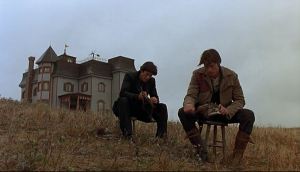
I’d have a difficult time choosing between Richard Gere and Sam Shepard, although I’m willing to bet neither of them smelled very good

Fun (?) fact: The locusts were really peanut shells (thank god). The film was then reversed to make it seem like they were ascending into the sky. I’m still traumatized.


My thoughts: Terrence Malick, during a discussion of an upcoming film: ‘You know what would really knock this film out of the park? poetry!’

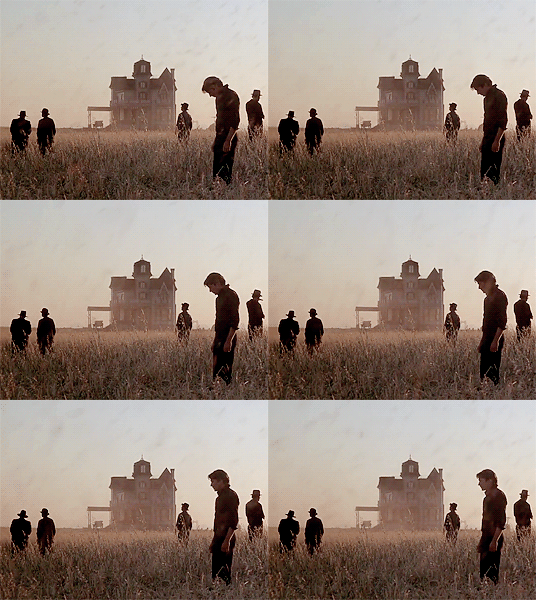
Days of Heaven looks similar to other Malick films in that the words and symbolism can be confusing but the scenes are gorgeous so I don’t mind. In a Malick film, don’t ever take anything at face value. Not war, not criminals on the lam, and now, not migrant workers looking for some quick cash. Days of Heaven was a bit easier to digest than the other two I mention, I think because there was a lot of religious symbolism I recognized. The film doesn’t have much dialogue between characters, which my 1001 movie book deemed ‘silent movie-esque’. I tend to agree with that statement, although there is plenty of narration to explain the plot. Despite getting the theme of the movie rather quickly, I still had some lingering questions after it was over:

  1. Why couldn’t Bill and Abby pretend like they were married instead of brother and sister? Watching them make out would’ve made everyone much less uncomfortable
  2. How expensive was soap in the early 1900s? Because it seemed like no one bothered to use it and if that’s true, how could you attract anyone?
  3. Were locusts that big of a deal back then? What a nightmare.

Overall, though, I was entirely invested in the characters from the beginning. Bill was kind of a jerk but also really young and in charge of his sister. Then again, it was his idea to marry off the love of his life so I don’t really think he thought things through. I loved the tense showdown at the end between Bill and the The Farmer, even though I never could reconcile who should’ve ‘won’. Honestly, even if this movie had no build up or resolution, I still would’ve loved it because it is beautiful.

Final review: 5/5

Up next: Blue