#82- The Tin Drum

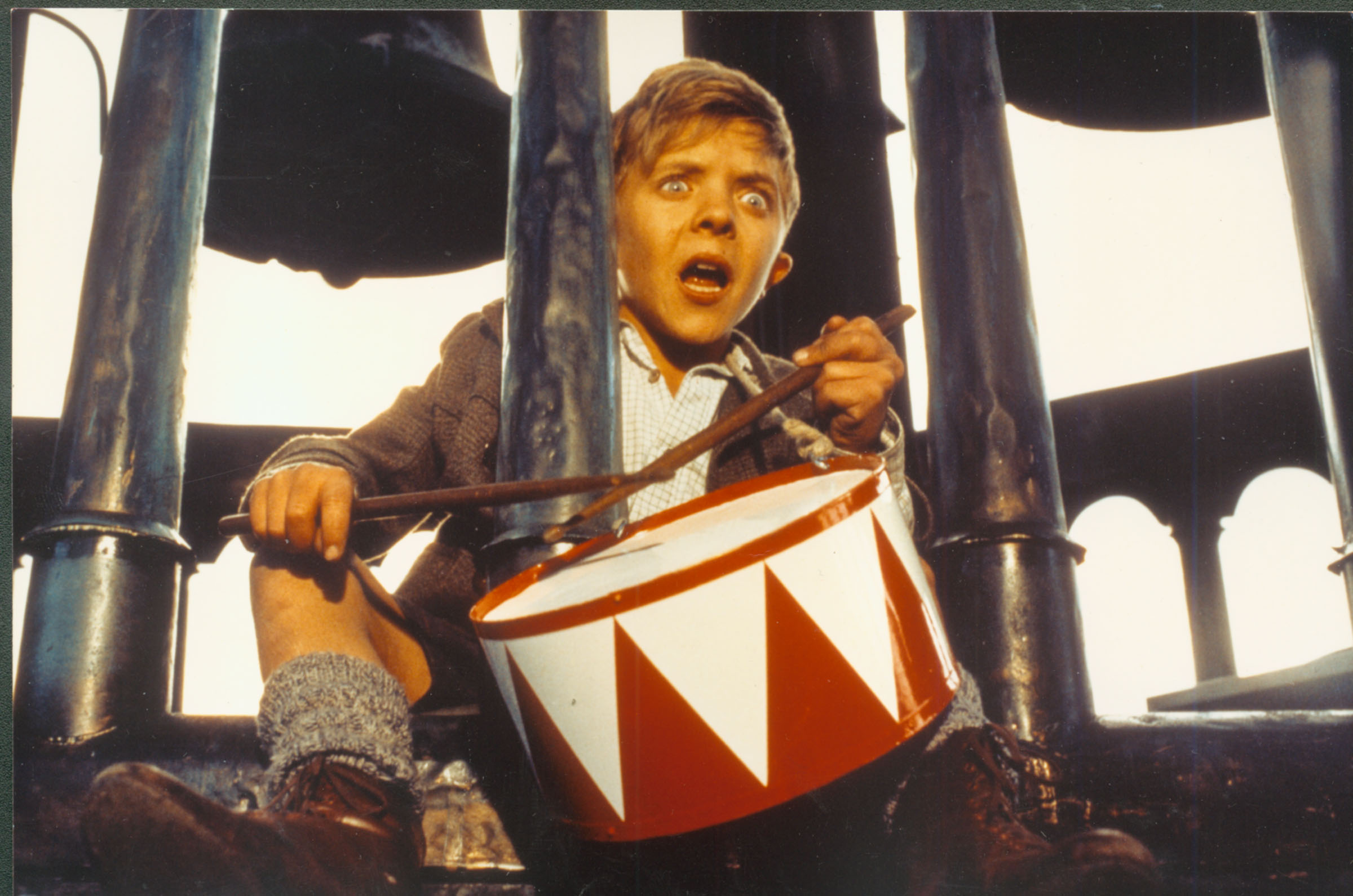
Quick recap: A little boy, growing up during World War II, receives a tin drum for his 3rd birthday. After seeing how the adults around him are incredibly stupid, he decides to throw himself down the stairs in order to stop growing. That was a completely true recap by the way, and not at ALL what the movie is about.
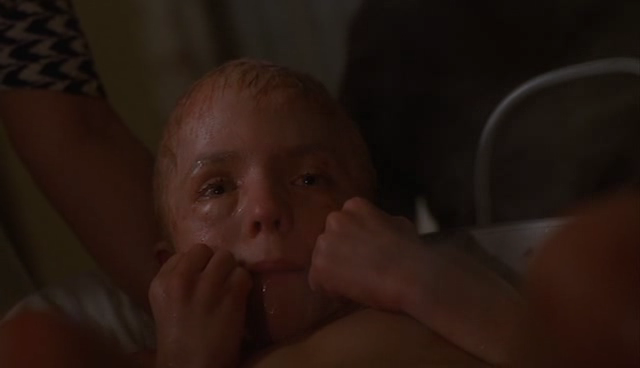
The birth scene that gives me nightmares all on its own

The birth scene that gives me nightmares all on its own

Fun (?) fact: Oklahoma County……in Oklahoma, banned this movie in 1997 based off of one controversial scene. All copies were confiscated and one person was even threatened with prosecution for being in possession of the film. The ruling was overturned later on.

disturbing image #2

disturbing image #2

My thoughts: So. I’m not really sure what Germany has against me, but The Tin Drum is now the second film from that country to traumatize me and make me rethink why I am even doing this project. For starters:

1. The opening scene features a man running away from police. He spies a woman in a potato field and begs her to let him hide underneath her skirts so he won’t get caught. She obliges and ends up sitting on him and they have sex.

2. The child conceived from that encounter grows up and falls for two men. She sleeps with both of them on a continuous basis so it’s not really known who Oskar’s father is.

3. Oskar, 3 years old at the time , makes himself fall down the cellar stairs so that he may never have to grow up. Throughout the whole movie he carries around a tin drum and beats on it when he is unhappy or angry.

4. There is a scene where a horse head washes up on shore and one of the men takes the eels from the head and cooks them. He is then hurt when his wife refuses to eat Rotted Horse Head Eels.

BUT WAIT, THERE’S MORE!
tindrum


Now you are probably thinking to yourself 1) Those crazy Germans and their movies! and 2) This won’t stop me from celebrating Oktoberfest and 3) why is Oklahoma so uptight?

Bear with me here: The boy who plays Oskar was 11 years old at the time of the film. During the film, Oskar has the body of a 3 year old but chronologically he gets older. So that means that when he becomes a teenager, he has sexual desires. Even though he looks like a 3 year old. See where I’m going with this? So, there are a few scenes where Oskar falls in love with a 15 year old who comes to live with his father after his mother dies (she became obsessed with eating raw fish after the eel incident and got food poisoning). Although nothing is shown explicitly, it is insinuated he  (the 11 year old playing a chronological 16 year old but looking like a 3 year old) performs oral sex on the girl and he can be seen under the covers having sex with her a little later on. They conceive a child together through this.

I’m still not sure what the meaning of the movie is. I read that it had something to do with the infantilism of adults and the Nazi party, but I felt like I would be smited (smote?) if I thought about this film too long so I stopped analyzing it.

Final review: 1/5.  There is probably some watch list out there for people who enjoyed this movie. Not falling for that one!

Up next: Breakfast at Tiffany’s

#59- The Thin Red Line

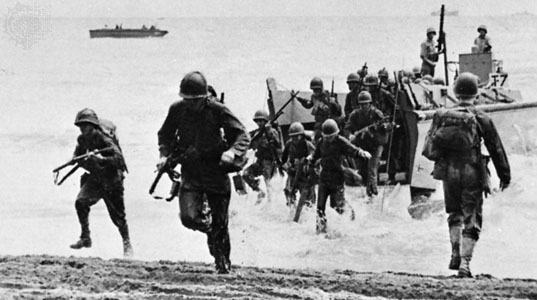
Quick recap: War is hell, you guys. Especially during World War II. The focus of this story is on the battle at Guadalcanal against the Japanese.

Guadalcanal_grave


Fun (?) Fact:  The original cut of the film was just under 6 hours in length. In getting the film ready for release, many stars like John Travolta and George Clooney were almost completely cut out of the film. Adrian Brody in particular had a major role during filming, but by the time the movie had been shortened, he was left with about 5 lines.

300px-Marines_rest_in_the_field_on_Guadalcanal


My thoughts:  Before I get to my review, first a little background: when I finish watching a movie for the blog, the very first thing I do is go to random.org, which gives me the next number to watch. I then go to a list and find the movie that corresponds to the number chosen. So, this movie was chosen several weeks ago and actually I had planned on watching something else, until a friend suggested this one. All that to say that it was completely unintentional to watch a movie about war so close to Veteran’s Day. And since it happened that way, I would feel like a jerk if I turned this into a lighthearted post. I’ll lay off the memes for now (no Hitler cats this time), but there will be a double dose the next time around (Hitler cats for all!)

Seeing as this was my first Terrence Malick movie, I knew nothing of his director trademarks. Which I suppose is a good thing because it makes everything seem fresh. There are a billion war movies out there, but this one has its own perspective and to me, stands out above many others. One of the more brilliant parts of the film, and now I know, a trademark, is the focus on nature. At first, the long shots of the forest and ocean seemed to slow everything down, but later became poignant once the battle started. In a way, it made the war seem even more real, rather than just watching people’s heads being blown off. I’m still not sure the entire meaning, but in focusing on the birds after watching mass casualties, it was as if to say that war is hell, but life will continue. This island is being torn up from both sides, and yet, life continues. And after everyone has left, the earth will repair itself,albeit with scars, and then life continues.

url


The movie did seem to drag on from time to time. I’m not a big fan of war movies to begin with, so I admit to some bias against the genre. The first battle scene just seemed to continue forever, and it was frustrating to keep up with everyone. I would see someone die on screen and then try to remember if they were a main character or not. Which I guess is another point of the film? The characters were ultimately not as important as the themes, such as nature. Once I gave up trying to find everyone, I enjoyed the movie much more. And in looking back, I imagine that the many battle scenes are much closer to how it really was- no one knowing who all was alive or dead, everyone on their own, trying to survive. That’s not to say that anyone was selfish, but in that situation, I wouldn’t be thinking about America, just about keeping myself alive.

It’s hard to say, but I feel like Malick did a wonderful job capturing how frightening war really is. I know about World War II and the sacrifices made, but seeing it through the eyes of these young men made me stop and think. Many were just kids, with about as much experience as the next guy. They were forced into something they knew next to nothing about and were told to fight. And through all the terror and pain, they did their job and they did it will. It might not be the message of the film, but it’s the one I’m taking home.

iguadan001p1


Final review: 4/5. The movie went over my head many times, especially during the voice-overs. It was all very philosophical and confusing, for the most part. This isn’t your typical shoot ’em up war movie and not everyone will appreciate it. But I think it’s an important film, and it’s refreshing to see a different story being told.

Up Next: The Lady Eve

#47- Rome, Open City

Quick Recap: So, Italy was in bad shape during World War II. This movie tells the story of citizens fighting Nazi forces and trying to take back their country. Among the characters: a pregnant woman, a priest, and a ragtag group of boys help to lead the resistance. It sounds like your regular uplifting fare until you remember that these are the Nazis and so this will never end well.

tumblr_mcvs4y5pyz1rjcdh2o1_400

Fun (?) Fact: The film didn’t do so well when it premiered in Italy, mainly because the citizens had JUST gone through the horrifying events and weren’t looking forward to reliving them on the big screen. Italian audiences wanted escapism and Rome,Open City is just the opposite of that.

My thoughts: In case it hasn’t been spelled out well enough, this movie is BRUTAL. I knew it would be tough to watch because, you know, Nazis. But I wasn’t expecting this. After the credits, I immediately Googled what I could about the background of Rome,Open City and found that many of the characters are based off of real people. I think it was at this time that curling up into a ball sounded like the most plausible idea.

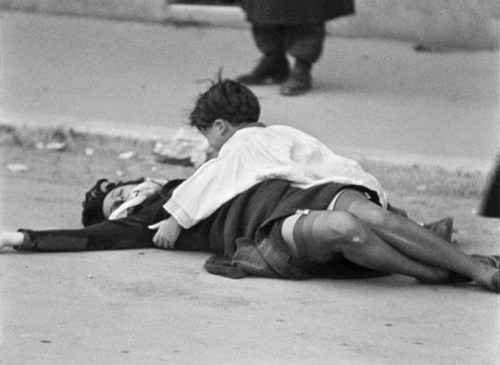
The first part of the movie is your typical wartime drama with the rebels quietly meeting up and forming a resistance and the enemy doing everything they can to stop them. One of the main characters, Pina , is a widow with a son and another baby on the way. She is set to marry Francesco. The two of them meet up with another patriot, Giorgio Manfredi, and attempt to help him continue fighting the Nazis while laying low. On the day of their wedding, Francesco gets captured and taken away to be tortured. As the truck drives off, Pina runs behind it, crying out for her love. The Nazis shoot and kill her while her young son watches. I think it’s safe to say that this is one of the most heartbreaking scenes in cinema and yet, IT GETS WORSE.

tumblr_lfmh6rBnZy1qz8rc5o1_500


The other main character is Don Pietro, a priest fighting in the resistance. He is mostly involved in smuggling things to other fighters because as a priest, he is able to stay out after curfew. His motives stay in line with his faith because he believes in helping good defeat evil. He is well loved in the community, especially with a group of boys who also do their part to take down the Nazis. You can see where this is going. During the second part of the film, Don Pietro gets captured with Manfredi and must witness his friend’s torture and death. He is then sentenced to firing squad, where we come to the second most heartbreaking film in cinema history- the soldiers tasked with killing the priest deliberately miss their target so the Nazi officer gets impatient, pulls out a gun and shoots him in the head. Not bad enough? Those boys who loved the priest so much witness everything, including Pina’s son. And then the movie ends.

don-pietro-shallow-focus1


So, yes, it goes without saying that this movie is disturbing and horrifying. But it’s at least a little comforting to know that Rome was eventually liberated and the Nazis ultimately defeated. The movie reminded me of ‘A Bell for Adano’, written by John Hersey. That novel also takes place during World War II, in the town of Sicily and the two forces at war are the Americans and the Fascists. The citizens of the town only want their old life back, and that includes a bell that means so much to them. The two are similar because both feature strong citizens who love their country. They aren’t looking for anything spectacular. World War II was complicated in many ways and it’s easy to get caught up in the military history, but to me, the most interesting stories are of the ordinary people just trying to survive.

Final review: 5/5. But I don’t recommend watching it unless you like to Ugly Cry.

Up next: HORRORFEST

#39- The Best Years of our Lives

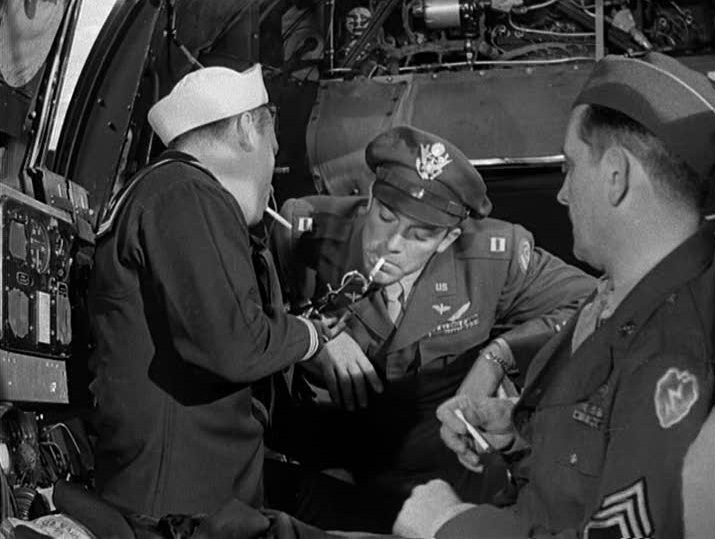
Quick recap: This movie follows three servicemen as they return from fighting in World War II and try to readjust to civilian life. Al, a sergeant in the Pacific, returns to his loving family and job as a banker. Fred, who was in the Air Force, comes home to an uncertain future as he and his wife are barely able to make ends meet. Homer, a veteran from the Navy who has had both of his hands removed, must cope with his new disability as well as try to build a relationship with his fiancee.

bonding over a good smoke

bonding over a good smoke

Fun (?) fact:  Harold Russell, who played Homer, was nominated for an Oscar for Best Supporting Actor. The board thought he was a longshot to win so they created a fake award for inspiring courage for his fellow veterans. And then he won the Oscar.

My thoughts: Growing up, I always had this idealized view about World War II. In my mind, America universally supported the war effort and when soldiers returned home, they were greeted as heroes and were given everything they needed as reward for keeping us safe.  I became an adult during the war in Afghanistan and Iraq and was able to see more realistically what solders are faced with: unemployment issues, disabilities that aren’t necessarily easy to spot, and the inability for us civilians to truly relate to what they have gone through during combat. After watching this movie,  I realize that soldiers have always faced these issues. I can’t comment as to how things have gotten better over time, but it just seems sad to me that these issues are still very much present.

The movie clocks in at almost 3 hours, but it is important to see each character as they navigate through their old life again.  It was heartbreaking to watch each character return to their family, especially Fred. He had done so much during the war, saving countless lives and yet comes back to his parents living in squalor, his wife MIA and no job. Most people who have seen the movie tend to focus on Homer’s character- the veteran who has had both hands amputated. And there is good reason for that, especially considering he was a real veteran. But for some reason, it is Fred’s story that really stuck with me. His character also had to deal with ‘combat trauma’, what we now call PTSD and it was moving to see him trying to recover from the past the horrors of war, yet knowing that it will never really be gone.

Final review: 4/5. The only issue I had with the movie was the ending. Everyone ends up happy and ‘back to normal’. It would’ve been nice to have had a grittier ending, but I’ll take it.

Up next: Who Framed Roger Rabbit?