#65- Brokeback Mountain

Quick recap: This is the one about the gay cowboys.

yay, homophobia!

Fun (?) fact: Annie Proulx, author of the short story of which Brokeback Mountain is based on, sent autograph copies to the two main stars. She addressed one to Jake Gyllenhaal but the other she accidentally addressed to Ennis instead of Heath Ledger, because she felt he was the perfect representation of that character.

2571


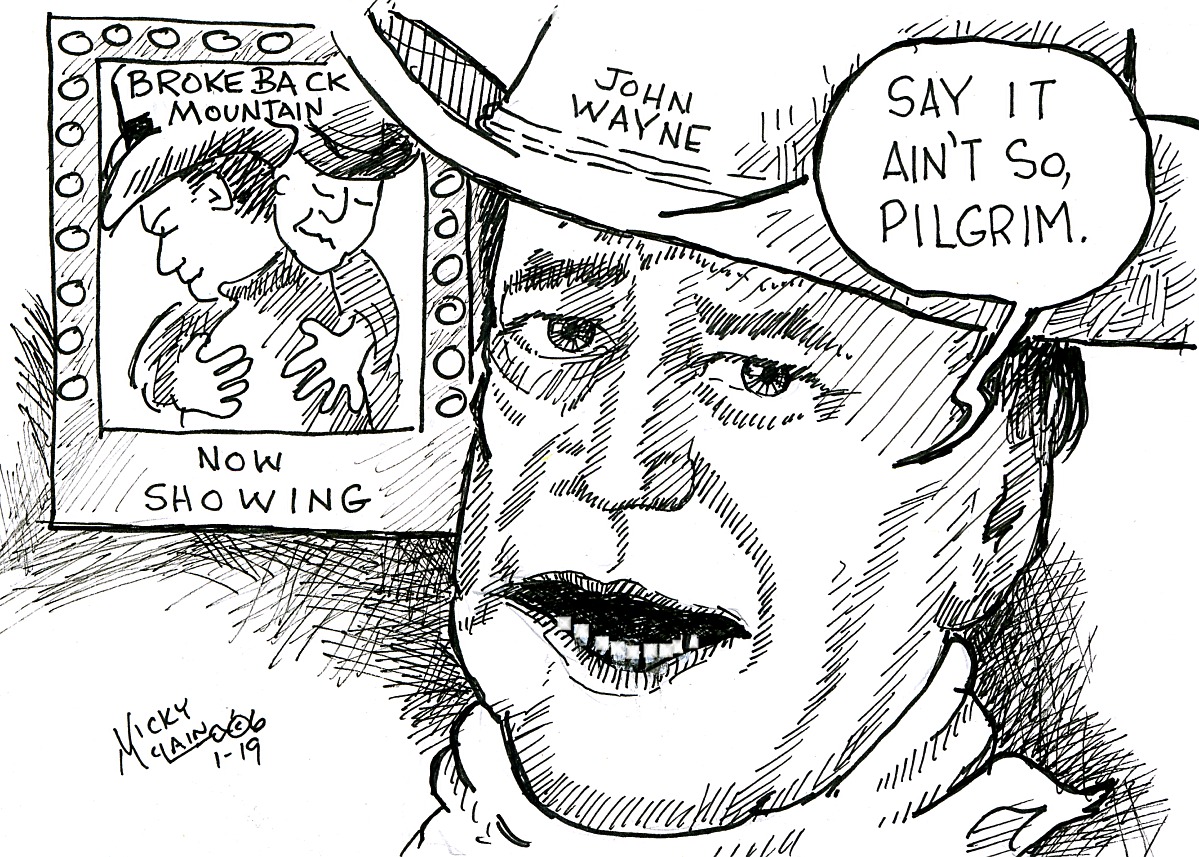
My thoughts:  I saw Brokeback Mountain for the first time in 2005 at a small theater in Lufkin, Texas. I had recently ‘come out’, so to speak, as liberal and felt that this is the sort of movie I should see. I can’t say that I have always been an ally for LGBT rights, but in sitting in that theater and listening to the slurs being yelled out to the screen from the audience, I knew it was the right thing to do.
brokeback_mountain

I don’t believe Brokeback Mountain to be the best representation of the gay culture, past or present, but I do think the movie serves a purpose to a certain extent. For a girl growing up in Texas, I really didn’t have much knowledge about what it meant to truly be gay. I guess I always saw it as a sexual thing, since that is what everyone focused on, instead of the more simple idea that two people love one another. And then when I saw the relationship between Jack and Ennis in the movie, it really opened my eyes to the whole concept of homosexuality. In watching the film a couple of nights ago, I still didn’t find the sex scene very romantic, or many of the other scenes when the characters made out. But I recognized the love and passion the two had for each other. It was even more evident when contrasted with their marriages to the women they settled with. The kicker for me was the last scene with Ennis and the shirt. I normally don’t hold back on spoilers,but I did on that one because I reacted to it the same way I did back in 2005. It broke me.

As for the ‘technical’ aspects of the film, I felt that Jake Gyllenhaal was more recognizable as a gay character but it was Heath Ledger who really owned the emotional mess his character was in. And because of that, I agree with Proulx that his acting was more believable. The scenery was gorgeous and still makes me want to visit the area at some point in my life. I also loved the choice of music: simple so as not to distract from the plot, yet helping the emotional scenes resonate even more.

Despite all of the victories this year for LGBT rights, we are far from over. There are many places where being called ‘gay’ is still the worst thing you can say to a person. And even for the more liberal cities in America, a stereotype still lingers as to what ‘gay’ looks like- and it’s certainly not a pair of cowboys. I’m not sure people who are homophobic would watch this movie and turn their beliefs around, and in fact, with a few of the explicit scenes, it’s bound to cement what they believe even further. But the movie is a good reminder of how things used to be, and in many parts of the world, still are. And hopefully, maybe in 20 or 50 years, Brokeback Mountain will be the kind of classic that we look back on and have trouble fathoming a world in which so much inequality and hatred existed.
brokeback-mountain2-300x300


Final review: 4/5.

Up next: Murmur of the Heart or Kiss Me Deadly
#64- Mildred Pierce

Quick recap: Mildred Pierce is the story of a woman who started out as a housewife whose husband had just left her, to becoming a successful restaurant owner. Her life seems perfect, except for the fact that her second husband is only in it for the money and her daughter Veda is about as spoiled as you can get. It’s almost as if there is a lesson to be learned here, maybe something about money and selling out?

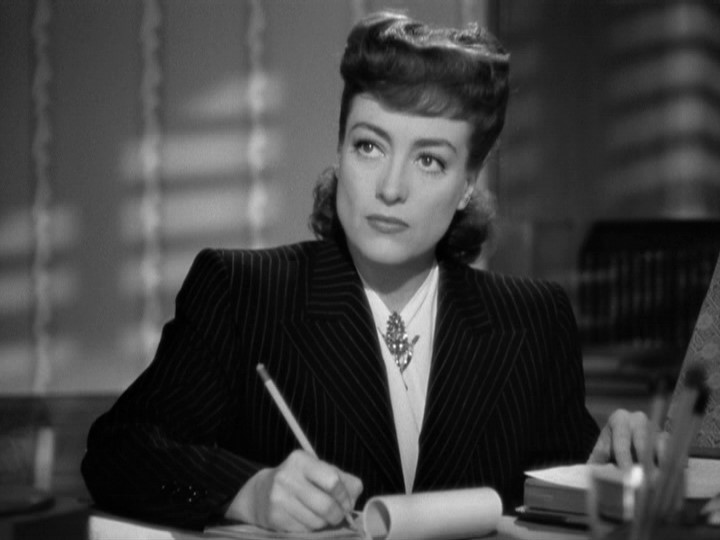
Joan Crawford as Mildred Pierce

Joan Crawford as Mildred Pierce

Fun (?) fact: Nobody really wanted Joan Crawford in this movie. Everyone was gunning for Bette Davis, but when she turned it down, they had no choice. Crawford ended up earning an Academy award for her performance, but that didn’t change the fact that people didn’t much care for her.

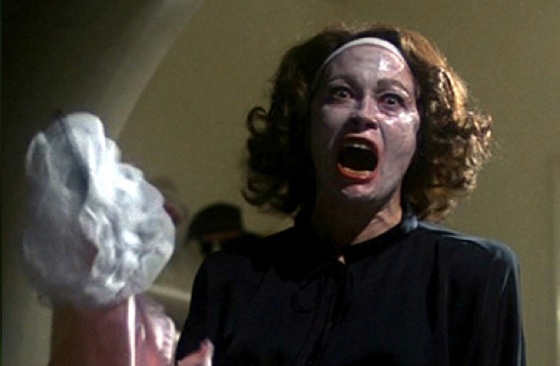
This probably didn't help her image much

This probably didn’t help her image much

My thoughts: At this point in my list, nothing strikes more fear in me than the word ‘melodrama’. As has previously been noted, I am not a fan of the genre. It just seems like such a cheap way to do cinema: to tug on the heartsrings of the audience and make them love you. On the other hand, the formula works. This movie did very well in its time and won several awards. I’m sure that back when it was first released, it was a film that appealed to a wide audience and had many plot points that people loved to discuss. I do understand why it made the list, but it just wasn’t the movie for me.

For starters, nothing screams ‘melodrama!’ more than someone getting murdered during the very first scene of the film. And as what has become my pet peeve, the death was in no way realistic. I don’t know why I expected more because that was just how you did things back then. But it just made the movie seem even more cheap and hokey.

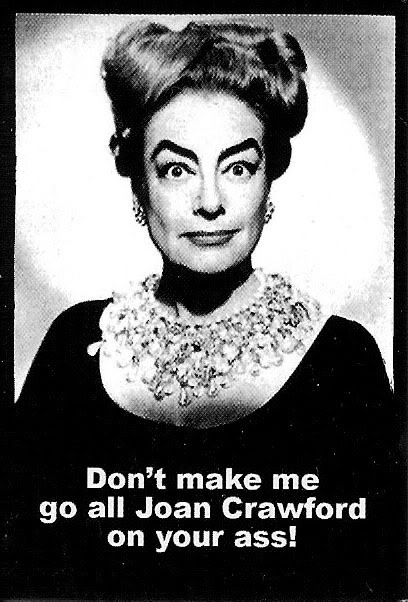
Although I didn’t love the plot, I do think some of the actors did a fine job telling the story. The actress who played Veda was my favorite. She played the bratty socialite to perfection. She did a fine job showing her true colors, as well as attempting to hide them when she was trying to get what she wanted. The performance I didn’t love, however, was that of Joan Crawford. I admit that there was some bias beforehand, because the only thing I knew about her was ‘Mommie Dearest’.I wavered back and forth throughout the entire movie, trying to decide if I could really see her talent or not. And even now, I don’t know. The movie called for a strong woman, someone who doesn’t crumble in the face of adversity, and Crawford plays that like no one else can. But also, the character of Mildred Pierce is supposed to invoke sympathy with the audience. I was supposed to sit there and think, ‘oh my god, that poor woman’, and I didn’t feel that way at all. Crawford could never seem to lose the ‘bitch’ face, like when she was interacting with her children. The acting stopped being realistic and started to take on the melodrama title proudly.

I think I want to be Joan Crawford for Halloween next year

I think I want to be Joan Crawford for Halloween next year

The revelation that Veda was the real killer was not a surprise, but I liked that the movie turned salacious when it was revealed she was having an affair with Pierce’s second husband. I’m sure that was shocking at the time. The twist seemed reminiscent of a VC Andrews book, which, if she were still alive, Joan Crawford would’ve been perfect for a role in an adaptation of any one of those books.

Final review: 2/5. Melodrama.

Up next: most likely Brokeback Mountain

#63- Woman in the Dunes

Quick recap: A schoolteacher explores the dunes, looking for a rare insect. Realizing he has missed his bus for the night, some villagers offer to help find him a place to sleep. They send him down into a dune with a widow, whose job is to shovel sand for a company. The next morning, the schoolteacher realizes he is trapped. With no way out, he begins to bond with the woman and eventually they fall in love.

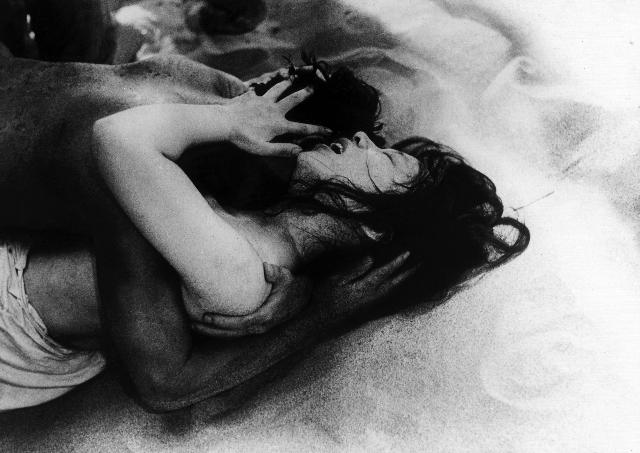
obligatory 'tie her up because she lured me in here' dance before falling in love

obligatory ‘tie her up because she lured me in here’ dance before falling in love

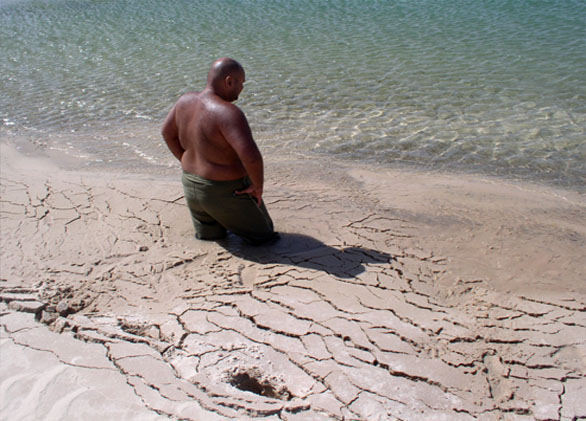
Fun(?) Fact: Quicksand isn’t really all that deadly. Most of the time, it runs just a few feet deep and if you make slow movements, you’ll end up floating to the top and be just fine. I don’t know why, but I always assumed quicksand would be an obstacle in my life at some point and now I’m a little disappointed that it wasn’t the enemy I feared. 😦

bonus fun fact! Apparently there is a fetish for people getting stuck in quicksand. Thanks, Google images!

bonus fun fact! Apparently there is a fetish for people getting stuck in quicksand. Thanks, Google images!

My thoughts:  When people gush to me about their love of foreign films, what they usually mean is Amélie. Which is fine, and I totally get it because it is a sweet movie, after all. But then I have the experience of watching an unexpected foreign film and I wonder why it isn’t getting the same recognition as all the others we ‘love’. Woman in the Dunes is a weird movie, but not so weird that it couldn’t be embraced by all the foreign film aficionados. In fact, if I had to come up with a tagline for this movie, it would be, ‘It’s not El Topo‘. Clear and concise, just the way it should be.

One of the thoughts that struck me throughout the movie was that I could never get a handle on what genre I was actually watching. This was the first time I chose to forgo research before sitting down to watch something and I must say that it increased my affection for the movie just a little bit more because everything is unexpected. The beginning of Woman in the Dunes would make for great horror film fodder: A young man, unaware of his situation, is lured into the dunes where there is no escape. The sand almost becomes a monster, a living thing. It is its own life force. And there is no escaping it. In fact, the widow must shovel daily, not just because it is her job, but also because if she didn’t the sand would bury her house within a couple of days, with her along with it. But it was also horror as the man realized he was just as trapped as his insects were, after catching them. This is his life now.

At some point, the mood changed and the plot centered more on the romance than the Sisyphus lifestyle. Earlier the sand had frightened me, but now it was being used for sexual tension. One of the aspects of living in a dune is that water is not readily available and when it is, it must be rationed. Therefore, when bath day rolls around, it is a big deal. The scenes with the schoolteacher and widow bathing each other were pretty hot and made me wonder if I had a future in writing sand dune related erotic novels. But then I also thought of a certain scene in the desert from El Topo, and the thought was gone. I guess it makes sense that love would blossom, seeing as literally the only other activity is shoveling sand.

woman-in-the-dunes

And then finally, after an escape attempt where the schoolteacher falls into quicksand, he is resigned to his fate. One day, he stumbles across an idea to pump water from underground so that it will be available at all times. When his lover is taken away due to an ectopic pregnancy, he even has a chance to escape. Instead of doing so, the schoolteacher climbs out of the dune to look at the ocean, and then puts himself right back where he was so that he can continue his project. It was a very depressing ending, although I suppose there are several ways to take it. My opinion is that there are aspects of life that seem like you may be trapped, and you very well might be, but there is always something interesting that you can throw yourself into and focus on.

Final review: 3/5. Very interesting concept, but there were some slow moving parts and it seemed like there was one disaster after another, which lost my interest a few times.

Up next: I actually haven’t a clue. I’m open to suggestions!

#62- Citizen Kane

Quick recap: Charles Foster Kane, newspaper magnate, dies and his last word is ‘rosebud’. A reporter is sent out to investigate what the word means, in hopes of getting to the bottom of who Kane really was.

1f01_015


Fun (?) fact: It’s no secret that William Randolph Hearst wasn’t a fan of Citizen Kane, seeing as how the main character parallels many points from Hearst’s life. Orson Welles has stated several times that the inspiration for Kane was based off of several sources, not just Hearst. Nevertheless, one time Welles and Hearst were in an elevator together, during the San Francisco premiere of the movie. Kane asked Hearst if he would be attending and Hearst ignored him. As he got off on his floor, Welles replied, ‘Charles Foster Kane would have accepted.’

pretty sure I have a thing for Orson Welles now.

pretty sure I have a thing for Orson Welles now.

My thoughts:  I can predict that this post is going to be more rambling than usual.I’d like to say it’s because it will be hard for me to describe the greatness that is Citizen Kane, but in all reality it’s mostly because I have the flu. As an early Christmas present to all of my readers, here is a helpful tip for you: the flu shot is bullshit.

Citizen Kane has been a movie I have been wanting to watch for a long time because it’s on everyone’s ‘best of’ list. It’s also a movie I have dreaded watching because it’s on everyone’s ‘best of’ list. And seeing  as how Psycho turned out, I turned my expectations way down. Luckily, from the first few minutes I was hooked. I’m a fan of non-linear movies or really any film that defies traditional storytelling and this movie is the father of them all. It starts out with the death of the main character and the viewer only finds out who Kane was through flashbacks. I especially loved the newsreel scene at the beginning, announcing Kane’s death. It was so realistic PLUS it had my favorite old movie trope- spinning newspapers!!

I think the reason I loved this movie so much is how Charles Foster Kane is brought to life. Each person interviewed had a different perspective on Kane, some negative and some positive. I went from feeling sorry for Kane as he was taken away from his home and instead brought up by the bank to swooning over him as he refused to acknowledge his vast amounts of money, only wanting to help the poor. And then as he became even more wealthy, his personality began to change.  The pivotal scenes showcasing the segue from All-American Good Guy to Kind of a Jerk happened during his first marriage. At the beginning of the marriage, he and Emily can’t stay away from each other. Both are in good spirits and have high hopes for the future. But with each scene, all set at the breakfast table but with different years, the couples drift apart physically and emotionally. It was a powerful way to show the damage being done.

As Kane continued his rise to fame and money, he became even more eccentric- buying statues and other works of art and then doing nothing with them. It is during his second marriage that he decides to build an estate, Xanadu. He and his wife relocate here and it is at Xanadu that I could finally see what Kane had become. The scene where Susan is begging to not have to sing again is heartbreaking, as well as when she finally leaves him.  The estate itself is ornate and gorgeous but at the same time desolate and depressing. It was the perfect place to match what Kane had become.

I could write a whole post focusing on the special effects and cinematography of Citizen Kane but there isn’t much to say that hasn’t already been analyzed a million times over. My two favorite aspects of what makes this such a remarkable movie are 1) the makeup effects turning Kane from his early 20s to old age. It was so hard to believe it was the same person at times and it wasn’t until after the movie that I found out that Welles was only in his early 20s himself when he made the movie. And then 2) I had no idea this was a thing, but I loved how the camera focused. This is called ‘deep focus’. I can’t really describe it but basically it wasn’t just an actor staring into the camera and saying his lines.

it's not a spoiler for a movie made in the 40s.

it’s not a spoiler for a movie made in the 40s.

Final review: 5/5. This movie lives up to all the hype and then some. It is truly a must see for anyone.

Up next: let’s go with Woman in the Dunes. If I keep putting that title here, I will eventually watch it.