#183- Alphaville

Quick recap: Secret Agent Lemmy Caution has been sent to Alphaville to locate a missing spy and destroy the city’s ruler- a computer named Alpha 60.

That's some good spying going on, Caution

That’s some good spying going on, Caution

Fun (?) fact: Although it is a sci-fi film, director Jean-Luc Godard shot all scenes in real places around Paris and only used conventional firearms.
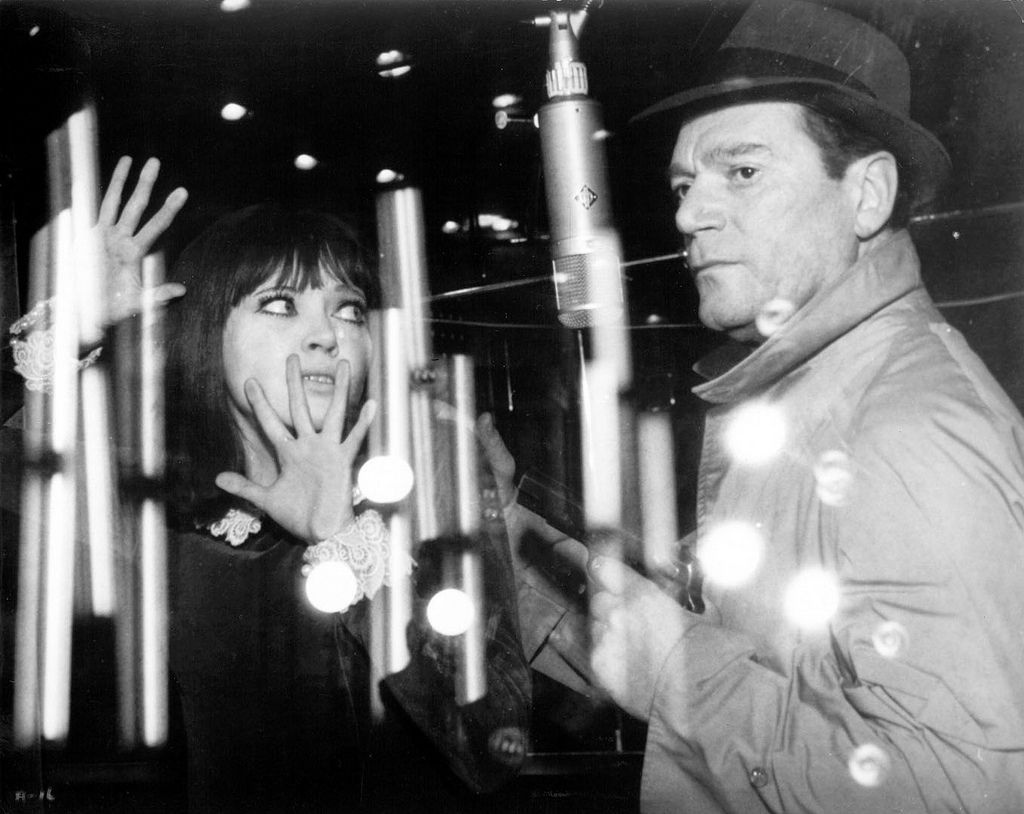
oooo, super sci-fi!

oooo, super sci-fi!

My thoughts: I had no idea what the hell was going on through most of the movie, and I’m still not sure what the ending was all about. Alphaville is one of those films pretentious people latch on to, but the general public would be bored to tears by it. There are many movies like that, including ones that I personally love, but this one just seemed to be pretentious for the sake of being pretentious. The director is French, after all, so maybe that’s why.

The plot of Alphaville is simple enough: spy comes to kill tyrannical leader who happens to be a supercomputer. A supercomputer in the 1960s, of course. If it was set in modern times, Lemmy Caution might be trying to murder Siri or something similar. The computer is all about logical thinking and holds executions for anyone who shows emotion, which is considered illogical thought. So, pretty straightforward, except that it wasn’t. There are several scenes in which Caution or the computer is talking and I had NO IDEA what they were saying. In looking up trivia for the movie later on, I found that many of the lines came from poetry, but it just sounded like beautiful nonsense in the context of the movie. I was also too caught up in the sci-fi details to really focus on the plot, like trying to figure out if Alphaville is a city or a planet and why it looks so similar to Paris.

Stripped down to its basic premise, Alphaville’s version of reality was quite interesting. Instead of a Bible, citizens use a dictionary, which changes constantly because words like ‘love’ and ‘weep’ are thrown out. People are treated like robots and are expected to behave as such, which also caused confusion for me because I thought the women were all computers. My favorite, scene, if you can call it that, was the depiction of the executions. There are a line of (mostly) men who stand on a diving board and are shot to death. They fall into the water, where a group of synchronized swimmers jump in to retrieve the body. Everyone claps politely and then the next person is brought in. This was the most ‘sci-fi’ part of the film and so messed up because everything looked so familiar. I actually like the idea of using present day locations because it seems as if the world depicted in the movie is not too far off from where we are right now.

Final review: 3/5. Alphaville is also considered noir, which is a weird pairing with the sci-fi genre, but I kind of liked it.

Up next: Gigi

#178- Shadow of a Doubt

Quick recap: Young Charlie (named before it was cool to call girls Charlie) loves her Uncle Charlie.That is, until she suspects he might be a serial killer. Which he totally is.

Just an uncle and his niece, embracing intimately

Just an uncle and his niece, embracing intimately

Fun (?) fact: The tune Young Charlie gets stuck in her head in the beginning of the film is the ‘Merry Widow Waltz’, a reference to her serial killer uncle. It’s supposed to have been a big clue as to whether or not Uncle Charlie is guilty, but as I’m not so up to date on my waltzes, I missed it.

Still Uncle Charlie and Young Charlie. Nothing weird going on at all.

Still Uncle Charlie and Young Charlie. Nothing weird going on at all.

My thoughts: Shadow of a Doubt was directed by Alfred Hitchcock, a fact that at first surprised me and after watching, made perfect sense. Before starting this list, Hitchcock was synonymous with ‘horror’ to me, and I wasn’t entirely impressed by either Psycho or The Birds. But as I have since discovered through Frenzy and North by Northwest, he is also adept at thrillers and I have now learned, Film Noir. Hitchcock has said on several occasions that this was his favorite movie, and it’s pretty easy to see why.

For starters, I think the cast is what really makes this film so enjoyable. Joseph Cotten played the part of Uncle Charlie perfectly, making him a terrifying killer by the end of the movie. Young Charlie (played by Teresa Wright) was also wonderful, with her ability to be naive as well as the most wise in the family. My favorite characters, though, were Young Charlie’s dad and his friend, Herb. The two men had a hobby of coming up with ways to kill each other, which was as disturbing as it was comical.In one scene, Herb asks Charlie’s father if he tasted anything funny in the tea that was served earlier. The father admitted that it did taste funny, to which Herb replied that he had added soda, but it could’ve just as easily been poison. It almost seemed like something David Lynch might do, creating these characters who only talk of gruesome ways to murder the other and still manage to stay good friends.

The one drawback of the film is the actual mystery. It’s clear from the very beginning that Uncle Charlie is a murderer, so it really became more of a question of how he would be caught. The last quarter of the movie dealt with him trying to kill Young Charlie, since she knew too much, which became more comical than it should’ve been. Uncle Charlie was sinister and played his part well, but his constant attempts to murder his niece reminded me of Wil E. Coyote always trying to catch the Roadrunner and instead being outsmarted in some way.

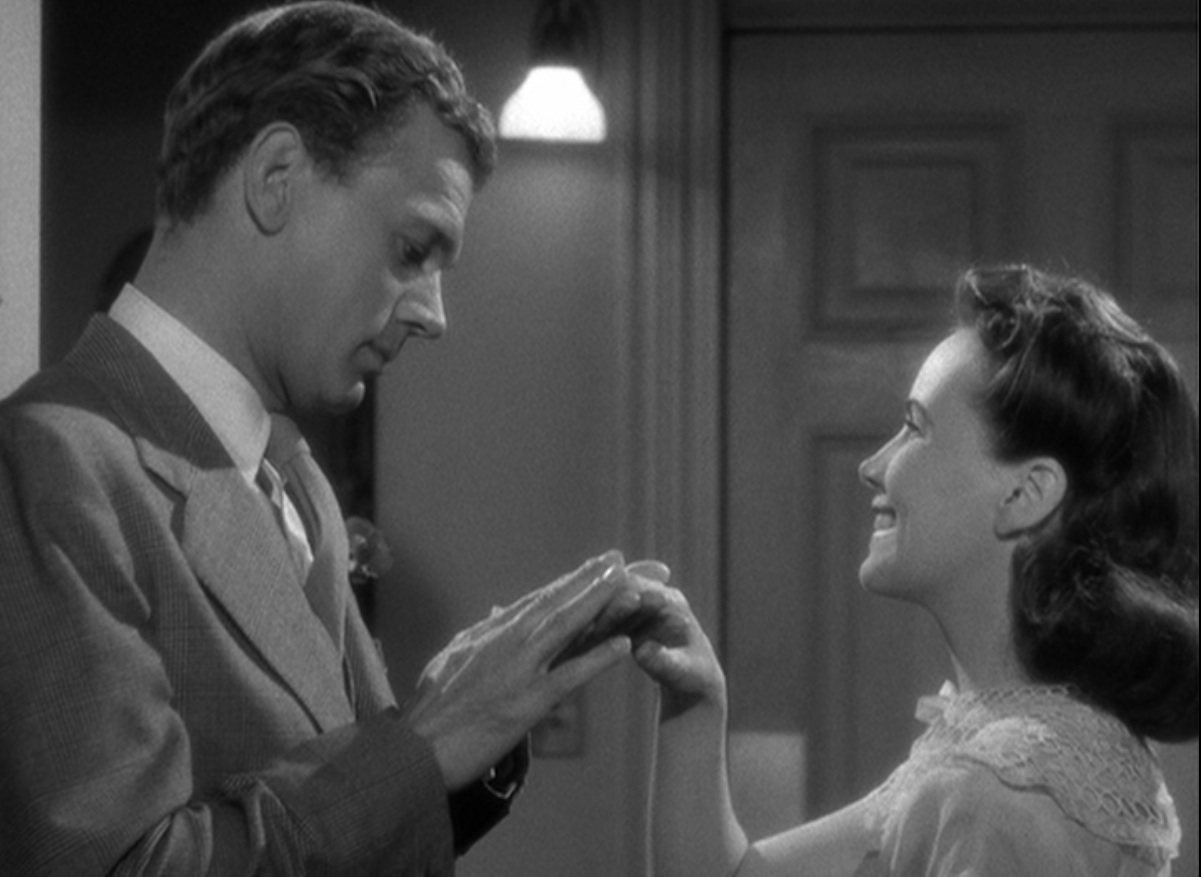
Uncle Charlie giving his niece a ring, full of familial love

Uncle Charlie giving his niece a ring, full of familial love

Final review: 4/5. Depending on your perspective, Shadow of a Doubt is a near perfect satire about suburban life (the entire town falls in love with Uncle Charlie, never stopping to question all the weird stuff he does).

Up next: Diary of a Country Priest

#120- Murder, My Sweet

Quick recap: Detective Philip Marlowe has been hired by an ex-con to find his missing ex girlfriend. Somehow this also turns into a jewelry heist and murder mystery. Always with the murder mysteries, noir films.

murder_2

Fun (?) fact: The film was originally titled Farewell, My Lovely but was changed because audiences thought it was a musical. If anything, I think this speaks more about the advertising department for the film than the initial confusion.

My thoughts: I’ve mentioned my least favorite genres at length as of late, but now I’m glad to talk about a new favorite- the film-noir. I’ve watched a few already and really love how dark they can be, and yet have such a quick wit about them . Murder, My Sweet is no exception. If I had to describe what film-noir was to someone, I would use this movie as a prime example.

The mystery at the heart of the film is a complex one and I’ll admit to still not completely understanding some parts. Not understanding a plot would annoy me in other situations, but it’s all par for the course in this type of genre. I wasn’t able to figure out where the ex-girlfriend was until the very end and I’d like to say it’s because of the intricate plot, but it’s most likely because I’m the worst at solving mysteries. I couldn’t even handle  Encyclopedia Brown as a kid because the stress of solving the puzzle, mixed in with the crushing disappointment of knowing the answer was right in front of me the whole time was too much for a 7 year old to deal with. In a positive light, if I had figured out the ending to Murder, My Sweet I wouldn’t have been as entertained.

I loved Dick Powell as Detective Philip Marlowe. He was fearless when it came to hunting down clues and never lost his cool. I’m not sure detective work is really a good choice for him in the long run however, on account of how easily he blacked out throughout the movie.The scene where he wakes up after being drugged is my favorite because of all the work it took to put the viewer in the perspective of someone who has lost his mind. The camera’s lens was made to look like spider webs had formed in the room, a perfect symbol for that foggy feeling we all feel at some point. Hopefully not because we have been strangled by a dim witted ex-con, but I still get it.

The black pool opened under my feet again, and I dived in

The black pool opened under my feet again, and I dived in

Some favorite tropes I observed in Murder, My Sweet:

  • beach house as a scene of the crime (seriously, I’m staying away from beach houses)
  • making out with all the girls, even the ones who are about to murder you
  • flashbacks!
  • police interrogation at the beginning of the film to launch the story
  • gun mishandling- always a laugh

Final review: 4/5. This one was a lot of fun, but still a little to complex for its own good.

Up next: Persona

#81- Little Caesar

Quick recap: Rico Bandello is in the mob but dreams of becoming the top guy. He and his best friend Joe Massara head to Chicago to stir things up. Rico gets in with a gang and works his way up while his friend Joe decides he would rather just dance. Seriously. Just think of Rico as the Little Engine that Could, only with more guns and wisecracks.

nothing wrong with a little dancing

nothing wrong with a little dancing

Fun (?) fact: Little Caesar was made in the Pre-Code era, which meant that audiences were subjected to lots of violence but still not much sex. When the Hayes code went into effect, movies become ok with the moral crowd but more bland for the rest of us. This is why we can’t have nice things.

My thoughts: Although I had never seen Little Caesar before last night, I already knew who Rico was. When I think of the mob (which I do often), I either think of A) Tony Soprano or B) some 30’s mobster who wears flashy clothing, talks out of the corner of his mouth because of a fat cigar and adds the word ‘see?’ at the end of every sentence. Turns out, that caricature comes from this movie! Yet another pop culture hole filled.

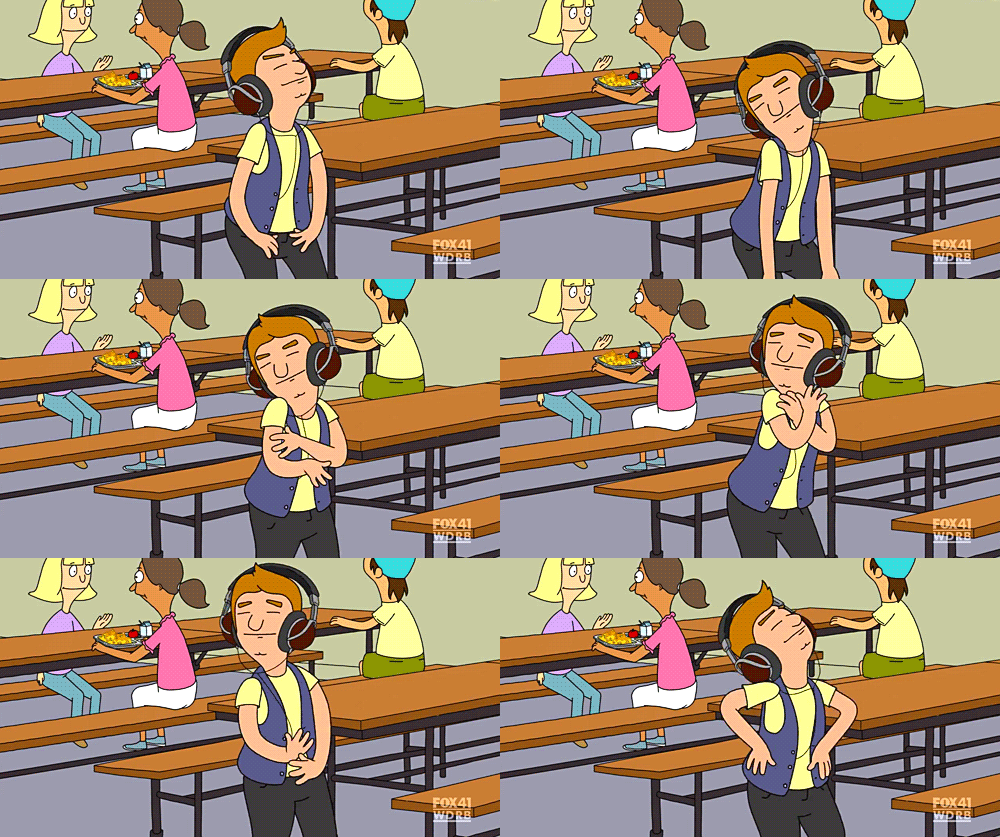
I forgot the pointing at oneself with the thumb! I'm totally going to start doing that more.

I forgot the pointing at oneself with the thumb! I’m totally going to start doing that more.

Typically, the mobster stories I have seen ( just The Sopranos) have been extremely complicated and at times morally ambiguous. Little Caesar is none of that. Rico is a small time gangster who quickly rises to the top with his quick anger and ability to plan successful hold ups. I always thought joining a gang would be more difficult than just, ‘hey, I’m new in town and now I’m going to join up with you guys, see?’ But that’s seemingly what happens. And, unlike The Sopranos, there was never a point in the movie where I felt any emotion or sympathy towards Rico. To an audience member in the 30’s, I can see why that would be a preferable thing. The 20’s were about long, drawn out, epic silent films and once ‘talkies’ were introduced, it must have been nice to sit back for an hour and just watch people shoot each other. There isn’t much analyzing to do here and there are no real surprises.

Mob stories have a reputation for romanticizing crime, but I’m not sure that applies to this movie. Little Caesar was made at the start of the Depression, a time when the rich weren’t seen in the most favorable light. In a way, Rico’s story is more of a moral lesson than anything else: greed will get you nowhere. The mob may be seen as cool now, but I bet that for the average American in 1931, there was something deeply satisfying watching Rico get caught and subsequently gunned down by the police.

Is this the untimely end of Milhouse?

Is this the untimely end of Milhouse?

Final review: 2/5. I’m sad to say that although there were several newspapers shown, none of them were spinning.

Up next: The Tin Drum